Hall of Masters

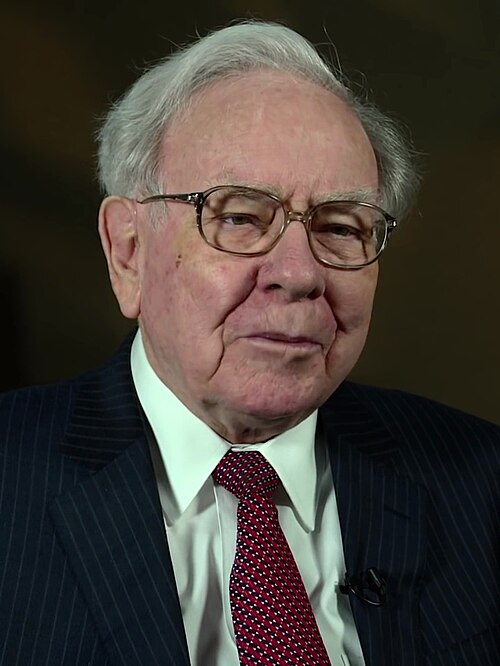
Warren Buffett

워런 버핏

Longtime leader of Berkshire Hathaway who practiced long-term compounding by investing within his circle of competence in businesses with durable economic moats and margins of safety.

1,409 records in all

  • Principles 389
  • Episodes 279
  • Quotes 741
Ask with this master's words

3 free questions a day, no sign-up.

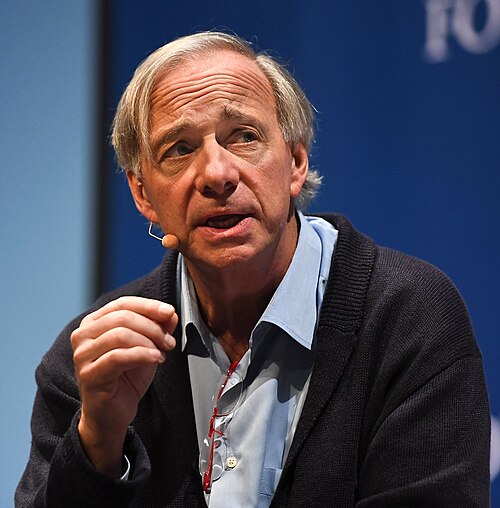
Photo: USA International Trade Administration  Public domain  Original  cropped

Episodes

42 basic records of 279

Episodes are real events from public sources, summarised by us.

  • Howard Buffett's Contrarian Firm

    After the bank where he worked failed and wiped out his savings, Howard Buffett started his own brokerage during the Great Depression. He focused on advising clients on hyper-conservative investments like municipal bonds and utility companies.

    LessonWhen the market crashes, there is still opportunity in serving the remaining capital with extreme safety and preservation strategies.

  • The Intel Omission

    Buffett was on the board of Grinnell College with Intel co-founder Robert Noyce and approved the college's $100,000 seed investment in Intel. However, he refused to invest his own partnership's money because he did not understand semiconductors.

    LessonStrictly adhering to a circle of competence can lead to missing massive opportunities, even when you have inside access.

  • The Founding of GEICO

    Leo and Lillian Goodwin founded GEICO with $100,000, betting they could sell auto insurance directly at lower prices than giant competitors. They challenged established insurers who had 1,000 times more capital and eventually grew the business to billions in revenue.

    LessonA superior business model can overcome a massive lack of capital when competing against entrenched giants.

  • Fireman's Fund Contract Expiry

    A contract providing 7% of Fireman's Fund business to Berkshire expired, leading to a negative $85 million entry in premiums written. Buffett accepted this large decrease in volume because the termination did not significantly impact overall profits.

    LessonDo not fear reporting negative growth numbers if the underlying business profitability remains intact.

  • Insurance CEOs Defy Expectations

    Buffett predicted that Berkshire's insurance float would level off or decline, but his insurance managers worked to increase it by $2.5 billion instead. This growth provided even more capital for Berkshire to invest for its own benefit.

    LessonEmpowered managers can often overcome conservative corporate forecasts through operational excellence.

  • GEICO's Market Underperformance

    In 1984, GEICO's stock price remained static despite a substantial increase in its intrinsic business value. Buffett remained satisfied because the underlying business performance was strong, even though the market didn't reflect it that year.

    LessonTrue business value and market price can diverge in the short term, but the business performance is what matters long term.

  • The Creation of B-Shares

    To stop investment trusts from selling expensive fractional interests in Berkshire, Buffett created a new class of 'Baby B' shares. These shares tracked 1/30th of the value of A-shares and were offered in an open-ended fashion to meet all demand.

    LessonCreate your own accessible product versions to prevent predatory middle-men from exploiting your brand's high entry price.

  • 2011Hiring

    Hiring Ted Weschler

    Ted Weschler won two consecutive charity lunches with Buffett for over $5 million. Buffett was so impressed by their conversations that he hired Weschler to manage a portion of Berkshire's capital.

    LessonExceptional talent can demonstrate their value through direct access and deep industry insight.

  • Decentralized Operating Structure

    Buffett built Berkshire Hathaway with a flexible, decentralized structure where individual companies operate independently. This allows the organization to react to changes even if they don't follow Buffett's specific style.

    LessonBuilding a flexible structure allows a large organization to remain agile and survive beyond the founder's direct influence.

  • Shaw Industries Cost Pressure

    Shaw Industries faced over $300 million in increased costs due to rising oil and fiber prices. They managed to earn a 25.6% return on tangible equity despite these massive headwinds and narrowing margins.

    LessonStrong businesses can remain profitable and dominant even when faced with staggering raw material cost increases.

  • The National Indemnity Acquisition

    Warren Buffett bought National Indemnity from his friend Jack Ringwalt for $8.6 million. The deal was finalized in fifteen minutes using a simple 1.5-page homemade contract without any audits or lawyers.

    LessonSpeed and simplicity can be achieved in major deals if there is high mutual trust between the parties.

  • The Gotrocks Family Parable

    Buffett illustrates how a wealthy family owning all American businesses loses money by hiring brokers, managers, and consultants to trade against each other. Each new layer of 'Helpers' charges fees that diminish the family's total wealth.

    LessonAdding complexity and intermediaries to your strategy often leads to higher costs without increasing total value.

  • Pension Fund Mismanagement

    In 1971, pension fund managers invested a record amount in stocks when prices were high. By 1974, after the market crashed, they reduced their stock exposure to a record low, missing the recovery.

    LessonAvoid following the crowd by buying when everyone is optimistic and selling when everyone is pessimistic.

  • 2025Team

    Introducing a Diverse Leadership Team

    At the 2025 shareholder meeting, Warren Buffett introduced his directors to highlight their diverse backgrounds. He noted that while he was from Omaha, Greg Abel was from Canada and Ajit Jain was from India.

    LessonBuilding a leadership team with diverse geographic and cultural backgrounds strengthens a global organization.

  • 1982Risk

    The Blown Deal Relief

    Buffett committed to a very large acquisition that ultimately failed to close due to factors beyond his control. He later realized the deal would have wasted immense energy for an uncertain payoff and viewed the failure as a major success.

    LessonSometimes the best business move is the deal you didn't make, especially when driven by the 'thrill of the chase.'

  • 1982Risk

    Insurance Industry Deterioration

    Buffett observed that the insurance industry's combined ratio reached an estimated 109.5, indicating significant underwriting losses. He warned that some insurers were using obscure accounting to mask this deterioration.

    LessonIn commodity-like industries with overcapacity, competition often leads to disastrous economics and deceptive reporting.

  • Transitioning from Law to Equity

    Charlie Munger noticed his wealthy clients had better lives than their lawyers, so he began taking legal fees in equity instead of just cash. He also expanded into real estate development in Southern California to build his net worth.

    LessonTo build significant wealth, move from selling your time for cash to owning equity in productive assets.

  • 1975Risk

    SEC Investigation of Complex Structures

    The SEC investigated Buffett and Munger for their complex 'Russian doll' corporate structure involving Berkshire, Blue Chip Stamps, and various subsidiaries. They faced potential charges for securities violations related to their acquisition of Wesco Financial.

    LessonEven successful investors can face intense regulatory scrutiny when their corporate structures become overly opaque or complex.

You are seeing 211 basic records. Membership answers from all 1,409 of this master's records.

See membership

More masters in this field

See the whole field

Investing and capital allocation

These records are our compilation of public statements and sources. We are not affiliated with or endorsed by Warren Buffett or any related company. If something should come down, tell us. Takedown request form