Hall of Masters

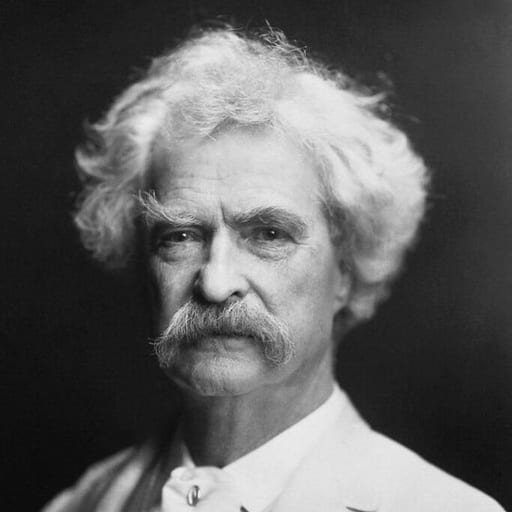
Mark Twain

마크 트웨인

American writer and humorist

1,104 records in all

  • Principles 367
  • Episodes 315
  • Quotes 422
Ask with this master's words

3 free questions a day, no sign-up.

Photo: A.F. Bradley, New York  Public domain  Original  cropped

Episodes

47 basic records of 315

Episodes are real events from public sources, summarised by us.

  • Mastering a Complex Craft

    Twain spent over two years as a cub pilot learning the intricate details of the Mississippi River. He had to memorize every landmark and shifting channel to navigate safely, eventually earning a prestigious pilot's license.

    LessonHigh-value roles require a deep, 'warm personal acquaintanceship' with the details of your industry's landscape.
  • Leveraging Heard Material

    While working as a miner, Twain heard a story at a hotel in California. He turned this anecdote into 'The Celebrated Jumping Frog of Calaveras County,' which brought him international fame.

    LessonGreat product ideas often come from observing and capturing the stories and experiences of others in your environment.

  • The Cost of Complexity

    Twain invested heavily in the Paige Compositor, a mechanical typesetter. The machine was too complex and imprecise to be commercially viable, leading to a total loss of his investment and personal bankruptcy.

    LessonOver-engineered products that prioritize complexity over reliability often lead to financial ruin.

  • Strategic Residency for Copyright

    Twain traveled to Canada to establish temporary residency, which was a legal requirement to secure British and Canadian copyrights. This move was designed to stop Toronto publishers from printing unauthorized editions that were being sold in the U.S. and depriving him of income.

    LessonTo protect your revenue, you must sometimes go to great lengths to comply with specific legal jurisdictions.

  • Breaking Party Lines

    트웨인은 평생 공화당원이었으나 1884년 공화당 후보 제임스 G. 블레인이 부패했다고 판단하여 당을 떠났어요. 그는 대신 민주당 후보 그로버 클리블랜드를 지지하며 집회에서 연설을 하기도 했어요.

    LessonTrue leadership requires choosing integrity over blind institutional loyalty.

  • 1863Brand

    Adopting the Mark Twain Name

    트웨인은 미시시피강 증기선에서 일하던 시절 안전한 수심을 뜻하는 용어에서 필명을 따왔어요. 그는 이전에 사용하던 'Josh'나 'Thomas Jefferson Snodgrass' 같은 이름들을 버리고 이 이름을 선택했어요.

    LessonA strong brand name can be rooted in practical expertise and a promise of safety or truth.

  • The Stowaway's Quick Thinking

    A young stowaway was caught and threatened with being painted blue and thrown overboard. He gave a fake name that referenced a local ghost story, making the crew laugh and softening their hostility.

    LessonIn high-pressure situations, finding a way to make the opposing party laugh can save you from immediate disaster.

  • Navigating the Driftwood Flood

    During a massive rise in the Mississippi, the river became clogged with dangerous floating logs and debris. Twain had to steer with extreme precision at night to avoid hitting sunken logs that could stun or damage the boat.

    LessonHigh-growth periods bring hidden dangers that require increased vigilance and precision.

  • The Ditch Miracle

    Landowners would sometimes illegally cut small ditches across narrow necks of land to reroute the river. This could quadruple their property value overnight while ruining neighbors by leaving them on isolated islands.

    LessonA small, strategic change in infrastructure can radically disrupt the market and destroy established value.

  • The Evolution of Memphis Trade

    Fifty-five years prior, Memphis was merely a muddy street of log houses with poor service. By Twain's visit, it had evolved into a city with five trunk lines of railway and a massive wholesale trade.

    LessonConsistent investment in transportation and industry can turn a backwater location into a dominant market player.

  • The New Orleans Ice Factory

    Twain visited a factory that produced thirty tons of ice daily using ammonia and steam machinery. The factory lowered prices so much that ice became accessible to the humble dwelling-house rather than just the rich.

    LessonIndustrial scale and technological efficiency can turn a luxury commodity into a mass-market necessity.

  • The Hartford Club Presentation

    Twain read an essay on the art of lying to the Historical and Antiquarian Club of Hartford. He offered it for a thirty-dollar prize but did not win.

    LessonEven masters face rejection when presenting unconventional or provocative ideas to established groups.

  • 1811Risk

    Shelley's expulsion and poverty

    Percy Shelley was expelled from college for writing an atheistical pamphlet and refused to compromise with his wealthy family. As a result, his father and grandfather cut off his financial support, leaving him in distress and poverty.

    LessonStanding by your creative or intellectual output can have severe financial consequences that you must be prepared to face.

  • The Biographer's False Weights

    Twain analyzed a biography of Shelley where the author claimed to be an impartial judge. However, the author used double standards, blaming Shelley's first wife for expenses while ignoring much larger debts incurred by his second partner's family.

    LessonA leader must ensure their standards are applied consistently to everyone, regardless of personal affinity.

  • The Twelve Reasons Analysis

    Twain compares six minor grievances against Harriet with six major instances of Shelley's infidelity. He demonstrates that the major reasons preceded the minor ones, proving the minor excuses were justifications after the fact.

    LessonAnalyze the timeline of events to distinguish between genuine motives and convenient excuses.

  • The Biographer's Selective Evidence

    A biographer attempted to protect Shelley's reputation by burying Harriet's side of the story in an appendix. Twain argued that this excluded evidence was more substantial than the 'pale shams' used in the main text.

    LessonIn business, ignoring inconvenient feedback or data leads to a false narrative that prevents solving the real problem.

  • 1814Wealth

    The Godwin Debt Factory

    William Godwin lived as a philosopher while running a struggling bookshop that Twain calls a debt-factory. He preached high ideals but frequently relied on others to pay off his debts while insulting those who helped him.

    LessonIntellectual authority does not guarantee business competence or personal integrity in financial dealings.

  • Harriet's Letter of Anxiety

    After Shelley stopped writing for four days while visiting Mary Godwin, Harriet wrote to his publisher in distress. The letter showed she was accustomed to frequent, affectionate contact and had no idea a permanent breach was forming.

    LessonDirect communication often reveals a much simpler and more truthful reality than complex psychological theories proposed by outsiders.

  • The Pivot to the Express Train

    Twain planned a long pedestrian trip through Europe starting from Hamburg. However, for private reasons, he changed the program at the last moment and took an express train instead.

    LessonBe prepared to change your operational plans quickly if circumstances or private needs dictate a more efficient route.

  • The Raven's Mockery

    While lost in a German forest, Twain felt mocked by a raven that croaked at him. He felt humiliated when the bird called its friends to join in what seemed like a public discussion of his foolishness.

    LessonPublic ridicule, even from an insignificant source, can be a powerful psychological blow that logic cannot fix.

You are seeing 165 basic records. Membership answers from all 1,104 of this master's records.

See membership

More masters in this field

See the whole field

Craft, arts and performance

These records are our compilation of public statements and sources. We are not affiliated with or endorsed by Mark Twain or any related company. If something should come down, tell us. Takedown request form