Hall of Masters

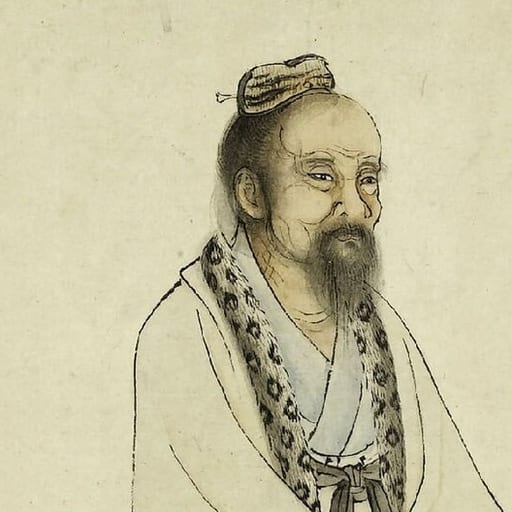
Zhuangzi (Zhuang Zhou)

장자

Philosophy and wisdom traditionsc. 369 BCE to c. 286 BCE

Chinese Daoist philosopher

362 records in all

  • Principles 139
  • Episodes 105
  • Quotes 118
Ask with this master's words

3 free questions a day, no sign-up.

Photo: Hua Zili (華祖立)  Public domain  Original  cropped

Episodes

16 basic records of 105

Episodes are real events from public sources, summarised by us.

  • The Monkey Keeper's Rations

    A monkey keeper proposed giving three chestnuts in the morning and four at night, which made the monkeys angry. He simply reversed the order to four in the morning and three at night, and they were satisfied despite the total being the same.

    LessonEffective management often requires changing the framing of a deal rather than the substance to satisfy stakeholders.

  • The Mutilated Master Wang T'ai

    Wang T'ai, a man who had lost his toes as a punishment, attracted as many disciples as Confucius despite not preaching or discussing. Confucius himself recognized Wang T'ai as a prophet who influenced others through his internal stillness rather than words.

    LessonTrue authority comes from internal character and results, not from status or polished communication.

  • Tzu Yu's Illness

    Tzu Yu became severely deformed by illness, with his back hunched and his organs displaced. Despite his physical suffering, he remained calm and viewed his body's decomposition as a natural transformation into other useful forms.

    LessonMaintaining mental equilibrium during physical or professional hardship is possible by viewing the situation as a natural transition.

  • The Yellow Emperor's Lost Pearl

    The Yellow Emperor lost his magic pearl and tried to find it using intelligence, sight, and speech, but all failed. Finally, he employed 'Nothing', a state of non-striving, and only then was the pearl recovered.

    LessonForcing a solution through sheer effort or intellect can often obscure the very thing you are trying to find.

  • The Model of Still Water

    Zhuangzi observed that still water reflects everything perfectly, from a person's beard to their eyebrows. He proposed that the mind should achieve this same level of lucidity through stillness to reflect the universe accurately.

    LessonA founder must clear their mind of noise to see the market and their business as they truly are.

  • The Three Month Retreat

    After being told by Lao Tzu that his teachings were merely 'worn-out foot-prints,' Confucius withdrew to his house for three months. He returned with a new understanding that one must be enlightened internally before trying to enlighten others.

    LessonTrue influence starts with internal mastery and self-reflection rather than external preaching.

  • The Training of Fighting Cocks

    Chi Hsing Tzu trained fighting cocks for a prince, refusing to declare them ready until they stopped reacting to other birds. Eventually, the cocks became so composed they looked like wood, causing opponents to run away without a fight.

    LessonA founder who is unshakeable by competition often wins without having to engage in a price war or direct conflict.

  • The Imposter Scholar Test

    Zhuangzi challenged Duke Ai's belief in the number of scholars in Lu by suggesting a law that punished those wearing scholarly robes without having true knowledge. After the mandate was issued, only one old man dared to wear the robes and successfully answered the Duke's difficult questions.

    LessonA leader should look past the 'uniform' of expertise to find the rare individual who actually possesses the required skill.

  • The True Artist's Attitude

    When Prince Yuan wanted a map drawn, many officials rushed to prepare their tools with great formality. One artist arrived late, showed no hurry, and went home to work bare-backed and relaxed, leading the Prince to recognize him as the only true artist.

    LessonAuthentic creativity and skill often come from those who are unburdened by performative professional etiquette.

  • Zhuangzi's Lesson on Omnipresence

    Tung Kuo Tzu asked where the Tao was, and Zhuangzi repeatedly pointed to lower and lower things like ants, weeds, and even waste. He did this to show that the ultimate principle is in everything without exception.

    LessonOpportunities and truths are not restricted to prestigious fields; they exist in every part of the market.

  • Refusing the silver

    The Heir Apparent of Chao offered Zhuangzi a thousand ounces of silver to persuade the Prince to stop his obsession with sword-play. Zhuangzi refused the money upfront, arguing that if he failed he would be executed, making the money useless, and if he succeeded, he could have anything he wanted.

    LessonDo not accept payment for a high-risk result until you have secured the leverage to deliver it.

You are seeing 55 basic records. Membership answers from all 362 of this master's records.

See membership

More masters in this field

See the whole field

Philosophy and wisdom traditions

These records are our compilation of public statements and sources. We are not affiliated with or endorsed by Zhuangzi (Zhuang Zhou) or any related company. If something should come down, tell us. Takedown request form