Hall of Masters

Mahatma Gandhi

마하트마 간디

Leader of India's nonviolent independence movement

1,081 records in all

  • Principles 326
  • Episodes 328
  • Quotes 427
Ask with this master's words

3 free questions a day, no sign-up.

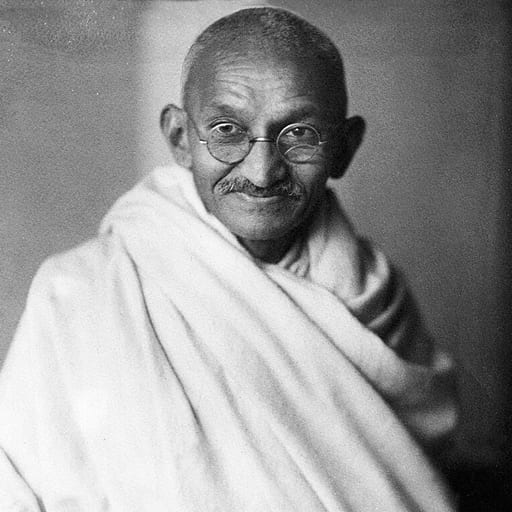
Photo: Elliott & Fry  Public domain  Original  cropped

Episodes

49 basic records of 328

Episodes are real events from public sources, summarised by us.

  • Economic Impact of Non-Cooperation

    비폭력 저항 운동을 통해 인도의 내부 세입이 약 7천만 달러 감소했고, 영국 상품 불매 운동으로 영국은 1년 만에 약 2천만 달러의 손실을 입었어요. 이로 인해 정부 기구가 크게 뒤흔들리는 성과를 거두었어요.

    LessonStrategic boycotts and non-cooperation can be powerful leverage in negotiations with dominant powers.
  • Giving Up Salt for Others

    Gandhi stopped using salt two years prior to writing because of someone else's illness, believing his example might help them. He discovered that he felt more energetic and required less water after making this change.

    LessonLeading by example can lead to unexpected personal benefits and insights that you wouldn't have discovered otherwise.

  • The Entry of Bubonic Plague

    Bubonic plague entered the land and caused millions of deaths because no sure remedy had been invented. Gandhi observed that people turned to unproven practices like inoculation out of desperation.

    LessonWhen faced with an unknown threat, avoid rushing into unproven solutions that may carry their own risks.

  • Building a Diverse Coalition

    간디는 채식주의자, 상층 카스트, 이슬람교도 등 서로 다른 이해관계를 가진 집단들의 지지를 이끌어냈어요. 그는 아힘사 원칙과 카스트 제도 지지, 그리고 특정 종교적 요구를 결합하여 대중적인 지지 기반을 확보했어요.

    LessonTo gain massive influence, a leader must appeal to the deeply ingrained values and specific interests of diverse groups simultaneously.

  • The Advocacy for the Spinning Wheel

    Witnessing the perceived evils of Western industrialism, Gandhi advocated for the universal use of the spinning wheel in India. He saw it as a way to provide work for the idle, though critics argued it could never truly supplant modern machinery.

    LessonWhen solving large-scale problems, choosing a symbolic but less efficient tool can provide immediate work but may not be a viable long-term economic substitute.

  • Redefining Independence as Self-Rule

    Gandhi argued that simply removing foreign rulers, as Italy did with Austria, does not bring true happiness if the nation merely adopts the same flawed systems. He defined 'Swaraj' as the personal experience of learning to rule oneself, which he dedicated his life to achieving.

    LessonTrue success is not just removing an external obstacle but mastering internal discipline and core values.

  • Launch of the Non-Cooperation Movement

    Gandhi advocated for a multi-stage boycott including the surrender of titles, withdrawal from government schools, and the boycott of foreign goods. This was designed as a moral movement to challenge the existing government's authority.

    LessonSystemic change requires a disciplined withdrawal of support from the existing infrastructure.

  • The Failure of Non-Violence Manifestos

    Local leaders issued a manifesto citing Gandhi's principles of non-violence to stop volunteers from carrying weapons. However, the manifesto was ignored, and one signatory even apologized for signing it at a public meeting shortly after.

    LessonTop-down ethical guidelines are ineffective if the local culture and immediate leadership are committed to a different path.

  • Submission as a Strategy

    Gandhi advised Hindus to submit to various Muslim demands, such as not insisting on the prohibition of cow slaughter and studying Hindustani instead of Hindi. He believed these concessions would foster communal harmony, but critics argued it was a total surrender of interests.

    LessonCompromising core identity or values to appease a partner rarely leads to a balanced or sustainable relationship.

  • School and College Withdrawal Campaign

    Gandhi pressured students to leave government-aided schools and colleges to join the non-cooperation movement. While many students from inefficient commercial institutions joined, those in more disciplined government schools were less likely to leave.

    LessonHigh-quality, disciplined institutions are more resilient to external disruption than those built solely for commercial purposes.

  • The One Year Swaraj Promise

    간디는 1920년 9월 캘커타에서 열린 국민회의에서 자신의 계획에 충분한 호응이 있다면 1년 안에 자치(Swaraj)를 얻을 수 있다고 선언했어요. 그는 이 대담한 약속을 통해 국가의 정책 기조를 바꾸고 사람들을 정치적 무기력증에서 깨우려 했어요.

    LessonBold promises can be a powerful tool to pivot an organization's direction and energize a passive audience.

  • Fundraising for the Movement

    간디는 자치 달성을 위해 상인들과 대중에게 자금 지원을 요청하며 틸락 자치 기금으로 1,000만 루피를 모으는 것을 목표로 삼았어요. 그는 돈을 내는 것이 직접 참여하지 못하는 사람들이 기여할 수 있는 실질적인 방법임을 강조했어요.

    LessonProviding a clear way for supporters to contribute financially is essential when scaling a mass movement.

  • The Shift in Conditions

    초기에는 학교와 법원 보이콧을 필수 조건으로 내세웠으나, 이후 간디는 자금 조달과 조직 구성으로 초점을 옮겼어요. 비판자들은 이를 약속을 지키지 못한 것에 대한 회피라고 보았지만, 결과적으로 조직의 기반을 닦는 계기가 되었어요.

    LessonLeaders often have to adapt their requirements and focus as they encounter the realities of execution.

  • Managing Expectations on Deadlines

    Gandhi initially suggested specific dates for attaining Swaraj (independence) throughout 1921. However, at the Congress in December, he stopped fixing specific dates after the previous deadlines passed without the goal being met.

    LessonSetting overly ambitious deadlines can damage credibility if they are not met; a leader must know when to pivot from fixed dates to long-term commitment.

  • Independent Relief Operations in Calicut

    During the 1921 unrest, various committees organized relief camps in Calicut to provide food and shelter. The Congress committee operated independently, distributing rice from its own resources rather than relying on centralized funds.

    LessonOperational independence allows an organization to maintain its mission even when external coordination is complex.

  • Launching Civil Disobedience in Surat

    Gandhi prepared to start a Civil Disobedience campaign in the Surat district with very severe restrictions. He insisted on moral and economic preparation to ensure the resistance did not turn into general lawlessness or chaos.

    LessonWhen leading a high-risk strategy, set clear boundaries and ensure the team is mentally prepared for the consequences.

  • 1922Risk

    The Tragedy at Chauri Chaura

    A protest in Chauri Chaura turned violent, resulting in the deaths of 21 police officers at the hands of volunteers. This event highlighted the risk that even movements intended to be peaceful can spiral into uncontrollable chaos.

    LessonLeaders must account for the risk of unintended consequences when mobilizing large groups for radical change.

  • Defining Swaraj as a Republic

    간디는 모호했던 '스와라지(자치)'의 개념을 인도 공화국 또는 인도 연방으로 명확히 정의해야 한다고 주장했어요. 이는 다수당의 횡포를 막고 각 지역의 소수 집단에게 안전장치를 제공하기 위함이었어요.

    Lesson조직의 목표가 모호하면 구성원 간에 의심이 생기므로, 비전을 구체화하여 모두가 동의할 수 있는 구조를 만들어야 해요.

  • The Ahmedabad Resolution

    At the Ahmedabad Congress, Gandhi moved a resolution to continue non-violent non-cooperation with even greater vigor. He argued that the movement had already increased the country's fearlessness and self-respect despite government repression.

    LessonFocusing on internal growth like morale and courage can be a metric of success even before the final goal is reached.

  • Negotiation with the Viceroy

    Gandhi met with the Viceroy to discuss the prosecution of movement leaders who had made seditious speeches. Following these meetings, certain leaders offered public undertakings, leading the government to withdraw their prosecutions.

    LessonDirect negotiation and offering concessions can be effective tools to protect team members from legal consequences during a conflict.

You are seeing 162 basic records. Membership answers from all 1,081 of this master's records.

See membership

More masters in this field

See the whole field

Leaders in history and crisis

These records are our compilation of public statements and sources. We are not affiliated with or endorsed by Mahatma Gandhi or any related company. If something should come down, tell us. Takedown request form