Hall of Masters

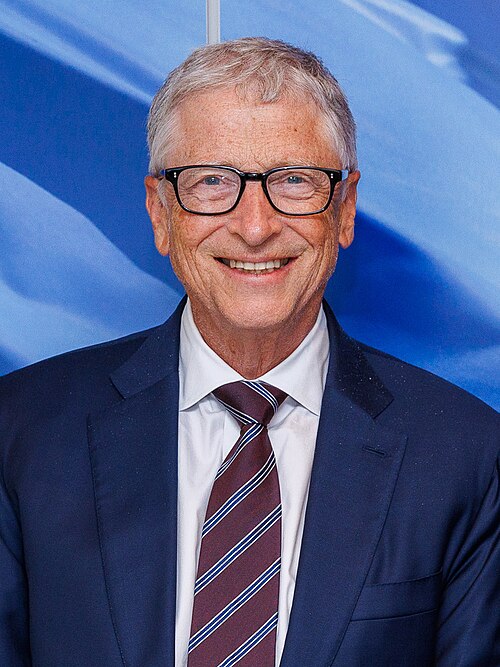
Bill Gates

빌 게이츠

Co-founder of Microsoft who led the personal computer revolution and later focused on global health and poverty through the Bill & Melinda Gates Foundation.

378 records in all

  • Principles 163
  • Episodes 165
  • Quotes 50
Ask with this master's words

3 free questions a day, no sign-up.

Photo: Bogdan Hoyaux / European Union  CC BY 4.0  Original  cropped

Episodes

25 basic records of 165

Episodes are real events from public sources, summarised by us.

  • 1975

    Developing Altair BASIC

    Bill Gates and Paul Allen saw the potential of the software market even without owning the Altair computer hardware. They took on the challenge of developing a BASIC interpreter using an emulator. Instead of waiting for perfect conditions, they quickly completed the software and secured a distribution deal.

    LessonEven if conditions are not perfect, agile execution and creative problem solving can help you seize massive opportunities.


  • 1975

    Dropping Out of Harvard

    Convinced that the microcomputer software market would explode, he stood at a major crossroads in his life. He had to choose between continuing his traditional education or becoming a pioneer in a new industry. He boldly decided to take a leave of absence from Harvard to co-found Microsoft and lead the software revolution.

    LessonRecognizing a massive paradigm shift sometimes requires the courage to step off the stable path and take bold risks.

  • Learning from Garbage Cans

    To learn how operating systems were built, Gates went to the Computer Science Center and retrieved discarded code listings from garbage cans. He studied these great programs written by others to improve his own skills.

    LessonResourcefulness and studying existing excellence are the fastest ways to master a craft.

  • 1975Sales

    Selling Before Coding

    Gates told MITS they had a working BASIC interpreter when they actually had no code or even an Altair machine. Once MITS showed interest, they worked intensely for weeks to build the emulator and interpreter for a successful demo.

    LessonConfirm customer demand with a pitch before spending months building the actual product.

  • 1976Brand

    Incorporating Microsoft

    The partnership was originally named 'Micro-Soft' to reflect the combination of microcomputers and software. They eventually dropped the hyphen and officially registered the name in New Mexico.

    LessonA clear brand name that describes the intersection of your industry and product can be very effective.

  • Breakthrough Energy Initiative

    Gates launched Breakthrough Energy at the UN Climate Change Conference to fund high-risk clean energy startups. He personally committed $2 billion to drive innovation in areas like nuclear energy and grid storage.

    LessonSolving massive problems requires taking financial risks on unproven technologies that the public sector may avoid.

  • Charity Sports Partnership

    Gates partnered with tennis star Roger Federer for exhibition matches to raise money for children in Africa. These events successfully raised millions of dollars by combining celebrity influence with a charitable cause.

    LessonCollaborating with influencers from different fields can broaden the reach and fundraising potential of a mission.

  • Nuclear Innovation with Warren Buffett

    Gates's company TerraPower partnered with PacifiCorp to announce the first sodium nuclear reactor in Wyoming. This project aimed to advance carbon-negative nuclear power and revitalize the local uranium mining industry.

    LessonStrategic partnerships with other industry leaders can accelerate the development of high-stakes infrastructure projects.

  • Opposing Software Regulation

    In the late 90s, Gates testified before the Senate to reject the need for government regulation of the software industry. He was reportedly upset when regulators suggested curbs on Microsoft's growing market power.

    LessonFounders often resist external interference to maintain the speed and autonomy of their company's growth.

  • Advocating for AI Regulation

    Gates publicly argued that the AI industry is understating risks to protect fundraising efforts. He advocated for government monitoring of models that could facilitate cyberattacks or biological misuse.

    LessonResponsible leaders must address the long-term risks of their industry, even if it complicates short-term financial goals.

  • Piracy as Unintentional Marketing

    Although Gates complained about hobbyists copying his software, this widespread piracy made Microsoft BASIC the industry standard. When National Semiconductor needed a BASIC, they chose Microsoft's because it was already the most popular due to hobbyist use.

    LessonWidespread use, even if unauthorized, can create a network effect that establishes your product as the market standard.

  • The Windows Vista Talent Drain

    Microsoft's Windows Vista project became a massive black hole that consumed the company's best engineering talent for years. As the project struggled, top executives and distinguished engineers were pulled from other innovative areas to fix it, leaving the company unable to compete in emerging markets like mobile and social. Many of these frustrated leaders eventually left for competitors like Amazon.

    LessonA failing core product can paralyze an entire organization by pulling your best people away from future growth opportunities.

  • Incubating Project Red Dog

    Microsoft started a secret project called Red Dog, which later became Azure, outside of its existing server divisions. This was done because the cloud model was completely disruptive to the existing Windows Server business and its partner ecosystem.

    LessonProtect disruptive innovations from being rejected by the company's existing successful organs.

  • The Nokia Acquisition Decision

    Steve Ballmer pushed to acquire Nokia's mobile unit for $7 billion despite opposition from the board and top leaders like Satya Nadella. The deal was finalized just ten days after Ballmer announced his retirement.

    LessonStrategic bets involving cash reserves are often viewed differently by outgoing leaders than by the board or successors.

  • Steve Ballmer's Difficult CEO Transition

    Steve Ballmer took over as CEO from Bill Gates in 2000 when Microsoft was at an all-time high valuation and facing a DOJ antitrust verdict. Despite tripling revenue over 14 years, the stock price remained flat because the initial valuation was so high.

    LessonInheriting a company at an extreme valuation peak creates an almost impossible situation for showing market cap growth.

  • 1968Career

    The Lakeside School Start

    Bill Gates enrolled at the Lakeside School in seventh grade, where he met his future co-founder Paul Allen. He used his early programming skills to write the school's class scheduling software.

    LessonEarly technical mastery in a niche environment can lead to foundational partnerships and real-world problem-solving experience.

  • Dinner Table Business Education

    Growing up in Seattle, Gates was regularly exposed to CEOs and politicians during family dinners. He spent his childhood absorbing complex business conversations and observing high-level leadership dynamics.

    LessonSurrounding yourself with experienced leaders early on builds a mindset where becoming a CEO feels like a natural progression rather than an impossibility.

  • IBM Unbundling

    Under antitrust scrutiny, IBM began selling hardware, software, and services separately instead of as a single bundle. This decision eventually allowed companies like Microsoft to exist by creating a market for independent software.

    LessonRegulatory shifts in dominant monopolies can create the structural gaps necessary for new startups to thrive.

  • The realization of Moore's Law

    Paul Allen convinced Bill Gates that semiconductor improvements would be exponential. Gates realized this meant computing power would become so cheap it could be treated as free, forming the vision for Microsoft.

    LessonUnderstanding the long-term trajectory of costs can reveal business models that seem impossible to others.

  • The Altair 8800 moment

    After seeing the Altair 8800 on a magazine cover, Paul Allen and Bill Gates realized the microcomputer revolution had officially started. They felt they were already late and decided they had to act immediately to build software for it.

    LessonWhen the market you've been waiting for finally arrives, you must move with extreme urgency to capture the lead.

You are seeing 59 basic records. Membership answers from all 378 of this master's records.

See membership

More masters in this field

See the whole field

Founders and company builders

These records are our compilation of public statements and sources. We are not affiliated with or endorsed by Bill Gates or any related company. If something should come down, tell us. Takedown request form