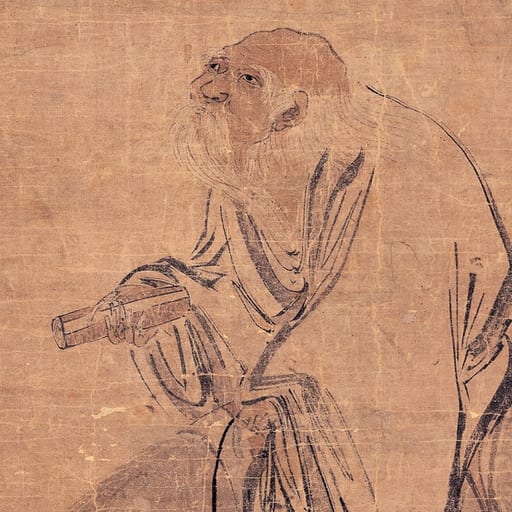
Hall of Masters

Lao Tzu (Laozi)

노자

Philosophy and wisdom traditionsc. 6th century BCE (traditional) to c. 5th century BCE (traditional)

Ancient Chinese sage, traditional author of the Tao Te Ching

179 records in all

  • Principles 52
  • Episodes 72
  • Quotes 55
Ask with this master's words

3 free questions a day, no sign-up.

Photo: Zhang Lu  Public domain  Original  cropped

Episodes

11 basic records of 72

Episodes are real events from public sources, summarised by us.

  • Leaving the Bureaucracy

    Lao Tzu served as an official for the Zhou Dynasty during the late Spring and Autumn period. However, he eventually decided to leave his position and abandon his official career.

    LessonWhen a system no longer aligns with your principles, have the courage to walk away from a stable position.
  • The Definition of a Godlike Leader

    Lao Tzu defined the ideal ruler as a 'godlike man' who is both holy and supremely wise. He believed such a leader does not use violence to gain honor but instead remains humble and yielding to triumph over obstacles.

    LessonTrue authority comes from wisdom and humility, not from aggressive power plays.

  • Critique of Excessive Taxation

    노자는 통치자들이 자신의 사치스러운 욕망을 채우기 위해 백성들에게 과도한 세금을 부과하여 그들을 가난하게 만드는 상황을 목격했어요. 그는 통치자가 화려한 옷과 사치스러운 음식을 즐기면서 창고를 비워두는 것은 약탈과 다름없다고 비판했어요.

    LessonExcessive extraction of resources from a team or customers to fund founder luxury leads to long-term failure.

  • The Definition of Wu-Wei

    노자는 무위를 아무것도 하지 않는 것이 아니라, 소란을 피우지 않고 조용히 자신의 일을 완수하는 것으로 정의했어요. 그는 자연이 소리 없이 끊임없이 일하는 것처럼 인간도 과시 없이 행동해야 한다고 믿었어요.

    LessonTrue productivity comes from steady, quiet work rather than performative busyness or seeking constant attention.

  • The Principle of Non-Litigation

    Lao Tzu emphasized maintaining peace even after disputes were settled. He advised that a virtuous person keeps their side of an agreement but does not use the law to force the other party to fulfill theirs.

    LessonFocus on building trust and voluntary cooperation rather than relying on legal force to manage business relationships.

  • Posthumous Glorification of Lao Tzu

    Long after his life, Lao Tzu was promoted to the status of a god by various Chinese dynasties. Emperors conferred sublime titles upon him, and his name was glorified across Tibet and Japan, showing the immense reach of his influence.

    LessonA powerful idea can gain momentum and authority far beyond its creator's lifetime, eventually becoming a foundational cultural pillar.

  • Official Status and Competition

    During the Tang dynasty, Taoism gained official status as emperors claimed Laozi as a relative. However, it faced intense competition from Buddhism and Confucianism for patronage and followers.

    LessonOfficial recognition brings prestige but also increases the pressure to compete with established rivals for market share.

  • Laozi Meets Confucius

    The Zhuangzi records seven different versions of meetings between Laozi and Confucius. In these encounters, Laozi's teachings are portrayed as confusing to the famous philosopher.

    LessonDeep, unconventional wisdom may initially confuse those who are strictly bound by traditional social rules.

  • The Creation of the Huahujing

    During the medieval period, Taoists produced the Huahujing to frame Buddhism as a derivative of Laozi's teachings. The text claimed that Laozi traveled west to convert 'barbarians,' effectively positioning their own tradition as the source of a competing ideology.

    LessonNarrative positioning can be used to claim authority and define the relationship with competitors.

  • The Emergence of Philosophical Taoism

    Scholars during the Han dynasty coined the term Daojia to group classic texts like the Daodejing and Zhuangzi. This categorization helped define a specific school of thought centered on the teachings of Lao Tzu.

    LessonDefining and categorizing your core principles helps create a clear brand identity and intellectual foundation for your business.

You are seeing 29 basic records. Membership answers from all 179 of this master's records.

See membership

More masters in this field

See the whole field

Philosophy and wisdom traditions

These records are our compilation of public statements and sources. We are not affiliated with or endorsed by Lao Tzu (Laozi) or any related company. If something should come down, tell us. Takedown request form