Hall of Masters

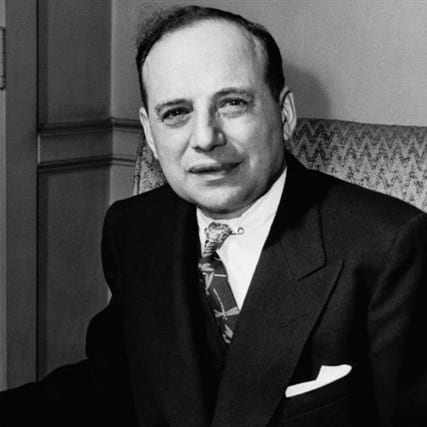
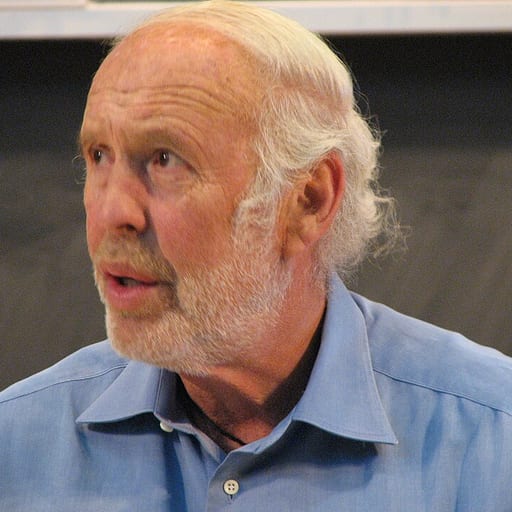
Jim O'Shaughnessy

짐 오쇼너시

Quantitative investor, author of What Works on Wall Street, founder of O'Shaughnessy Ventures

2,844 records in all

  • Principles 974
  • Episodes 563
  • Quotes 1,307
Ask with this master's words

3 free questions a day, no sign-up.

Photo: Matthew Ryan  CC BY-SA 2.0  Original  cropped

Episodes

84 basic records of 563

Episodes are real events from public sources, summarised by us.

  • Hitting Rock Bottom

    After losing a fortune of over $5 million, Jason Buck had to move in with his sister and later his mother to survive. He spent years living cheaply and handing out food samples on street corners while his sister finished medical school.

    LessonResilience often requires stripping away ego and doing whatever work is necessary to rebuild after a total loss.

  • The Babylonian Myth Rewrite

    Babylonia wanted to rule Mesopotamia but had a minor god named Marduk. The priests rewrote the myth to make Marduk the supreme deity who defeated monsters and absorbed 50 other gods, successfully gaining public support.

    LessonA powerful, rewritten narrative can transform a weak brand into a dominant market leader.

  • Rejecting the Family Business

    Jim's extended family was very successful in the oil business, and his uncle repeatedly tried to recruit him. Jim realized he had zero interest in the industry and chose to pursue his own path in finance instead.

    LessonDo not feel obligated to join a successful family business if it does not align with your personal interests and personality.

  • Infinite Films Cheese Documentary

    Jim's company, Infinite Films, financed a show about cheese featuring a charismatic host. During filming, the team made a technical error by failing to mic themselves properly while testing the cheese on camera.

    LessonEven with great talent and funding, small execution errors in production can undermine the final product.

  • Standardizing Fellowships

    Jim decided to rename all grants to 'fellowships' and remove fixed pricing after his team argued that small grants didn't move the needle. This change was also intended to give all recipients equal prestige and status.

    LessonUniform branding of roles or awards can create a sense of equality that fosters better collaboration.

  • 1990Life

    Jim's isolation in Japan

    While visiting Japan in the late 1990s, Jim found himself unable to communicate or even make a simple phone call. He felt like a complete outsider because the environment was entirely in Japanese with no English support.

    LessonLanguage and cultural barriers can make even the most capable person feel powerless in a new market.

  • The Rise of Progress Ireland

    Jim interviews Luke Fehily about Progress Ireland, a think tank created to fill a gap in policy ideation. The organization focuses on housing, infrastructure, and innovation to move Ireland to its next stage of growth.

    LessonIdentify a specific gap in your industry's ecosystem and build a specialized entity to address it.

  • The Offensive Lineman Strategy

    Progress Ireland acts as an external module to support talented civil servants who are restricted by political pressure or risk-averse environments. They perform the research and clear blockages that internal actors cannot handle themselves.

    LessonPosition your business as a support system that clears obstacles for key players within the systems you want to influence.

  • Regulatory Shutdown of a Portfolio Company

    Jim's firm invested in a European company attempting to build a Y Combinator-style accelerator. The company was forced to shut down operations for several months specifically due to restrictive EU regulations.

    LessonRegulatory environments can be a primary risk factor that halts business operations regardless of the product's merit.

  • Spinning Out from Bear Stearns

    After working within Bear Stearns for several years, he negotiated an agreement to spin his team out. This led to the formation of O'Shaughnessy Asset Management as an independent entity.

    LessonNegotiating the independence of a successful internal unit can be a path to creating a high-value independent company.

  • 1985Life

    The First Letter to His Children

    Jim started a book of letters for his children on April 22, 1985, despite being perplexed about what to write. He wanted to create something over the years that would serve as a guide for their lives.

    LessonStarting a long-term project of sharing wisdom is valuable even if the exact direction isn't clear at the beginning.

  • 2012Risk

    The Cost of Closed-Mindedness

    Jim heard about Bitcoin very early in 2012 but dismissed it because he thought he was too smart to listen. It took him several years to finally start learning about it, a delay he estimates cost him hundreds of millions of dollars.

    LessonBeing too certain of your own intelligence can lead to expensive missed opportunities; stay open to organic, word-of-mouth ideas.

  • 1990Career

    Writing Invest Like the Best

    Jim wrote a book about using computers to unlock secrets of top money managers. He realized that while humans couldn't read every quarterly report, computers could do it easily.

    LessonLook for competitive advantages in processing information that others find too tedious or impossible to handle manually.

  • Exploring Epistemological Challenges

    Jim engaged in a deep discussion about how language and mathematical concepts like zero shape human perception. He questioned whether native language influences how well people understand complex subjects like math.

    LessonFounders should examine how the 'language' or frameworks they use might be limiting or enabling their strategic thinking.

  • 2025Life

    Family Gathering Reflection

    Jim recently hosted a large family gathering where his daughter from California expressed how meaningful it was for the cousins to play together. This reinforced his belief that these simple moments are what people value most at the end of their lives.

    LessonFocus on creating shared experiences with loved ones rather than just chasing professional milestones.

  • 1995Life

    Wife's Career Pivot

    After having their third child in 1995, Jim and his wife realized that her long working hours were negatively affecting her overall well-being. They decided she would stop working to focus on their children, prioritizing family time over a second income.

    LessonTrading financial gain for time with family can lead to greater happiness for the entire household.

  • The Bonfire of the Vanities

    During the Renaissance in Florence, a priest persuaded residents to burn their art and luxuries by framing them as 'vanities' that would prevent them from entering heaven. He successfully used the fear of spiritual consequences to destroy the cultural progress made under the Medici.

    LessonFear of negative consequences is one of the most persuasive tools for changing human behavior, even against their own interests.

  • The shift in media consumption

    Jim observed TV news transform from neutral 30-minute reports into 24-hour propaganda cycles designed to sell fear. He realized this constant noise acts as a silent assassin to making good choices.

    LessonConstant exposure to fear-based media degrades the quality of your business and life decisions.

  • The Tragedy of Nikocado Avocado

    Nicholas Perry started a YouTube channel for mukbang videos and became trapped by his audience's demands. He gained extreme weight and sacrificed his health just to satisfy the feedback loop of his 3.5 million subscribers.

    LessonFounders and creators must be careful not to let their audience's expectations distort their original mission or personal well-being.

  • Analyzing the Container Analogy

    Jim discussed how the shipping container acted as a 'dumb' technology that rewired the global economy by standardizing cargo. This standardization allowed different modes of transport to coordinate, leading to just-in-time manufacturing and globalized supply chains.

    LessonA simple standard can transform an entire industry by enabling seamless coordination between fragmented players.

You are seeing 426 basic records. Membership answers from all 2,844 of this master's records.

See membership

More masters in this field

See the whole field

Investing and capital allocation

These records are our compilation of public statements and sources. We are not affiliated with or endorsed by Jim O'Shaughnessy or any related company. If something should come down, tell us. Takedown request form