Hall of Masters

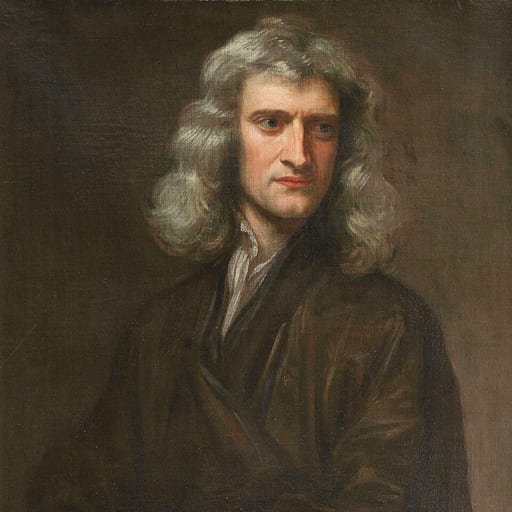
Isaac Newton

아이작 뉴턴

Physicist and mathematician; laws of motion and gravitation

877 records in all

  • Principles 319
  • Episodes 292
  • Quotes 266
Ask with this master's words

3 free questions a day, no sign-up.

Photo: Godfrey Kneller  Public domain  Original  cropped

Episodes

44 basic records of 292

Episodes are real events from public sources, summarised by us.

  • The Delayed Publication of Opticks

    Newton wrote parts of his discourse on light in 1675 but delayed printing for decades to avoid public disputes. He only published it in 1704 after his friends persistently urged him to do so.

    LessonExternal pressure from trusted peers can be the necessary catalyst to finally release long-held work to the market.
  • Iterative Improvement of the Second Edition

    In the second edition of Opticks, Newton removed irrelevant mathematical tracts and added new questions about gravity. He chose to frame his thoughts on gravity as questions because he lacked sufficient experimental evidence to state them as facts.

    LessonWhen certain of a phenomenon but uncertain of its cause, framing it as a question maintains credibility while inviting collaboration.

  • The Book Focus Test

    Newton placed an open book in refracted sunlight and used a lens to project its image onto paper. He discovered that the blue light focused at a different distance than the red light, requiring the paper to be moved by over two inches.

    LessonPrecision requires adjusting your position based on the specific 'color' or nature of the information you are processing.

  • The Color Mixing Experiment

    Newton calculated the resulting color of a mixture by assigning proportions to different primary colors and finding their common center of gravity. He predicted that a specific mix would result in an orange verging toward red and verified this through physical experiments with lenses.

    LessonTesting a theoretical model against sensory evidence is the best way to prove its reliability for real-world application.

  • The Soap Bubble Experiment

    Newton meticulously observed the changing colors of soap bubbles as they thinned and eventually broke. He recorded the specific sequences of colors and how they shifted based on the angle of his eye.

    LessonDetailed observation of a fleeting process can reveal the underlying mathematical laws governing it.

  • Mapping Colors to Music

    Newton sought a systematic way to define the boundaries of colors in his observations. He applied the mathematical proportions of a musical chord to represent the intervals and extent of different colors.

    LessonBorrowing frameworks from one discipline can provide a clear structure for solving problems in another.

  • Testing Chemical Color Changes

    Newton experimented with mixing different liquors to see how they changed color. He reasoned that salts in the liquids caused particles to swell, shrink, or cluster, thereby altering their optical properties.

    LessonUnderstand that small internal changes in a system can lead to dramatic visible transformations.

  • Testing Single Color Rings

    To understand how white light formed rings, Newton covered a mirror with black paper and let only one color of the spectrum through at a time. He discovered that each color produced rings of different sizes, with red being the largest and violet the smallest.

    LessonBreaking a complex product or problem down into its individual 'colors' reveals the unique properties of each component.

  • The Thickness Experiment

    Newton measured a glass plate and calculated the expected diameters of light rings based on its thickness. He then compared these calculations to his actual measurements and found they matched perfectly.

    LessonA product or theory is only as good as its ability to produce predictable, repeatable results in the real world.

  • The Hair Shadow Experiment

    Newton used a pinhole to let a beam of light into a dark room and measured the shadow of a human hair. He discovered the shadow was significantly broader than the hair itself, proving that light rays bend when passing near an object.

    LessonSmall, controlled experiments can reveal fundamental truths that are hidden in larger, noisier environments.

  • Measuring the Invisible

    To measure extremely thin shadows, Newton projected them obliquely onto a scale to make them appear twelve times broader. He then divided his measurements by twelve to achieve a level of precision impossible with direct measurement.

    LessonWhen a problem is too small to analyze, find a way to amplify it or change the angle of observation to make it measurable.

  • The Plague Years Breakthrough

    During the plague years of 1665 and 1666, Newton was forced into isolation. In this period, he developed the method of fluxions, the theory of colors, and his initial thoughts on gravity.

    LessonExternal disruptions and forced isolation can become the most productive periods for deep work and innovation.

  • 1728Sales

    The Subscription Model for Scientific Works

    Isaac Newton's philosophy was popularized through a book funded by a diverse list of subscribers, including dukes, merchants, and academics. This list acted as both a source of capital and a marketing tool to show widespread intellectual support.

    LessonPre-selling to a targeted audience can validate your idea and provide the necessary cash flow to launch.

  • Cross-Disciplinary Endorsement

    Newton's ideas were not just for scientists; they were backed by surgeons, booksellers, and legal experts like Thomas Fairfax. This broad endorsement helped transition his technical theories into mainstream intellectual thought.

    LessonTo make a specialized product successful, seek endorsements from leaders in adjacent industries to build wider trust.

  • Attracting a Diverse Professional Audience

    The publication of Newton's philosophy attracted subscribers from various fields, including doctors, merchants, and legal experts like Robert Raymond. This demonstrated the broad market appeal of rigorous intellectual work.

    LessonHigh-quality products can transcend a single niche and attract leaders from multiple industries.

You are seeing 132 basic records. Membership answers from all 877 of this master's records.

See membership

More masters in this field

See the whole field

Science and first-principles thinking

These records are our compilation of public statements and sources. We are not affiliated with or endorsed by Isaac Newton or any related company. If something should come down, tell us. Takedown request form