
Hall of Masters

Chris Dixon

크리스 딕슨

General partner at Andreessen Horowitz; founder turned investor

1,416 records in all

  • Principles 579
  • Episodes 284
  • Quotes 553
Ask with this master's words

3 free questions a day, no sign-up.

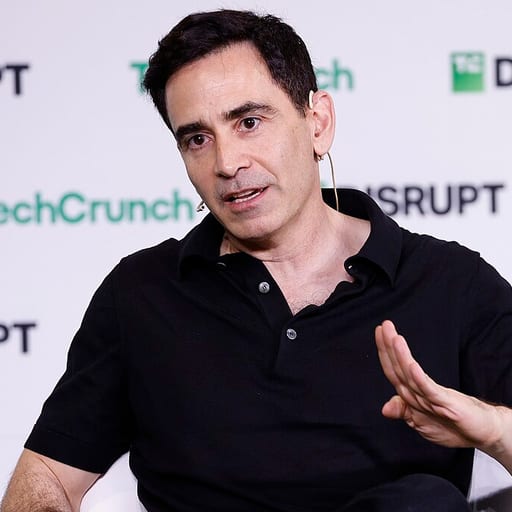
Photo: TechCrunch  CC BY 2.0  Original  cropped

Episodes

43 basic records of 284

Episodes are real events from public sources, summarised by us.

  • 2005Hiring

    The SiteAdvisor Breakthrough

    After several fruitless trips to MIT, a talented designer named Hugo Liu re-approached them because he liked their idea. This led to hiring Hugo, David Gatenby, and Matt Gattis, who later followed Dixon to his next company, Hunch.

    LessonOne successful hire from a persistent outreach effort can create a long-term talent pipeline for future ventures.

  • The Success of Nest

    Nest chose to build its own hardware and software rather than licensing its technology to established players like Honeywell. This allowed them to achieve a deep, Apple-like integration that incumbents couldn't match.

    LessonDeep integration between hardware and software is often only possible when you control the entire product.

  • 1992Career

    Peter Thiel's Clerkship Rejection

    Peter Thiel was a finalist for a Supreme Court clerkship, a top-tier credential he felt would set him for life. He did not get the position, which at the time felt like a failure.

    LessonMissing out on a prestigious credential can be a blessing that frees you to build something much larger, like PayPal.

  • iOS App Store Saturation

    The iOS App Store reached over 500,000 apps, causing discovery to be dominated by the Top 25 lists. This created a 'rich get richer' environment where new apps struggled to get noticed without gaming the system.

    LessonHigh saturation on a platform makes meritocratic discovery nearly impossible for new entrants.

  • Foursquare's Gamified Location Tracking

    Foursquare used check-ins to collect location data from users. By using social and game-like incentives, they turned a privacy-sensitive action into a voluntary activity.

    LessonGamification can be a powerful tool to encourage users to share data that would otherwise remain offline.

  • The Anti-Dilution Trade-off

    A company Dixon knew had to choose between a higher valuation with full ratchet anti-dilution or a lower valuation with weighted average anti-dilution. Dixon argued that only the business owners could assess the likelihood of a future down round to make the right choice.

    LessonFounders must understand the math behind legal terms to make strategic financing decisions.

  • Abandoning Google Reader for Twitter

    Dixon had used Google Reader religiously since its launch but decided to quit because Twitter became a more efficient way to discover content. He found that following people who retweeted interesting links led to more relevant long-form reading than RSS feeds.

    LessonA product wins when it provides a more efficient discovery mechanism, even if it replaces a long-standing habit.

  • The Logic of Tech Acquisitions

    Dixon analyzed why large companies spend millions on startups by using a hypothetical $1B revenue company. He showed that a 10% revenue boost could justify a $500M market cap increase, making a $100M acquisition rational even if building costs only $50M.

    LessonAcquisitions are often driven by the buyer's need to eliminate the risk of execution failure and time delays.

  • 2002Career

    The Season of Rejection

    Dixon applied to hundreds of jobs across VCs, startups, and big tech companies but was rejected by every single one. He had a non-traditional background and the economy was in a downturn, making it difficult to break into the industry.

    LessonA period of constant rejection can be the most useful experience for developing the resilience needed for a startup career.

  • 2012Team

    Observing the a16z Operation

    Dixon visited the firm and found that out of 60 people, only six were doing traditional investing. The rest were specialized staff helping startups with recruiting, marketing, and research.

    LessonA company's headcount should reflect its core value proposition to its customers.

  • The Rise of Uber and Square

    Dixon observed that companies like Uber and Square were using mobile apps primarily to enable offline services like car rides and physical payments. These businesses used the smartphone as a tool to improve real-world analytics and convenience.

    LessonThe most valuable apps often serve as a bridge to better offline experiences rather than just being a screen to look at.

  • The Oyster vs TripAdvisor Comparison

    Dixon observed that a newer, cleaner site called Oyster ranked much lower than an ad-riddled TripAdvisor page for lucrative hotel searches. This happened because Google's algorithm rewarded the older site's longevity and link profile despite the lower quality experience.

    LessonQuality content alone is often insufficient to outrank established incumbents who have a massive head start in link building.

  • The Failure of Turntable.fm

    Turntable.fm attempted to innovate in the music space but was crushed by the high costs of legal fees and royalties. The founder noted that a quarter of their cash went to lawyers instead of product development.

    LessonAvoid industries where litigation and restrictive licensing stifle experimentation and drain your capital.

  • Investing in Stack Exchange

    Chris Dixon led a $40M investment round for Stack Exchange through A16z. He had previously been a personal investor in the company since its initial funding and admired the CEO's vision.

    LessonBacking visionary entrepreneurs repeatedly can lead to significant opportunities as their companies reach escape velocity.

  • Hunch vs Answers Sites

    Hunch was frequently compared to Yahoo Answers, even though it functioned more like a collaborative decision-tree builder. Dixon had to fight this 'pigeonholing' to show that Hunch was about structured decision-making, not just simple Q&A.

    LessonBe prepared for the press to compare your innovative product to inferior, unrelated incumbents.

  • The Rise of Mobile B2B

    Dixon observed that employees bringing personal devices to work created a massive shift in business software. This led to new opportunities for mobile-friendly B2B tools and software for workers who previously relied on paper.

    LessonConsumer behavior shifting into the workplace creates new gaps for specialized B2B software.

  • Building SiteAdvisor's safety ratings

    Dixon cofounded SiteAdvisor to rate the safety of millions of websites, where errors could harm users or site owners. Since automation was only 80-90% accurate, they built confidence-level estimators and a workflow for staff and users to manually fix inaccuracies.

    LessonWhen accuracy is critical, build a human-in-the-loop system to handle the edge cases that algorithms miss.

  • The Rise of Content Farms

    Dixon observed that companies like Demand Media were creating low-quality, keyword-stuffed content to game Google's search results. This led to a spammy internet experience where robotic content factories dominated search rankings.

    LessonRelying solely on keyword algorithms invites low-quality competition that can degrade the user experience.

You are seeing 213 basic records. Membership answers from all 1,416 of this master's records.

See membership

More masters in this field

See the whole field

Investing and capital allocation

These records are our compilation of public statements and sources. We are not affiliated with or endorsed by Chris Dixon or any related company. If something should come down, tell us. Takedown request form