1917Strategy
Lenin's Strategic Adoption
레닌은 클라우제비츠를 위대한 군사 작가로 존경하며 그의 사상을 소련 군사 사상의 기초로 삼았어요. 특히 전쟁은 정치의 도구일 뿐이며 군사적 관점은 정치에 종속되어야 한다는 원칙을 철저히 따랐어요.
Lesson기술이나 전술적인 수단은 항상 비즈니스의 상위 목적과 비전에 부합해야 해요.
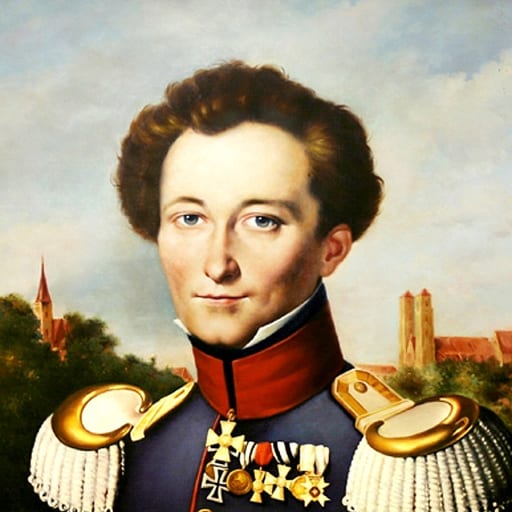
카를 폰 클라우제비츠
Prussian general, author of On War
597 records in all
3 free questions a day, no sign-up.
Photo: Wilhelm Wach Public domain Original cropped
20 basic records of 133
Episodes are real events from public sources, summarised by us.
레닌은 클라우제비츠를 위대한 군사 작가로 존경하며 그의 사상을 소련 군사 사상의 기초로 삼았어요. 특히 전쟁은 정치의 도구일 뿐이며 군사적 관점은 정치에 종속되어야 한다는 원칙을 철저히 따랐어요.
Lesson기술이나 전술적인 수단은 항상 비즈니스의 상위 목적과 비전에 부합해야 해요.
나폴레옹 보나파르트가 이끄는 프랑스군은 국가 전체의 힘을 기반으로 한 새로운 군사력을 구축했어요. 이들은 유럽 전역을 행진하며 구식 군대들을 압도적인 차이로 격파했어요.
LessonOld methods cannot survive when a competitor leverages the full energy and resources of their entire organization.
그는 전쟁을 거대한 규모의 결투로 정의하며, 두 레슬러가 서로를 쓰러뜨리려는 모습에 비유했어요. 물리적 힘을 사용하여 상대방을 저항 불능 상태로 만드는 것이 핵심이라고 설명했어요.
Lesson경쟁 상황에서는 상대의 의지를 꺾고 우리 쪽으로 끌어오기 위해 핵심적인 역량을 집중해야 해요.
클라우제비츠는 전쟁의 이론은 이해하기 쉽지만 실제 상황에서 이를 실행하는 것은 매우 어렵다고 강조했어요. 많은 관찰자들이 실제 현장의 마찰과 어려움을 이해하지 못한 채 리더의 실행 실패를 비난하곤 해요.
LessonUnderstanding a strategy is simple, but the true challenge lies in the grit required to execute it amidst real-world friction.
He advocated for using as few resources as possible during the preparatory stages of a conflict by leveraging the environment. This 'economy of force' ensures that the majority of the strength is saved for the decisive act.
LessonDon't burn all your capital or energy on the setup; save your biggest moves for when they will have the most impact.
나폴레옹의 원수들인 맥도날드, 우디노, 네는 1813년 겨울에 각각 대패를 당했어요. 이들은 전력을 너무 넓게 분산시킨 탓에 나폴레옹의 드레스덴 승리 효과를 상쇄시키고 결국 몰락의 길을 걸었어요.
LessonOver-extending your resources to cover too much ground can lead to a total collapse of your previous gains.
Clausewitz developed his theories by closely observing war and conversing with experienced leaders like Scharnhorst and Gneisenau. These interactions allowed him to synthesize years of practical experience into clear principles.
LessonDeep reflection combined with access to experienced mentors is essential for turning raw data into actionable strategy.
Clausewitz died before finishing On War. His wife, Marie von Brühl, organized his unfinished manuscripts and published the completed version in 1832.
LessonThe legacy of your work often depends on having partners who understand and value your vision.
After years of intense experience in war, Clausewitz began collecting his reflections into short, disconnected essays while stationed at Coblentz. He initially lacked a formal plan, focusing instead on capturing precise results of his thoughts.
LessonValuable insights often start as raw, disconnected observations before they are refined into a strategy.
Clausewitz observed that nations cannot bring all their strength, armies, geography, and allies, into a single moment of conflict. This physical limitation prevents war from reaching its theoretical extreme of total destruction instantly.
LessonA founder cannot spend all their capital, talent, and brand equity in a single day; growth is naturally phased.
Clausewitz analyzed how war was often viewed as a separate explosion of force independent of its origins. He corrected this by defining it as a continuous political act subject to a guiding intelligence.
LessonEvery tactical move in business must serve your long-term strategic vision rather than becoming an end in itself.
Clausewitz observed that in real conflicts, states of unequal power often fight despite theoretical absurdity. He realized that real-world outcomes are determined by probability and the 'price' of success rather than pure military logic.
LessonFounders should base decisions on market probabilities and resource costs rather than perfect theoretical models.
Clausewitz observed that many officers who were decisive in lower ranks lost their nerve when promoted. The increased weight of responsibility and new complexities caused their understanding to lose its force.
LessonSuccess in a small role doesn't guarantee success in a larger one unless you can manage the increased pressure of responsibility.
Clausewitz notes that Charles XII is not considered a great genius despite his military skill. This is because he failed to make his military power serve a higher philosophical or political purpose.
LessonTechnical skill and raw power are useless if they are not directed toward a clear, high-level strategic goal.
Clausewitz observes that in early military history, the 'Art of War' was mostly about material preparation. Siege warfare was the first area where intellectual guidance began to direct material forces through complex systems like trenches and batteries.
LessonTrue strategy begins when the mind starts directing material resources toward a specific, calculated outcome.
Theorists tried to reduce the complexity of war to simple geometric angles and base lengths to find certain results. This led to useless conclusions that ignored the reality of human spirit and unpredictable friction.
LessonOver-simplifying business metrics into pure math can lead to decisions that are logically sound but practically useless.
In 1814, the Allies captured Paris, which caused Napoleon's power to collapse. This was effective because it made further resistance by the French forces impossible, leading directly to peace.
LessonIdentify and strike the specific point that makes your competitor's continued resistance impossible.
Clausewitz observed the Austrian Staff's reliance on abstract theories during the campaigns of 1814. He argued their approach failed because it treated geographical points as isolated goals rather than parts of a whole series of events.
LessonFocusing on vanity metrics or isolated milestones without considering the long-term chain of events leads to strategic failure.
Napoleon concentrated his massive army on a single road during the invasion of Russia to ensure he was as strong as possible at the point of decision. This caused extreme privation and lack of supplies because so many men were in one spot.
LessonEven a sound principle like concentration can cause logistical failure if you don't expand your operational breadth to support the scale.
Frederick the Great initially captured the Russian position and seventy artillery pieces. However, because the battle continued to a final conclusion, he lost everything by the end of the day.
LessonA partial success is only temporary until the final decision is reached; don't celebrate too early.
You are seeing 90 basic records. Membership answers from all 597 of this master's records.
See membershipStrategy and mental models
These records are our compilation of public statements and sources. We are not affiliated with or endorsed by Carl von Clausewitz or any related company. If something should come down, tell us. Takedown request form