
Rob Walling
롭 월링
Founder of Drip, TinySeed and MicroConf; host of Startups for the Rest of Us
4,700 records in all
- Principles 1,000
- Episodes 700
- Quotes 3,000
3 free questions a day, no sign-up.
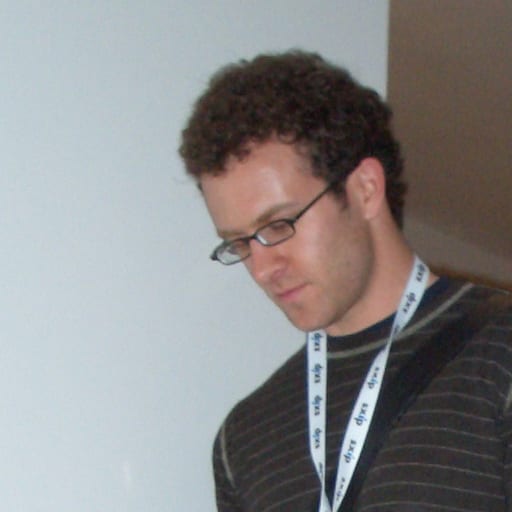
Photo: 49945carlo CC BY-SA 4.0 Original cropped
Quotes
450 basic records of 3,000
Quotes are word for word from the source.
Directing customer attention
We're talking a little bit about distribution here, and as you drive traffic and generate interest, that attention has to land somewhere.
Our noteRob emphasizes that generating interest is only half the battle; you need a place for that attention to land.
Internal AI automation
Throughout TinySeed and MicroConf, all of our team members have Claude and ChatGPT accounts and we are using a lot of it internally to automate a ton of stuff
Our noteRob shares how his own organizations utilize AI tools to improve operational efficiency.
B2B vs B2C
B2B tends to have a smaller market size, a higher cost of customer acquisition, and a higher product price than B2C.
Our noteRob summarizes the fundamental economic differences between B2B and B2C business models.
Doing hard things
It's nice to be able to do something. And that's where you're willing to do something hard and invest time, attention, and energy and do something that is mentally and physically and psychologically challenging, but it's worth it
Our noteRob discusses the value of pursuing challenging projects that align with one's life mission.
Analytical vs intuitive
I think about it as a spreadsheet. You think about it as an intuition or there's a lot of heart and mind going into it. I think about it as an escape room, solving a puzzle.
Our noteRob compares his analytical approach to business exits with his wife's psychological approach.
Value Based Pricing
No, really figure out how to maximize this and charge based on the value that you or your product provides.
Our noteRob emphasizes charging based on value rather than just what you think you are worth.
The value of complements
Whatever product you have, if your complement is free then you become very valuable. Or you want your complement to be commoditized and as low priced as possible.
Our noteRob explains the strategic advantage of having cheap or free complementary products.
Hiring technical debt
I couldn't find developers to do classic ASP; so I wound up doing all the changes. You don't have time and so stuff that needed to get fixed wasn't getting fixed because it would sit in my queue
Our noteRob discusses the difficulty of maintaining a product built on an outdated technology stack.
Outsourcing complex tasks
As soon as it gets complicated that's the kind of thing that I would see outsourcing.
Our noteRob identifies complexity as the primary trigger for deciding to outsource a task to an assistant.
Product vs Consulting Revenue
it's a multi year time frame to hit some that brings in as much as say a consulting firm even if you're just a one person consultant could bring it on day one.
Our noteRob compares the speed of revenue generation between product companies and consulting.
Customer Retention Risk
as soon as you lose someone, you don't have a chance of explaining something twice. As soon as you lose someone, it's just so easy for them to wander off and try a competitor.
Our noteRob emphasizes the importance of clear communication in low-touch product models.
Founder stress factors
When you're running your own company, you're waiting to get just swatted by your competition, or to run out of funding, or to run out of money, or whatever, and that's gone.
Our noteRob describes the constant pressure of running an independent startup.
Stair stepping growth
But if you get there and you decide you get bored, this is the path. Look at what Patrick's done. Look at what I've done. Look at how other folks have stair-stepped their way up.
Our noteRob encourages founders to look at the stair-step approach if they want to grow beyond their first success.
Defining kill criteria
Knowing when to quit and kill criteria involves a date and some type of number usually or some type of milestone that if you haven't hit this by that date, then it's done
Our noteRob explains the concept of kill criteria for founders struggling with the decision to quit.
Roadblocks vs speedbumps
Those are the speed bumps that you encounter. You can let 'em be roadblocks or you can just let 'em be Speed bumps, keep driving, pivot.
Our noteRob encourages a founder to view rejection and ghosting as minor setbacks rather than total failures.
Pricing Version Control
Another thing to think about is versioning your pricing and/or grandfathering. These things are related. Typically, if you're gonna build your own system, you may change pricing overtime. You may even change what you bill on.
Our noteRob discusses the necessity of managing different pricing tiers and grandfathering existing customers when updating a billing system.
Leveraging Price Increases
It's also cool, you can use this as a way to get a bump in trials, or bump in new customers, is to be public that prices are going up in two or three weeks.
Our noteRob suggests using an upcoming price increase as a marketing tactic to drive conversions.
IP assignment agreements
Do you have an IP assignment agreement from every contractor, every employee, everyone who has ever touched basically anything in your code? That can be a big deal.
Our noteRob emphasizes the importance of having legal ownership of all code written by contributors.
Self awareness in leadership
You can kind of be natural at something and if it works good, but you may not know really what makes you good. What are you doing right and what are you doing poorly?
Our noteRob discusses the challenge of teaching management when your own skills are intuitive rather than deliberate.
Product Market Fit
I always say on this show, product market fit is a continuum. It's not a one or a zero. It's more like a one to a hundred.
Our noteRob explains that product market fit is not a binary state but a scale of strength.
Long Term Survival
So there aren't that many software companies that last 10, 20 years. There are some. We can call them out. But even those that last, they don't do it with one product.
Our noteRob notes that long-lasting companies must evolve beyond their initial product.
Traits of great founders
That's what I see great founders doing is that, A, willingness to make mistake, B, the willingness to do things quickly and C, the willingness to make potentially scary, strategic high-level changes
Our noteRob identifies the key behaviors that lead to significant business growth.
Tactical vs strategic changes
You can make a bunch of little tactical things like, well, let's do a little more SEO, or let's do a little more cold outbound. Or you can say, well, let's double our pricing.
Our noteRob contrasts minor tactical tweaks with high-impact strategic decisions like pricing.
Rewriting codebase risks
Why did you have to rewrite your codebase? That's something that I tend to discourage people unless something is really a nightmare because it often takes five times longer than you think, and it doesn't solve as many problems as you think.
Our noteRob asks why the founder decided to rewrite their entire application despite the common pitfalls.
Entrepreneurship and family
Two businesses and kids. All of that. There's just too many unknowns and there are too many surprises and there's too many-schools get cancelled because of snow or some other thing
Our noteRob discusses the logistical challenges of running businesses while raising children.
Balancing production and growth
If you are just hammering the course out and not doing any list growth, I feel like you should be partitioning your time. Because keeping that list warm and keeping it going is how you're going to build this business.
Our noteRob explains why founders should split their time between product creation and audience growth.
Hiring junior staff
When I was starting Drip, didn't have much money, hired a lot of junior people. And that worked obviously, but it was tough.
Our noteRob reflects on the challenges of building a team with limited capital.
Defining Bootstrapping
look, venture capitalists, if you raise less than a million, you're bootstrapped.
Our noteRob clarifies that taking a small amount of funding doesn't necessarily mean you aren't a bootstrapper.
Hiring financial experts
I still manage my own money but I do think there's a case to be made for getting outside help, getting experts as long as you find someone you can trust.
Our noteRob shares his perspective on when to hire financial advisors versus self-managing.
Founder technical knowledge
You don't need to be at such detail to know everything about it, but as an example like I know that we use Honeybadger which is from Benjamin Curtis.
Our noteRob explains that founders need high-level awareness rather than deep technical mastery.
You are seeing 705 basic records. Membership answers from all 4,700 of this master's records.
See membershipMore masters in this field
See the whole fieldSolo business and indie makers



These records are our compilation of public statements and sources. We are not affiliated with or endorsed by Rob Walling or any related company. If something should come down, tell us. Takedown request form