
Rob Walling
롭 월링
Founder of Drip, TinySeed and MicroConf; host of Startups for the Rest of Us
4,700 records in all
- Principles 1,000
- Episodes 700
- Quotes 3,000
3 free questions a day, no sign-up.
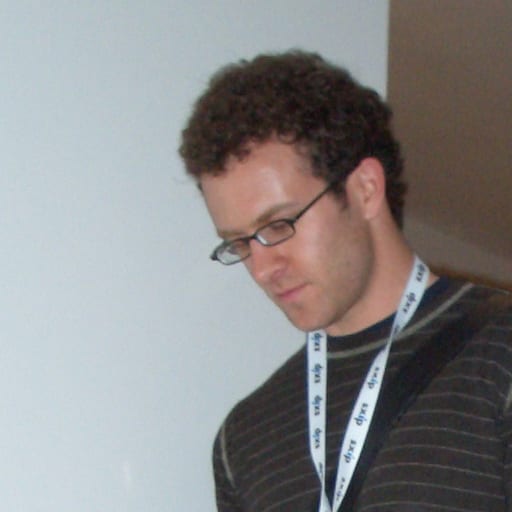
Photo: 49945carlo CC BY-SA 4.0 Original cropped
Quotes
450 basic records of 3,000
Quotes are word for word from the source.
Learning over revenue
at this point learning and just getting people using the app is more important than the money as long as the people are willing to pay you in the long-term
Our noteRob discusses the early days of Drip and why user activity mattered more than immediate billing.
90 day roadmap
I find that thinking out 90 days, in a pretty concrete manner, and kind of having a pretty set up roadmap of where we're going, is a good place to start.
Our noteRob discusses the ideal timeframe for planning a product roadmap in a growing startup.
Testing marketing channels
definitely researching and testing marketing channels. At least getting them to the point where they're working, then you could hand them off to someone else.
Our noteRob advises founders to validate marketing channels themselves before delegating them.
Value of continued work
even keeping something going, as you said, you don't have to necessarily work as hard, but the bit of purpose that brings you and the bit of income is shown in this
Our noteRob explains why maintaining some level of work or projects is beneficial for long-term well-being.
Founder exit mindset
There's a certain point where I feel like you start to hear that there's an opportunity to not have to continue doing what you're doing.
Our noteRob discussed the psychological shift that happens when a founder realizes they have an opportunity to sell their business.
Limiting user decisions
It's essentially limit the number of decisions that folk need to make as they're reading though it. Be opinionated about where you vision should go.
Our noteRob emphasizes the need to limit choices on a page to guide the user effectively.
Ambitious growth targets
Since Drip is still in somewhat early stages, 5x is I think a doable goal. It's definitely ambitious and it's beyond what I had in the original marketing plan but things have been going well so far
Our noteRob sets an aggressive growth goal for Drip in 2014.
Founder asset diversification
Most entrepreneurs are just way under-diversified. Most entrepreneurs who are having success like you had literally had millions of dollars tied up into a small business
Our noteRob points out the financial risk of having all of one's net worth tied up in a single startup.
Market confluence factors
The uniqueness of the teachers and how it was like a confluence of events, (a) it's a tribal structure, (b) you found the water cooler, and (c) it was growing so fast
Our noteRob summarized the factors that led to the explosive growth of the business.
Marketing over features
It's that building features for feature's sake, we've already have...we already have brought a market in. So, there is...it's more of a focus for sure on marketing for the time being.
Our noteRob explains why HitTail is focusing on marketing instead of constant feature development.
Strategic acquisition value
Strategic acquisitions tend to have a much higher purchase price than financial.
Our noteRob explains why strategic fits command higher prices than purely numbers-based deals.
Health and growth
I know founders who developed health problems and ulcers and that kind of stuff. And that has never been something I've been willing to sacrifice in order to grow a company.
Our noteRob discusses the physical and mental toll of startup stress on founders.
Acquisition stress
In order to sell a company, I think that you are going to need to undergo a tremendous amount of stress. I think if you don't undergo a large amount of stress, then you probably didn't negotiate hard enough
Our noteRob explains that the intensity of negotiation naturally leads to high stress levels.
Post-funding commitment
if you raise funding you are signing up for three, five, seven years of just hammering on and growth and definitely growing headcount because that's going to be a big part of why you're raising the funding.
Our noteRob describes the operational reality of running a venture-backed startup.
Emotional detachment in business
I don't tend to get emotional about these things. Remember when Figma sold to Adobe and people are like, "Oh my God, this is the worst, I'm so angry they sold this out
Our noteRob explains his pragmatic approach to major industry news and acquisitions.
Learning through audio
I am listening to them all the time when my brain is not occupied. It is when you're mowing the lawn or when I am out doing yard work, all that kind of stuff. It really is a nice way to get some time back.
Our noteRob explains how he manages to listen to dozens of podcasts every week by utilizing downtime.
Enterprise sales tactics
They really want you to call and talk to someone, or to do a demo, or to sign up for a webinar. That's the call to action rather than actually getting you to sign up directly on your first visit
Our noteRob explains why expensive software companies focus on lead generation over immediate self-service sign-ups.
Lack of equity
For me, it was about I wasn't building anything that would last. There is no permanence to it. I didn't build anything that I owned, I had no equity, and my consulting "firm" was never sellable.
Our noteRob discusses the downsides of a pure consulting business model.
Defining beta
Beta implies that it is a buggy product and it's pre-launch. It's a preview you can use, but beware of the bugs.
Our noteRob explains the common perception of a beta version of a product.
Hierarchy of success
Market comes first, marketing second , aesthetic third, and functionality a distant fourth Actually, it's long, dull and kind of boring...but it's true.
Our noteHe outlines the order of importance for building a successful software business.
Managing email overload
I feel like I've outsourced or delegated or figured out systems for so many things, but my inbox was always the one, it's just hammering me non-stop. I finally might have a solution.
Our noteRob discusses his long-standing struggle with email and his new approach to managing it.
Delegating decision making
I told her my criteria, my loose criteria for evaluating invites for interviews and guest posts, and even some partnership stuff and she's starting to take some action on those
Our noteRob describes how he trained his assistant to handle incoming requests based on his criteria.
Productivity book skepticism
I've listened to a lot of productivity books over the years and I've become immune to a lot of them and they have a lot of suggestions and tactics that don't necessarily work for everyone
Our noteRob reflects on why many productivity tips fail to stick or provide value.
Mastermind group dynamics
Our attention spans are only so long when it's just one person talking. And so this breaks it up more and gets multiple voices into the system. I think this is a cool approach.
Our noteRob discusses the benefits of a fast-paced roundtable format to keep participants engaged.
Using premium themes
The premium themes just give you an instantly professionally looking designs. So you can go to Woo Themes, or Theme Forest.
Our noteRob suggests using premium WordPress themes as a low-cost way to improve a website's appearance.
Evaluating major expenses
for a lot of people, daycare or private school can be your number two expense after your mortgage, so it's something to seriously look at and consider.
Our noteRob highlights daycare as a significant expense that founders should evaluate when cutting costs.
Stalled product growth
Growth had really stalled and things starting to go sideways with it as the value that it provides is a lot less than it did 4 or 5 months ago.
Our noteRob explains why he needed to update the HitTail algorithm to restore its value proposition.
Commitment and compatibility
I think you really need to think hard before you get into a mastermind relationship and I think that you will need to make sure that the folks are going to be compatible with kind of your working style.
Our noteRob advises founders to carefully vet potential mastermind partners before committing their time.
Scaling based on need
You know, that's when an app really becomes sticky, and that's when you can scale something up; because people really need it.
Our noteRob explains that scalability comes from creating a product that users truly rely on daily.
Protecting your time
You don't have to respond to every email and even if you do, like you just said Mike, don't spend a ton of time on this. That's the key.
Our noteRob emphasizes the importance of not letting others dictate your schedule through email.
You are seeing 705 basic records. Membership answers from all 4,700 of this master's records.
See membershipMore masters in this field
See the whole fieldSolo business and indie makers



These records are our compilation of public statements and sources. We are not affiliated with or endorsed by Rob Walling or any related company. If something should come down, tell us. Takedown request form