
Rob Walling
롭 월링
Founder of Drip, TinySeed and MicroConf; host of Startups for the Rest of Us
4,700 records in all
- Principles 1,000
- Episodes 700
- Quotes 3,000
3 free questions a day, no sign-up.
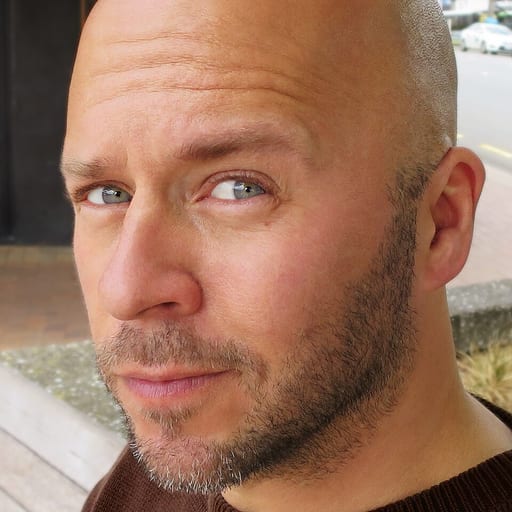
Photo: 49945carlo CC BY-SA 4.0 Original cropped
Quotes
450 basic records of 3,000
Quotes are word for word from the source.
Modern funding options
It's not just should I self-fund? Should I bootstrap? Should I raise a venture? There are all these avenues you can go down, whether it's a TinySeed-like accelerator raising a small angel round for a couple of hundred thousand dollars.
Our noteRob explains that the binary choice between bootstrapping and venture capital is outdated.
Founder self-sustainability
How can we help more entrepreneurs succeed, more founders become self-sustaining, and this is another option.
Our noteRob discusses the mission of providing various paths to help founders reach sustainability.
Funding and Equity
I think with that in mind the idea is the more you raise, the more of your company you have to sell. It all depends on valuation as well.
Our noteRob explains the trade-off between raising capital and maintaining ownership of a company.
Founder Mission
the bottom line mission for me is to help more founders succeed faster and have a sustainable business of any kind.
Our noteRob defines his core motivation for creating content and starting TinySeed.
SaaS Efficiency
What's good today is if you are building SaaS, it's so capital-efficient. It can be extremely profitable if you decide to keep it. It can be extremely lucrative if you decide to sell it.
Our noteRob highlights the financial flexibility and efficiency of the modern SaaS business model.
Customer objections
The thing that people should keep in mind is that for every person who asks you or who has a sales objection like this, there are probably 5, 10, 50 other people who have a similar thought and maybe just never asked
Our noteRob explains why one customer's question often represents a larger silent group.
Marketing documentation
in the early days of anything, you start to get the same question over and over and that's when you realize, "I really need to document this and push it to the forefront of my website or of my marketing."
Our noteRob advises founders to turn repetitive questions into public-facing content.
Customer churn reasons
the one biggest complaint that people have, one biggest reason people cancel as that they get all these suggestions but it basically creates work for them
Our noteRob explains why users were canceling his SEO tool, HitTail.
Email conversion rates
The best conversion rates I've seen by far are with e-mail. Everyone has e-mail and people just, they tend to read it and they tend to clickthrough.
Our noteRob explains why email is superior to social media for marketing conversion.
Evaluating mutual fit
That's the thing, it's not just do they have the chops or do they have the traction to get in, but are we going to be able to help them?
Our noteRob discusses the criteria for selecting founders for the TinySeed accelerator program.
Sustainable growth
Now, it means that the growth-at-all-cost mindset were not growing at all cost, because we're not going to do it at the cost of our long-term relationships.
Our noteRob explains his rejection of the 'growth at all costs' mentality in favor of relationship building.
Rejecting bad ideas
I do think that there are going to be quite a few suggestions that come up that you're not going to build and are not a good idea to build.
Our noteRob emphasizes that founders must be willing to ignore suggestions that don't fit their vision.
Software evolution
If SaaS goes away or it drops by 80% in terms of the value, something will replace that something. It will be software that does something.
Our noteRob explains that the form of software might change, but the need for it won't.
Adaptability for incumbents
if you're smart and paying attention, I think you're okay if you are a big incumbent and your advantage really is just that you got there first and you have a brand and you're super lazy
Our noteRob warns that lazy incumbents are the ones most at risk from AI disruption.
Short term vs long term
It's a short-term hit of I want to make quick money. It's like a crypto and NFTA. There's an opportunity there, but it's not a five year business, certainly not a, I often think is it a 10 year business?
Our noteRob discusses the difference between quick-money opportunities and sustainable ten-year businesses.
Biased patent advice
every time I've ever seen an article like that, it's written by a patent attorney every time.
Our noteRob points out that advice to get patents often comes from people who profit from filing them.
Early career realization
I got a salaried job right out of college and I was working for a construction company. I was a project manager and I realized right away that working 9:00 to 5:00 was for the birds.
Our noteRob reflects on his early realization that traditional employment was not for him.
Control over fate
I feel like we're a little more in control of our fates than when you're buying into an investment that has such market forces that can send it up and down.
Our noteRob compares the control one has as an entrepreneur versus a passive investor in volatile markets.
Handling surprises
I don't know about every surprise that's going to come along but I just - I guess I'm not as surprised by them as I once was.
Our noteRob reflects on how experience reduces the panic caused by unforeseen business challenges.
Spectrum of thinking
It tends to be much more a spectrum or a continuum of 1-100 maybe instead of this 0-1 binary thinking.
Our noteRob explains that startup decisions are rarely binary and exist on a continuum.
Expanding your perspective
As you get older, if you get experience and you get knowledge outside of your little box, you don't live in your little box but you travel and you meet other people with your thoughts. You're allowed to be shaped.
Our noteRob describes how life experience and exposure to different viewpoints reduce absolute thinking.
From donations to sales
He changed it from almost a donation model, right? It's like, "Hey, can I have tips? To like, you need to pay to use the software?
Our noteRob describes how an open-source project became a business by enforcing a paid license model.
Early stage support
in the early days, doing customer support is really helpful. As a founder you learn a ton as you transition.
Our noteRob reflects on the value of founders handling support in the beginning.
Questioning your why
I looked back and I thought, "What are the things that were my core values? Why was I doing this at all? Why didn't I stay a salaried employee?
Our noteRob reflects on the motivations that drove him to pursue entrepreneurship over a traditional career.
Returning to center
Throughout this journey, as I've wandered off that path, as I've given up some of my freedom, given up some of my purpose, hurt my relationships because I work too much or over-committed, I've always had to come back to that center line
Our noteRob explains how he uses his core values to correct his course when work-life balance slips.
Platform dependency risk
anyone of any time can kind of pull the rug out from under you if you're relying on their data.
Our noteRob discusses the risk of building a business like HitTail that relies on Google's keyword data.
Scaling with confidence
I never would've emailed 600 people 3 or 4 months ago because I just didn't have the confidence that we can handle it.
Our noteRob talks about waiting until the product and processes were ready before mass emailing his list.
Reseller Pricing Control
I have a tough time at allowing them to charge whatever they like because then that means you're leaving the price elasticity on the table.
Our noteRob discusses why founders should maintain control over the final price when working with resellers.
Ground Research First
I do think that before you write a line of code there's a lot more feet on the ground research that probably needs to happen.
Our noteRob advises a founder to do manual research before starting development.
Minimalist design conversion
it's often the simple minimalist designs that do better because they get out of the way of your copy and of your message.
Our noteRob discusses why simple landing pages often outperform heavily designed ones in conversion rate testing.
You are seeing 705 basic records. Membership answers from all 4,700 of this master's records.
See membershipMore masters in this field
See the whole fieldSolo business and indie makers

These records are our compilation of public statements and sources. We are not affiliated with or endorsed by Rob Walling or any related company. If something should come down, tell us. Takedown request form