
Rob Walling
롭 월링
Founder of Drip, TinySeed and MicroConf; host of Startups for the Rest of Us
4,700 records in all
- Principles 1,000
- Episodes 700
- Quotes 3,000
3 free questions a day, no sign-up.
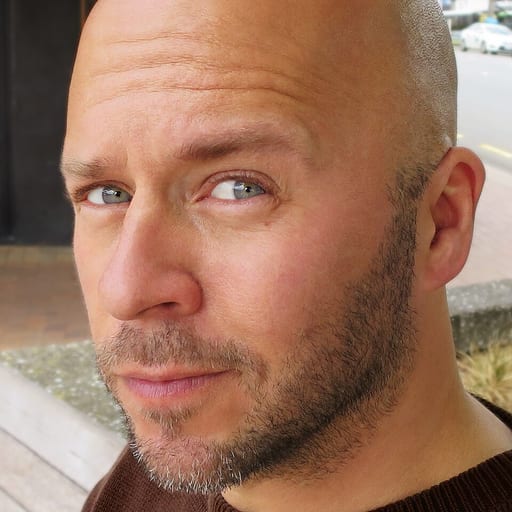
Photo: 49945carlo CC BY-SA 4.0 Original cropped
Quotes
450 basic records of 3,000
Quotes are word for word from the source.
Optimization and growth
I drove a lot of traffic, I did a lot of split testing, a lot of conversion optimization. I optimized the hell out of the funnels, the onboard, all of that was a massive thing
Our noteRob describes the active work involved in scaling a product-led business.
Avoiding estimates
I think most people avoid doing estimates at the beginning of a project because I think that they don't want to be wrong because that makes them feel bad
Our noteRob explains the psychological resistance to setting project deadlines.
Value of estimates
it is still so much more clear than if you have nothing and are just basically driving in the dark.
Our noteRob explains why even imperfect project completion estimates are better than having no plan at all.
Manageable task lists
you have to narrow it down to 50 or a hundred or some small enough number that when you're done working and you log out for the night, that you go in there and it should take 30 seconds to just scan through
Our noteRob advises against having too many tiny line items in a project tracking spreadsheet.
Speed to market
If I were to hire a developer to build or write it myself to build Pat and Vat like I just described, it would've been months of effort, no doubt.
Our noteRob emphasizes how much faster it is to build an internal tool or MVP using no-code.
Comparing payment processors
There are horror stories from PayPal. There are horror stories for every merchant account processor. There's no doubt in my mind that I don't think any of them are much better or much worse.
Our noteRob explains that all payment processors have potential downsides and horror stories.
Managing platform risk
I don't actually leave a lot of money in those accounts, because in theory I guess if they went out of business or something, that they're not FDIC insured.
Our noteRob explains his caution regarding keeping large balances in non-bank payment accounts like PayPal.
Scaling ambitions
I realized that I'm excited about doing, you know, another SAS app frankly and kind of doing when it's maybe a little bigger than the other ideas that I've done in the past.
Our noteRob discusses his motivation for starting a new, larger software project.
Reversible decisions
I moved fairly slowly but I was never at a point where I couldn't turn around pretty easily and go back if I needed to.
Our noteRob describes his gradual transition from employee to consultant to product owner.
Solving Pain Points
I think you have like I said a value problem and you need to dig deeper to find that before you're going to be able to really start attracting customers and solving a deep paying point.
Our noteRob explains that pricing issues are often actually underlying value proposition problems.
Early Stage Banking
when you're first starting out, you're right, a big bank is always going to charge you fees until you get to that point of having whatever the minimum balance is typically $10,000 to $20,000
Our noteRob discusses the reality of bank fees for early-stage startups with low balances.
Managing multiple versions
If your client thinks that he can basically pay once and then get three versions out of it, I think that's another thing to think about is that there's always a lot more with having three apps than just writing that shared codebase.
Our noteRob discusses the hidden costs of supporting multiple customized versions of a single app for one client.
Deciding with uncertainty
The thing I say all the time, mostly being a founder, is making hard decisions with incomplete information and this is the definition of that.
Our noteRob defines the core challenge of being a founder as making tough calls without having all the facts.
Criticism vs action
I find that people who are good, people who do a lot of things, people who are successful, they don't tend to criticize others nearly as much as the people who are sitting on the sidelines
Our noteRob observes that high achievers rarely waste time on non-constructive criticism.
Delegating customer support
I will set up a separate Gmail account just, you know, whatever probably the business gmail.com, I will give access to a VA so they can log in to that
Our noteRob explains a simple way to let an assistant handle support emails using a dedicated account.
Scalability of tools
That is the simplest, it's free but it gets cloogy pretty quickly if you have a lot of support coming in. So it's not scalable basically.
Our noteRob warns about the limitations of using a basic Gmail setup for growing support needs.
Customer Development Research
Eventually, you do because you have to test it out, but at least, this is kind of your customer development/almost market research in a sense.
Our noteRob explains how early interviews serve as a form of market research before building an MVP.
API language wrappers
Everybody wants a wrapper in every language, and you just can't do it, and it's just not feasible.
Our noteRob discusses the difficulty of maintaining API libraries for multiple programming languages.
Self reflection
I think you really have to look in the mirror and ask yourself, "Am I willing to do what it takes?" because this startups stuff is not easy.
Our noteRob emphasizes the difficulty of building a startup and the need for self-assessment.
Consumer subscription challenges
trying to ask consumer to do a subscription tends to be a harder thing to do.
Our noteRob warns about the challenges of charging consumers for ongoing subscriptions.
Hiring for sales
The only time we did these larger deals that required a lot of headache was once we had salespeople who were willing to do that for, of course, their commission. It was a cut of the deals.
Our noteRob explains that founders should delegate complex enterprise sales to commissioned salespeople.
Recognizing market pull
the B2B side, reaching out to you without you advertising that you have those features or that you are B2B, that's a great signal. And in the business, we call that market pull.
Our noteRob explains how unsolicited interest from a specific segment indicates a strong market opportunity.
B2B sales process
So can a sales process, even if it's a one call close, can a sales process be implemented for just the B2B side?
Our noteRob discusses implementing a specific sales funnel for the B2B side of a business.
Stability before mission
I like to think about getting some stability first on your own by providing value for people who are willing to pay for it and then potentially offering this, as you said, the mission driven side
Our noteRob advises founders to secure revenue before focusing on low-cost or free mission-driven offerings.
New year momentum
I'm always excited to hit the ground running as we enter early in mid-January.
Our noteRob talks about the energy of starting new marketing initiatives at the beginning of the year.
When to raise
you're purely raising the fundraising as a growth mechanism, which is always the point where I have thought that funding is a good idea. It's when you have some traction and you just need to add $1 in order to pull $5 out
Our noteRob explains that funding is best used as a growth lever once a business has proven traction.
Broken unit economics
A lot of them don't have unit economics that actually make sense. They have literally been paying a dollar to make 50 cents.
Our noteRob discusses why some unicorn companies struggle when their customer acquisition costs exceed lifetime value.
Bootstrapper challenges
It's a bummer to be a bootstrapper when it's not fair. And as a bootstrapper, you probably need the GCP more than the funded companies do, but alas.
Our noteRob reflects on the unfairness of resource access for self-funded founders.
Legal review reality
In a perfect world, if you're going to cover your ass, yes, a lawyer reviews everything that you sign. Is that realistic for a bootstrapper? I would say not.
Our noteRob discusses the trade-offs bootstrappers must make regarding legal expenses and contract reviews.
Scratching your itch
Drip was built out of a problem that I was having on the prior SaaS app HitTail. And so I knew there was at least one customer for it.
Our noteRob shares how his own pain point led to the creation of Drip.
You are seeing 705 basic records. Membership answers from all 4,700 of this master's records.
See membershipMore masters in this field
See the whole fieldSolo business and indie makers


These records are our compilation of public statements and sources. We are not affiliated with or endorsed by Rob Walling or any related company. If something should come down, tell us. Takedown request form