
Rob Walling
롭 월링
Founder of Drip, TinySeed and MicroConf; host of Startups for the Rest of Us
4,700 records in all
- Principles 1,000
- Episodes 700
- Quotes 3,000
3 free questions a day, no sign-up.
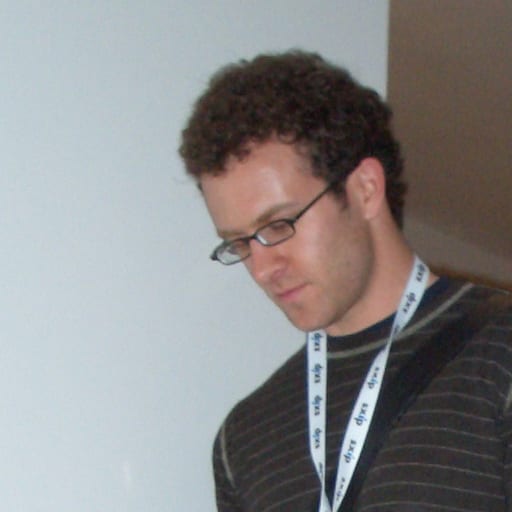
Photo: 49945carlo CC BY-SA 4.0 Original cropped
Quotes
450 basic records of 3,000
Quotes are word for word from the source.
Early user research
in the early days of customer [...] that's when, I would say, matters most. As a product matures, you can still do it, but it's definitely, I would say not as, in my opinion, not as critical
Our noteRob shares his perspective on when user research is most critical for a startup's growth.
Managing expectations
At certain point, you just can't all be doing the best one ever. You just have to do the best that you can and hope it turns up. But there's a bunch of stuff that's not within our control, frankly.
Our noteRob reflects on the pressure to make every MicroConf better than the last one.
Customer as hero
I've always liked them because they make your customer the hero which, in essence, tries to make your prospect the hero of the story.
Our noteRob discusses the psychological impact of positioning customers as heroes in case studies.
Investing in competitors
if you're an accelerator and you're investing in a lot of companies, you inevitably will back competitors over time. And at TinySeed, we have also had to face this because you can't invest in 200 B2B SaaS startups and expect to never invest in two companies that compete
Our noteRob discusses the inevitability of backing competing startups when managing a large portfolio.
Accelerator batch size
We back across Americas and emea, we do two rounds per year every six months, and we get about 22 to 30 companies between both of those. So still a good pace, but it allows us to be a lot more hands-on
Our noteRob explains the scale and frequency of TinySeed's investment batches.
Social media impact
I don't think social media is good for anybody. I especially don't think it's good for kids who are just so much more addictable, which is not a word, but it's just easier for them to just get hooked on stuff.
Our noteRob shares his personal views on the dangers of social media for children.
Searching for PMF
it was a search for product market fit and it was like "Slight pivot, we're going to add this, we're going to figure out this, we're going to try this."
Our noteRob describes the grueling process of iterating on Drip to find product-market fit.
On vs In business
It's given me a lot more time to look at higher level stuff and work on the business instead of so much in the business.
Our noteRob explains the benefit of delegating tasks to focus on strategy.
Interpreting book titles
I want to read this quote from the book because I was struck by the title. It's Deploy Empathy, and I had to think of deploy as a code, but if you're deploying code...
Our noteRob shares his initial reaction to the title of Michele Hansen's book on customer research.
Focusing on problems
I don't want to do it the way you've done it, but we are trying to get to the problem, not their solution.
Our noteRob highlights that founders should look for the underlying problem rather than just building the user's suggested solution.
Skepticism of interviews
Rob: Right, and the interesting part about interviews, usually when I hear someone do a talk about interviews, or I see a book or a podcast episode, I cringe a little bit for two reasons. One to your point earlier, who has time for this?
Our noteRob admits to the common founder feeling that customer interviews can feel like a time-consuming burden.
SaaS growth rates
Usually it's an absolute dollar amount at best, right? It's where it's like, oh, we're growing $2,500 a month every month, and even that is really cool for a bootstrapper.
Our noteRob explains that consistent linear growth is already a significant achievement for self-funded startups.
Conflicting expert advice
This is the best. When you talk to two people and they tell you the opposite and you're like, but I trust both of you, which exactly why did he, because I'm actually surprised by that.
Our noteRob reacts to Harris receiving opposite advice from him and his partner Einar regarding raising more capital.
Customer feedback value
It feels to me, at this point, it's time consuming but it feels like the right choice to still do demos so you can hear.
Our noteRob was advising Mike on whether to require demos for his new product, Bluetick.
Demos for development
I think those demos will really help not just close more sales, but will just help with the education and the customer development effort.
Our noteRob explained the dual benefits of product demos for early-stage startups.
Early equity conversations
I think that if you do feel like you're truly a co founder, I agree with Mike that you're going to want to start this conversation early before stuff gets in writing.
Our noteRob discusses when a founding employee should negotiate for equity.
Flat seat pricing
I've always leaned towards having this flat per seat pricing and then offering discounts to larger customers because larger customers are going to tend to talk to anyways in advance
Our noteRob explains his preference for simple pricing models for SaaS products.
Source of truth
To me, your apps user accounts, you got to decide what's the source of truth for your business.
Our noteRob explains the importance of having a central database for SaaS user information.
Avoid tool fragmentation
I would either stay whole hog on MailChimp or whole hog on Drip.
Our noteRob suggests sticking to one primary email provider rather than splitting users.
Cost of hacking
oftentimes another $50 or $100 a month sounds like a lot until you are maintaining these hacks because you outgrow MailChimp
Our noteRob discusses the hidden costs of trying to make a limited tool do too much.
Hidden Launch Tasks
I thought that putting together all the material and writing everything would be the bulk. But man, I've just had such a number of tasks to take care of
Our noteRob reflects on the unexpected administrative tasks involved in publishing his book.
Inevitability of fear
No matter which avenue you choose, whether you work for an employer or start your own company, you're going to have fear about something, right?
Our noteRob explains that fear exists in both employment and entrepreneurship.
Limitations of activity data
It said nothing about your ICP, it's just their really into what you're writing. That's what we had and we had planned to go out and augment and we never got there.
Our noteRob discusses the difference between engagement and ideal customer fit.
Features vs products
I'd imagine it's a feature of CRMs or HubSpots or Salesforce. I don't know. I've never used it, but I'm sure it's in them.
Our noteRob questions whether a specific tool is a standalone product or just a feature.
Confidence through validation
But if you have interest, you have that launch list and you're in communication with people, that gives you the confidence to spend more and more money.
Our noteHaving a pre-launch list provides the necessary validation to invest more capital into a startup.
Start small
Don't feel like you need to jump into the majors because other people are talking about playing in the major leagues. Work your way up there.
Our noteRob uses a baseball analogy to describe the progression of a founder's career.
Focusing on value
They realized there was one section of the app that people really love. They just had to rebuild it with new technology and really focus on this one piece of it.
Our noteRob describes how the Aurelius founders pivoted by focusing on their most loved feature.
Methodical risk taking
While we take on more risks than our friends who are developers at Target or BestBuy, we still go about this pretty sensibly and methodically. We want something that has a pretty high chance of success.
Our noteRob describes the balanced approach to risk taken by sensible software entrepreneurs.
Automated email sequences
the reason I like email sequences and email mini-courses and I've been using these in most of my businesses for going on-it's more than a decade now, is because they are set it and forget it.
Our noteRob explains why he prefers automated email sequences over manual broadcast emails for his businesses.
Prioritizing onboarding
of all these sequences, I actually think on-boarding emails may be the first one I dig into when I think about a new app.
Our noteRob emphasizes that onboarding is his favorite and most prioritized email sequence.
You are seeing 705 basic records. Membership answers from all 4,700 of this master's records.
See membershipMore masters in this field
See the whole fieldSolo business and indie makers



These records are our compilation of public statements and sources. We are not affiliated with or endorsed by Rob Walling or any related company. If something should come down, tell us. Takedown request form