Hall of Masters

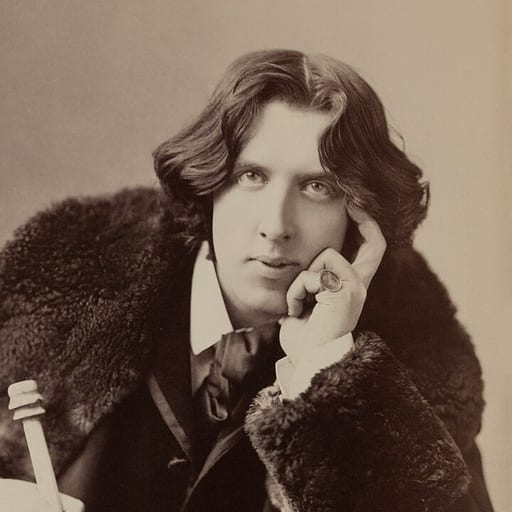
Oscar Wilde

오스카 와일드

Irish playwright and wit

1,054 records in all

  • Principles 331
  • Episodes 298
  • Quotes 425
Ask with this master's words

3 free questions a day, no sign-up.

Photo: Napoleon Sarony / Adam Cuerden  Public domain  Original  cropped

Episodes

45 basic records of 298

Episodes are real events from public sources, summarised by us.

  • The Hinksey Road Project

    John Ruskin led a group of Oxford students, including Wilde, to build a road across a swamp to help local villagers. Despite being mocked by peers and the project ending abruptly when Ruskin left, the experience inspired Wilde's vision for a collective artistic movement.

    LessonShared labor toward a noble ideal can build the foundation for a powerful creative movement.

  • The Vision of Mechanical Slavery

    Wilde observed that while machinery currently caused unemployment and starvation due to the property system, it had the potential to liberate humanity. He proposed that machines should perform all 'ugly' and 'uninteresting' work so that people could focus on culture and leisure.

    LessonTechnology should be viewed as a tool to free human talent for higher-value creative work rather than just a competitor for labor.

  • 1891Brand

    The labeling of Wordsworth

    Wilde noted that the British public had a habit of conferring 'diplomas of immorality' on every real poet of the century. Even a poet like Wordsworth was labeled 'immoral' simply because his work was original and true.

    LessonExpect your most authentic and innovative work to be misunderstood or labeled negatively by the general public at first.

  • The Revolution in House Decoration

    Craftsmen began making beautiful furniture and patterns despite public indignation and attachment to vulgar traditions. By refusing to produce ugly items, they eventually forced the public to adopt better taste in their homes.

    LessonSupply can dictate demand if creators are disciplined enough to only produce high-quality, beautiful work.

  • The Renaissance Individualism

    Wilde observes that the Renaissance was a period of greatness because it allowed individuals to develop naturally without forcing them to solve social problems. This freedom resulted in the creation of unique and great artists.

    LessonCreativity flourishes best when individuals are free from the pressure of social conformity.

You are seeing 159 basic records. Membership answers from all 1,054 of this master's records.

See membership

More masters in this field

See the whole field

Craft, arts and performance

These records are our compilation of public statements and sources. We are not affiliated with or endorsed by Oscar Wilde or any related company. If something should come down, tell us. Takedown request form