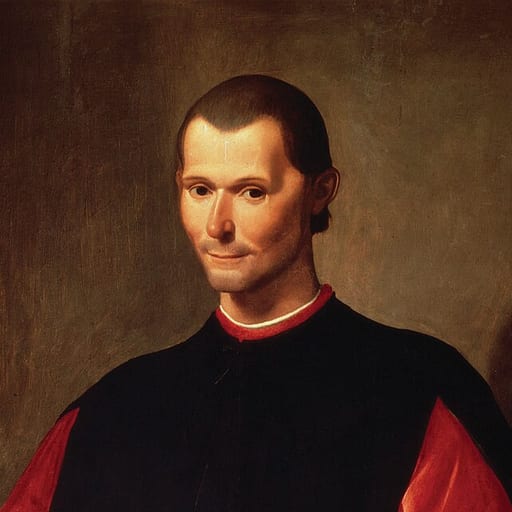
Niccolò Machiavelli
니콜로 마키아벨리
Florentine diplomat, author of The Prince
1,049 records in all
- Principles 323
- Episodes 263
- Quotes 463
3 free questions a day, no sign-up.
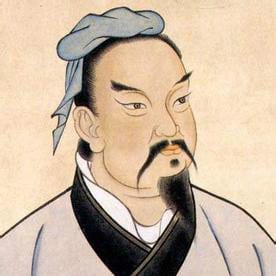
Photo: Santi di Tito Public domain Original cropped
Quotes
69 basic records of 463
Quotes are word for word from the source.
Strategic vulnerability
Some capitaine, whiche hath perceived hymself to be assaulted of a greate multitude of enemies, hath drawen together his men, and hath given to the enemie commoditie, to compasse hym all about
Our noteMachiavelli discusses a counter-intuitive tactic for dealing with overwhelming numbers.
Strict access control
The whiche is, that there be observed greate diligence, to knowe at night, who lodgeth not in the Campe, and who commeth a newe
Our noteMachiavelli emphasizes the importance of monitoring who enters and leaves the camp to prevent espionage.
Quality over quantity
the Romaines, and the Grekes, have made warre with fewe, fortefiyng themselves thorough order, and thorough arte: the west, and the easte, have made it with multitude
Our noteMachiavelli explains why disciplined smaller forces often defeat larger, disorganized mobs.
Winning hearts through justice
emong all the thynges, with the whiche the Capitaines, winne the hartes of the people, be the insamples of chastitie and justice
Our noteOn how moral character and fair dealing are more effective than force in winning loyalty.
Necessity drives good
Men never do good unless necessity drives them to it; but when they are free to choose and can do just as they please, confusion and disorder become rampant.
Our noteMachiavelli explains human behavior in the absence of constraints.
Strategy for success
Cunning and deceit will every time serve a man better than force to rise from a base condition to great fortune.
Our noteMachiavelli discusses how individuals rise to power and fortune.
Psychology of fear
Fear of evil is greater than the evil itself.
Our noteDiscussing how people react to perceived threats.
Preparation and Opportunity
Without that opportunity their powers of mind would have been extinguished, and without those powers the opportunity would have come in vain.
Our noteMachiavelli discusses how great leaders combine their innate ability with the right timing.
Risk of Innovation
there is nothing more difficult to take in hand, more perilous to conduct, or more uncertain in its success, than to take the lead in the introduction of a new order of things
Our noteHe explains why changing the status quo is the most difficult task for any leader.
Escalating conflict
The badly employed are those which, notwithstanding they may be few in the commencement, multiply with time rather than decrease.
Our noteThe author warns against the danger of prolonged and increasing harshness in leadership.
Timing of actions
For injuries ought to be done all at one time, so that, being tasted less, they offend less; benefits ought to be given little by little, so that the flavour of them may last longer.
Our noteMachiavelli explains how to manage unpopular decisions versus rewards.
Source of power
He who obtains sovereignty by the assistance of the nobles maintains himself with more difficulty than he who comes to it by the aid of the people
Our noteThe difficulty of managing a team of equals versus a loyal base.
Leading through crisis
a powerful and courageous prince will overcome all such difficulties by giving at one time hope to his subjects that the evil will not be for long
Our noteHe describes how a leader manages morale during a difficult siege or period of hardship.
Paradox of Virtue
something which looks like virtue, if followed, would be his ruin; whilst something else, which looks like vice, yet followed brings him security and prosperity.
Our noteHe observes that conventional morality and business success do not always align.
The cost of distrust
when you disarm them, you at once offend them by showing that you distrust them, either for cowardice or for want of loyalty, and either of these opinions breeds hatred against you.
Our noteWhy taking away power or tools from your subjects creates dangerous resentment.
The best defense
the best possible fortress is - not to be hated by the people, because, although you may hold the fortresses, yet they will not save you if the people hate you
Our noteMachiavelli argues that public goodwill is more protective than physical defenses or infrastructure.
Building esteem
Nothing makes a prince so much esteemed as great enterprises and setting a fine example.
Our noteHe emphasizes that bold actions and personal example are key to building a strong brand.
Decisive commitment
A prince is also respected when he is either a true friend or a downright enemy, that is to say, when, without any reservation, he declares himself in favour of one party against the other
Our noteMachiavelli advises against neutrality when powerful neighbors or competitors are in conflict.
Seeking Advice
A prince, therefore, ought always to take counsel, but only when he wishes and not when others wish
Our noteMaintaining control over the decision-making process.
Human agency
God is not willing to do everything, and thus take away our free will and that share of glory which belongs to us.
Our noteHe explains that while divine favor helps, individuals must take action to achieve their own success.
Strategic dissimulation
the duke resolved at once to see if he could not close the trouble with offers of reconciliation, and being a most perfect dissembler he did not fail in any practices to make the insurgents understand that he wished every man who had acquired anything to keep it
Our noteDuke Valentino used reconciliation as a tactic to disarm his enemies while preparing his revenge.
Outwitting the competition
he considered that it would be safer and more advantageous to outwit them, and for this reason he did not stop the work of reconciliation.
Our noteMachiavelli explains why the Duke chose negotiation over open warfare to neutralize threats.
Power through alliance
The popes had more or less authority in Rome and the rest of Italy, in proportion as they were favorites of the emperor or of the most powerful states.
Our noteThe authority of a leader often depends on their relationship with other powerful entities.
Decisive action
Mosca Lamberti said, that those who talk of many things effect nothing, using that trite and common adage, _Cosa fatta capo ha
Our noteA conspirator argues that over-analyzing leads to inaction and that a deed once done cannot be undone.
Reuniting the city
The people being victorious, by the advice of those who loved the good of the republic, determined to reunite the city, and recall all the citizens
Our noteMachiavelli describes the attempt to stabilize Florence by recalling exiled citizens after a conflict.
The power cycle
Their fear of a powerful person caused them to increase the influence of one previously weak; his becoming great caused him also to be feared
Our noteThe passage details the self-defeating cycle of balancing power by creating new rivals.
Risk of desperation
it is an injudicious step to drive men to desperation, for he who is without hope is also without fear
Our noteMachiavelli explains why pushing opponents too far is dangerous for a leader.
Public accountability
The loss of this city, as in like cases commonly happens, exasperated the people of Florence against the members of the government; at every street corner and public place they were openly censured
Our noteThe failure to capture Lucca led to widespread public anger against the ruling class.
Escalation of conflict
The arrogance of one party and the anger of the other rose to such a degree, that the heads of the people complained to the bishop
Our noteDescribing the rising tension between the nobility and the common people in Florence.
Pernicious retrospective laws
Nor is it possible for a republic to enact a law more pernicious than one relating to matters which have long transpired.
Our noteMachiavelli discusses the danger of reviving old laws to target specific political factions.
You are seeing 156 basic records. Membership answers from all 1,049 of this master's records.
See membershipMore masters in this field
See the whole fieldStrategy and mental models
These records are our compilation of public statements and sources. We are not affiliated with or endorsed by Niccolò Machiavelli or any related company. If something should come down, tell us. Takedown request form