Hall of Masters

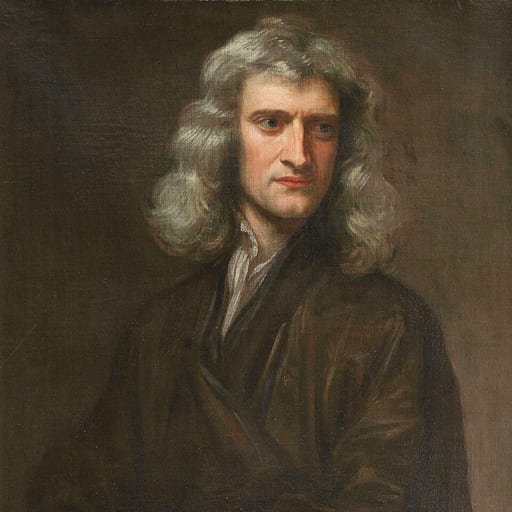
Isaac Newton

아이작 뉴턴

Physicist and mathematician; laws of motion and gravitation

877 records in all

  • Principles 319
  • Episodes 292
  • Quotes 266
Ask with this master's words

3 free questions a day, no sign-up.

Photo: Godfrey Kneller  Public domain  Original  cropped

Episodes

44 basic records of 292

Episodes are real events from public sources, summarised by us.

  • The Failure of Speculative Systems

    Before Newton, many writers attempted to explain nature through loose conjectures and incomplete systems. They tried to fathom the depths of nature with slight effort, leading to a lack of certainty in the field of natural philosophy.

    LessonAvoid building a business or product on unverified assumptions; depth and certainty require rigorous, incremental work.
  • Solving Lunar Motion Intricacies

    By discovering that the moon gravitates toward both the sun and the earth, Newton explained complexities in its motion that observation alone could not solve. This mathematical approach provided clarity where previous astronomers had struggled.

    LessonCombining theory with data allows you to solve complex problems that simple observation cannot fix.

  • The Efficiency of Compound Pulleys

    Newton demonstrated that by doubling a cord through a pulley, a weight could be supported by only half the force. He further showed that combining multiple pulleys allows a small power to support a weight many times its size, such as one-eighth or even one-fifteenth of the total weight.

    LessonSmall resources can handle massive tasks if you structure your 'levers' or systems correctly.

  • Mathematical Proof of Equilibrium

    Newton used geometry to prove how a smaller weight could balance a larger globe on an inclined plane. By showing that the common center of gravity does not descend during motion, he established the exact proportions needed for balance.

    LessonUse data and logical proofs to find the exact point of balance in your operations or pricing.

  • The Rotating Water Bucket Experiment

    Newton used a suspended bucket of water to demonstrate the difference between relative and absolute motion. When the bucket first starts spinning, the water stays flat despite moving relative to the bucket, but as the water itself begins to spin absolutely, it rises at the edges due to centrifugal force.

    LessonSurface-level observations can be misleading; look for physical effects that reveal the true state of your system.

  • The Geometry of Reversibility

    Newton demonstrated that a body moving under a centripetal force can be made to retrace its path exactly. By stopping a body at any point and throwing it backward with its current velocity, the same forces that guided it forward will bring it back to its starting point in the same amount of time.

    LessonUnderstanding the underlying forces of a process allows you to predict how to undo or replicate a sequence of events.

  • Building the first practical reflecting telescope

    Newton built a reflecting telescope to demonstrate his theories on light and optics. This practical invention proved his technical capability and led to his election as a fellow of the Royal Society.

    LessonCreating a tangible prototype or product is the most effective way to gain recognition and prove abstract theories.

  • The loss of unpublished research

    A story suggests that Newton's dog knocked over a candle, burning years of unpublished research intended for a fourth volume of 'Opticks'. This incident resulted in the loss of a potential unified theory of physics.

    LessonProtect your most valuable intellectual assets from simple, preventable accidents.

  • Challenging the Ptolemaic System

    중세 시대에는 지구가 우주의 중심이라는 프톨레마이오스의 견해가 절대적이었고 이에 의문을 제기하는 것은 금기시되었어요. 하지만 코페르니쿠스는 평생의 연구를 통해 지구가 태양 주위를 도는 행성 중 하나일 뿐이라는 결론을 내렸어요.

    Lesson모두가 당연하게 믿는 시장의 상식이 틀릴 수 있다는 의심이 혁신의 시작이에요.

  • 1919Risk

    The Eclipse Expedition Test

    Scientists organized an expedition during a solar eclipse to test a new theory of gravitation that built upon Newton's legacy. They aimed to see if light from stars would deflect when passing near the sun's mass, as predicted by mathematical models.

    LessonCritical theories must eventually face real-world tests to prove their validity and gain widespread acceptance.

  • The Limitation of Low Velocity Observations

    Newton and other early masters primarily studied objects moving at relatively small velocities compared to the speed of light. Because they did not have the occasion to study enormous velocities, the discrepancies between their theories and experimental results remained hidden for centuries.

    LessonYour current models may only be accurate within the specific scale or environment you are currently observing.

  • The Foundation of Modern Mechanics

    아이작 뉴턴은 갈릴레오와 함께 물체의 운동을 설명하기 위해 좌표계라는 개념을 도입하여 역학 법칙을 공식화했어요. 이 체계는 관성계 내에서 물리 법칙이 어떻게 작용하는지 이해하는 표준이 되었어요.

    Lesson새로운 시장이나 기술을 개척할 때도 기존의 검증된 기본 원칙을 토대로 삼아야 안정적인 성장이 가능해요.

  • 1699Risk

    The Calculus Priority Dispute

    뉴턴은 비판이 두려워 미적분학 연구 결과를 출판하기를 주저하다가 나중에 라이프니츠와 우선권 분쟁에 휘말렸어요. 이 논쟁은 왕립학회가 뉴턴의 손을 들어줄 때까지 수년간 이어졌으며 두 학자 모두에게 큰 상처를 남겼어요.

    LessonDelaying the release of your work due to fear of criticism can lead to intellectual property disputes and lost credit.

  • Universal Physical Principles

    In his work Principia, Newton applied the same physical concepts to both earthly and celestial bodies. He calculated the masses of the Sun, Jupiter, and Saturn, putting them on a single comparative scale.

    LessonA single set of robust principles can often explain diverse and complex systems across different scales.

  • Royal Society Conflict

    As president of the Royal Society, Newton published John Flamsteed's work prematurely without his full consent. This action created a lasting enmity between Newton and the Astronomer Royal.

    LessonAggressive use of authority over others' intellectual property can lead to bitter professional rivalries.

  • The Hidden Pursuit of Alchemy

    For thirty years, Newton secretly engaged in alchemy, a field largely hidden from his colleagues. He left behind a vast collection of papers on the subject that were only fully recognized and reassembled centuries later.

    LessonA master may pursue unconventional or experimental interests in private to fuel their broader intellectual curiosity.

  • 1936Wealth

    The Auction of Intellectual Legacy

    Newton's private papers were sold at auction and scattered among dozens of bidders. John Maynard Keynes eventually recognized their value and worked to reassemble half of the collection to preserve Newton's full legacy.

    LessonThe true value of a creator's work is often not fully realized until long after their time, requiring dedicated curators to preserve it.

  • The Turning Point of the Enlightenment

    The publication of Newton's Principia introduced a universe governed by rational, natural laws. This work became a foundational seed for the Enlightenment, influencing political, economic, and social theories.

    LessonCreating a clear, logical framework can influence fields far beyond your original niche.

  • Posthumous Revision Process

    Newton was actively revising his work on ancient chronology for publication right up until his death. His editors had to decide whether to include unfinished chapters found among his papers to complete the narrative.

    LessonA commitment to accuracy continues until the very end of a project, even if others must finalize the delivery.

You are seeing 132 basic records. Membership answers from all 877 of this master's records.

See membership

More masters in this field

See the whole field

Science and first-principles thinking

These records are our compilation of public statements and sources. We are not affiliated with or endorsed by Isaac Newton or any related company. If something should come down, tell us. Takedown request form