Hall of Masters

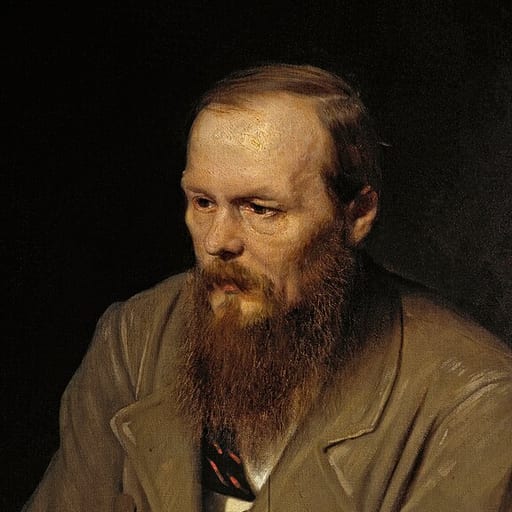
Fyodor Dostoevsky

표도르 도스토옙스키

Russian novelist; author of Crime and Punishment

408 records in all

  • Principles 158
  • Episodes 216
  • Quotes 34
Ask with this master's words

3 free questions a day, no sign-up.

Photo: Vasily Perov  Public domain  Original  cropped

Episodes

32 basic records of 216

Episodes are real events from public sources, summarised by us.

  • Failure in Translation

    Dostoevsky began his literary career by translating Balzac's work, but the project and subsequent translations were not successful. Facing financial difficulties, he decided to write his own novel instead.

    LessonIf your current service or product isn't gaining traction, use your skills to create something original.

  • The Cost of Addiction

    Dostoevsky's relationship with Polina Suslova peaked in the winter of 1862 but eventually failed. His gambling addiction and age were cited as key factors that led to the end of their intimate affair.

    LessonPersonal vices and lack of self-control can destroy valuable partnerships and personal stability.

  • Development of Individual Style

    Early in his career, Dostoevsky faced accusations of plagiarism because the influence of other writers was so evident in his work. Over time, he moved beyond these influences to develop a highly individual and recognizable style.

    LessonInitial imitation is common, but long-term success requires evolving into a unique voice that cannot be mistaken for anyone else.

  • The Treasure Digger Label

    The critic Mihailovsky once referred to Dostoevsky as a 'treasure-digger' while reviewing his work. This was a rare recognition that Dostoevsky was digging into the darker, hidden parts of the human soul that others ignored.

    LessonTrue insight often comes from exploring the 'dark' or difficult areas that competitors and peers avoid.

  • The Illusion of Worldviews

    Dostoevsky and Tchekhov observed that people often mistake their comfortable lifestyle for the strength of their ideals. When illness or failure strikes, these 'general ideas' often shatter because they were never the true source of happiness.

    LessonDo not rely on abstract theories for resilience; test your principles against actual hardship.

  • 1881Risk

    The Failure of Political Prophecy

    도스토옙스키는 러시아가 내부 문제를 평화롭게 해결하고 유럽을 구원할 것이라고 예언했어요. 하지만 그가 죽고 25년이 지난 후, 러시아는 유혈 사태와 폭력에 휘말리며 그의 예측과는 정반대의 길을 걷게 되었어요.

    Lesson자신의 전문 분야를 벗어난 예측은 브랜드의 신뢰도를 떨어뜨릴 수 있으니 주의해야 해요.

  • Heine's Defiance in Suffering

    시인 하이네는 전신 마비로 침대에 누워 극심한 통증을 겪으면서도 기존의 도덕이나 종교에 굴복하기를 거부했어요. 그는 회개하거나 용서를 구하는 대신 오히려 더 날카로운 풍자와 독설로 자신의 신념을 지켰어요.

    LessonExternal failure or physical limitations do not have to mean the defeat of your inner vision or principles.

  • The Failure of Metaphysics as Science

    Metaphysics attempted to gain legitimacy by adopting the rigorous proof requirements of science. This decision backfired, as it forced the field to abandon its unique vocation of exploring truths that cannot be logically demonstrated.

    LessonTrying to fit a creative or visionary project into a rigid, traditional framework can destroy its core value.

  • The Dilemma of Modern Methodology

    Dostoevsky and Tolstoy shared their conversion stories, but modern scientific methodology often dismisses such subjective experiences as useless. This creates a risk where people lose the ability to value or even remember exceptional insights that aren't demonstrable.

    LessonDo not let a strict reliance on metrics blind you to the 'hallucinations' or dreams that could be valuable realities.

  • Schopenhauer's Radical Consistency

    Arthur Schopenhauer was the only follower who took Kant's ideas about the subjectivity of space and time to their literal, radical extremes. This led him to explore unconventional areas like magic and clairvoyance, which other Kantians ignored to stay within 'common sense.'

    LessonTaking a theory to its absolute limit can lead to breakthroughs, but it often alienates you from the mainstream market.

  • The Clash of Philosophical Giants

    Dostoevsky's biographer notes that great thinkers like Aristotle and Plato, or Schopenhauer and Hegel, were often fundamentally incapable of understanding each other's core premises. This lack of mutual understanding is not a failure but a natural result of their distinct, sovereign intellectual paths.

    LessonIn business, do not expect competitors or even peers to fully grasp your unique vision; focus on your own strategic sovereignty.

You are seeing 66 basic records. Membership answers from all 408 of this master's records.

See membership

More masters in this field

See the whole field

Craft, arts and performance

These records are our compilation of public statements and sources. We are not affiliated with or endorsed by Fyodor Dostoevsky or any related company. If something should come down, tell us. Takedown request form