Hall of Masters

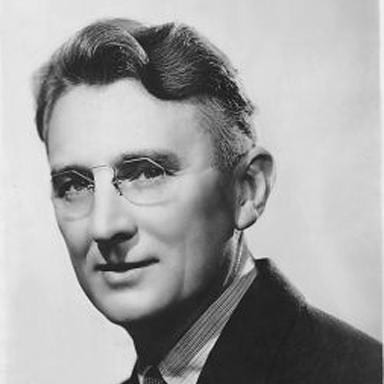
Dale Carnegie

데일 카네기

Author of How to Win Friends and Influence People

561 records in all

  • Principles 166
  • Episodes 95
  • Quotes 300
Ask with this master's words

3 free questions a day, no sign-up.

Photo: Unknown author  Public domain  Original  cropped

Episodes

14 basic records of 95

Episodes are real events from public sources, summarised by us.

  • 1908Sales

    Early Sales Success

    After graduating from college, Carnegie sold correspondence courses and later moved to selling food products for Armour & Company. He excelled so much that he made his South Omaha territory the national leader for the firm.

    LessonMastering sales in a specific territory can provide the financial foundation and confidence to pursue bigger dreams.

  • 1922Brand

    Strategic Name Change

    Originally spelled 'Carnagey', he changed the spelling of his last name to 'Carnegie'. He did this to avoid constantly correcting people who misspelled it and to potentially benefit from the association with the famous Andrew Carnegie.

    LessonRemoving friction for your audience, even in something as simple as a name, can improve brand recognition and ease of communication.

  • The Department Store Strategy

    A successful department store owner does not simply shout for people to buy goods. Instead, he provides entertainment, like organ recitals, to put customers in a pleasant mood that naturally leads to buying.

    LessonTo sell or influence, you must first create a positive and engaging experience for your audience.

  • The Failure of Fair Plays

    Carnegie observed plays that were technically fair but failed to move the audience. They lacked the 'punch' or force necessary to cross the footlights and connect with the viewers.

    LessonTechnical correctness is useless if your product or message lacks the force to impact your target audience.

  • The Lesson of Phidias's Statue

    Phidias was criticized for the rough outlines of a statue he submitted for a high column. When placed at its intended height, the distance smoothed the crudities into grace.

    LessonPublic statements must be bold and enlarged because the audience will naturally tone them down in hindsight.

  • Locomotive Sales Strategy

    A locomotive salesman shared that even when selling heavy machinery to railroads, emotional appeals were more effective than mechanical arguments. This proved that even professional B2B buyers are influenced by feelings.

    LessonEven in highly technical fields, the human element and emotional connection drive the final decision.

  • The Misaddressed Letter

    A Frenchman heard the name of Sir Humphry Davy pronounced and attempted to write to him. Because of the unclear pronunciation he heard, he addressed the letter to 'Serum Fridavi'.

    LessonPoor pronunciation can lead to total failure in communication and professional identity.

  • Whitefield's Nautical Metaphor

    While preaching, Whitefield used dramatic nautical gestures to describe a gathering storm at sea. His delivery was so convincing that sailors in the audience leaped to their feet, shouting for the longboat.

    LessonVivid, dramatic delivery can make a message so real that the audience reacts as if the situation were happening in the moment.

  • Beecher's Source of Sermons

    Henry Ward Beecher found material for his sermons in every person he met on the street and every element of nature he observed. He spent hours looking at jewelry store windows to find analogies between gems and human souls.

    LessonA business owner should look for marketing and product analogies in everyday surroundings rather than just industry reports.

  • Dr. Hillis's Mental Treasure House

    Dr. Newell Dwight Hillis was known for speaking fluently without notes by drawing from a vast internal library of facts across fifteen different subjects. His ability to think and see clearly came from deep reading and constant mental exercise.

    LessonBroad knowledge across diverse fields provides the 'reserve power' needed for confident leadership and communication.

  • Peary's Polar Discovery Lecture

    Robert Peary used a mix of exposition, description, and narration to explain his polar discoveries. He explained his instruments through exposition and shared his daily adventures through narration.

    LessonA great presentation combines factual explanation with storytelling to keep the audience engaged and informed.

  • The Wood-Ash Experiment

    A speaker at a club claimed that grass would grow from wood-ashes without seeds. Despite the absurdity, his absolute confidence eventually convinced an intelligent listener to believe the error.

    LessonPure confidence can sometimes override logic, making even implausible claims seem believable.

  • The Department Store Slogan

    A major U.S. department store invested heavily in the slogan 'Everybody is going to the big store.' This created a psychological urge for people to follow the crowd and visit the store themselves.

    LessonFounders can use the power of social proof to make their product feel like the obvious choice for new customers.

  • Napoleon's View on Governance

    Napoleon Bonaparte declared that the human race is governed by its imagination. This authoritative statement commands respect even from practical people who usually undervalue imagination.

    LessonEven the most practical leaders recognize that imagination is a powerful tool for influence.

You are seeing 84 basic records. Membership answers from all 561 of this master's records.

See membership

More masters in this field

See the whole field

Sales and persuasion

These records are our compilation of public statements and sources. We are not affiliated with or endorsed by Dale Carnegie or any related company. If something should come down, tell us. Takedown request form