Hall of Masters

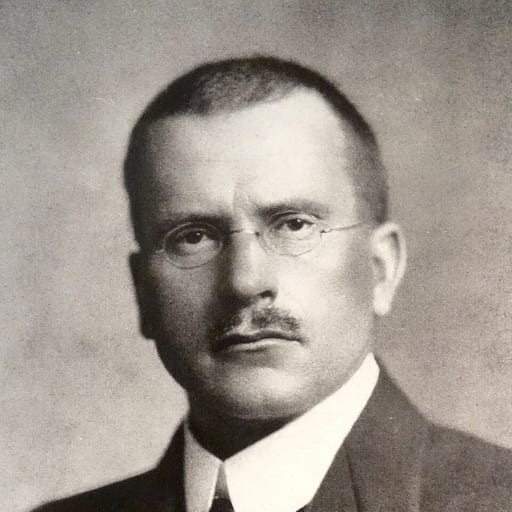
Carl Jung

카를 융

Swiss psychiatrist, founder of analytical psychology

1,078 records in all

  • Principles 381
  • Episodes 233
  • Quotes 464
Ask with this master's words

3 free questions a day, no sign-up.

Photo: Unknown author  Public domain  Original  cropped

Episodes

35 basic records of 233

Episodes are real events from public sources, summarised by us.

  • Demosthenes' Overcoming of Stammering

    데모스테네스는 다른 아이들보다 언어 능력이 떨어지는 신체적 열등감을 가졌으나, 이를 극복하려는 야망을 품었어요. 그는 단순히 정상적으로 말하는 것을 넘어 당대 최고의 웅변가가 되는 성취를 이루었어요.

    LessonSpecific weaknesses can be the starting point for developing world-class strengths through focused ambition.


  • The Analysis of Psychological Types

    Jung identified eight psychological types to explain the deep-seated misunderstandings and conflicts between people. He observed that individuals often become highly specialized in one area, like Darwin in thinking, while becoming callous to other aspects of life like art or joy.

    LessonOver-specialization in business or a single skill can lead to a fragmented life and eventual mental breakdown.

  • The Shift from Trauma Theory

    Jung observed that the early psychoanalytic focus on childhood shocks was being replaced by a more nuanced understanding of the patient's current environment. He noted that relying solely on past trauma to explain current neurosis was too narrow.

    LessonDon't let a single past failure or 'shock' define your entire business strategy; look at the current context.

  • The Discovery of Repression

    Breuer and Freud discovered that patients often forgot significant emotional events, requiring special methods to bring them back to consciousness. Jung validated this through association tests, proving that emotional complexes are harder to recall.

    LessonCritical information in a team or project can be 'forgotten' or suppressed if it is tied to high emotional stress.

  • The Case of the Hysteric Patient

    Jung observed a young lady who reacted pathologically to everyday events while ignoring major shocks. He discovered she lived in an infantile fantasy world, avoiding the stern realities of life through light-hearted trifling or exaggerating small troubles.

    LessonIgnoring reality in favor of comfortable illusions makes one vulnerable to sudden collapse when faced with minor external pressures.

  • Analyzing the Opponents

    Jung analyzed colleagues who were previously passionate opponents of psychoanalysis. He found that when they started practicing, they initially failed by forcing the material to fit their own prejudices.

    LessonEven experts can fail if they let their past biases dictate how they interpret new evidence.

  • The Shift to Actual Conflict

    Jung observed through association experiments that neurosis is often a reaction to an actual, current conflict rather than just childhood trauma. He realized that while everyone has complexes, the key difference is whether one solves the current conflict or remains stuck in it.

    LessonFocus on solving the immediate problems you are avoiding today rather than over-analyzing past failures.

  • Evolution of Psychoanalysis

    Jung observed that psychoanalysis shifted from a 'surgical' method of removing blocked emotions to a 'historical' method of investigating origins. He realized that simply understanding history wasn't enough if the patient remained stuck in an infantile attitude.

    LessonUnderstanding the root cause of a failure is useless unless it leads to a change in current practical behavior.

  • The Schoolgirl's Arithmetic Recovery

    A young girl suffered from physical symptoms and avoided school because she felt inferior in arithmetic and feared losing her teacher's respect. After an analysis revealed she was using illness to escape, she was encouraged to ask questions and view her affection for the teacher as motivation.

    LessonAddressing the underlying fear of failure can turn a struggling performer into a top achiever.

  • Treating Rowland Hazard

    Jung treated an American businessman for alcoholism, concluding that recovery required a vital spiritual experience. This insight was shared with others and eventually became a foundational principle for the creation of Alcoholics Anonymous.

    LessonA deep understanding of human psychology can lead to solutions that scale far beyond a single client or product.

  • Sacrificing Status for Vision

    During his psychological crisis, Jung resigned from his lectureship at the University of Zürich. He chose to focus on his private practice and his internal exploration despite the loss of academic standing.

    LessonYou may need to step back from prestigious roles to protect your focus during a pivotal transition.

  • Mapping the Four Functions

    Between 1913 and 1917, Jung engaged in intense self-experimentation using active imagination to observe his own mental processes. This allowed him to map how certain functions like thinking or intuition dominate consciousness while others remain unconscious.

    LessonSelf-observation is a powerful tool for identifying your dominant strengths and hidden blind spots.

  • Publication of Psychological Types

    Jung moved from a simple model of introversion and extraversion to a complex eight-fold functional system. He integrated these concepts into a comprehensive theory that defined personality based on the movement of psychic energy.

    LessonDeveloping a systematic framework for understanding human behavior can lead to more predictable and effective management.

  • Integration of Evolutionary Theory

    Jung grounded his psychology in Darwinian theory but integrated it with German developmental traditions. This led him to view the human psyche as an 'archaeological' structure with layers ranging from archaic subcortical systems to modern consciousness.

    LessonRecognizing that human behavior is driven by deep-seated evolutionary layers can help a business owner better understand consumer instincts.

  • The Indirect Origin of AA

    융은 만성 알코올 중독 환자인 롤랜드 해저드 3세에게 의학적 치료가 한계에 다다랐음을 알리고 영적 경험만이 유일한 희망이라고 조언했어요. 이 조언은 해저드를 거쳐 나중에 익명 알코올 중독자 협회(AA)를 공동 설립한 윌리엄 그리피스 윌슨에게 전달되어 12단계 프로그램의 심리학적 토대가 되었어요.

    LessonWhen technical solutions fail, a fundamental shift in mindset or a 'spiritual' transformation may be the only way to solve a chronic problem.

  • BTS Map of the Soul Collaboration

    한국의 그룹 BTS는 융의 분석심리학 원리를 바탕으로 한 앨범 시리즈를 발표했어요. 멤버들은 가사를 통해 페르소나, 그림자, 자아 등 융의 핵심 이론을 탐구하며 전 세계적인 공감을 얻었어요.

    Lesson깊이 있는 심리학적 이론을 현대적 콘텐츠에 결합하면 강력한 팬덤과 브랜드 서사를 구축할 수 있어요.

  • The Evolution of a Major Work

    Jung published Psychology of the Unconscious in 1912, which was a pivotal moment in his career. Forty years later, in 1952, he released a significantly revised edition titled Symbols of Transformation to reflect his matured theories.

    LessonDo not be afraid to overhaul your early products or ideas when you have gained more experience and insight.

  • Jung's Departure from Freud

    Jung diverged from Freud by arguing that the cause of neurosis is not just in the past but in the present. He believed patients often look to the past to avoid facing their current responsibilities.

    LessonFocusing on past failures can be a form of procrastination; look at what current task you are avoiding instead.

  • The Pursuit of Risky Research

    Jung decided to publish his findings on the unconscious despite knowing the hypotheses might be erroneous. He chose to prioritize the deepening of knowledge over the safety of established dogmas.

    LessonInnovation requires the courage to test hypotheses that others might dismiss as unproven or risky.

  • The encounter with Freud's Oedipus theory

    Jung reflects on the profound impact of reading Freud's interpretation of dreams. He realized that ancient myths like Oedipus were not just old stories but roots of modern individual psychological conflicts.

    LessonRecognizing historical patterns in modern problems allows for a higher coherence and deeper understanding of current challenges.

You are seeing 162 basic records. Membership answers from all 1,078 of this master's records.

See membership

More masters in this field

See the whole field

Mindset and resilience

These records are our compilation of public statements and sources. We are not affiliated with or endorsed by Carl Jung or any related company. If something should come down, tell us. Takedown request form