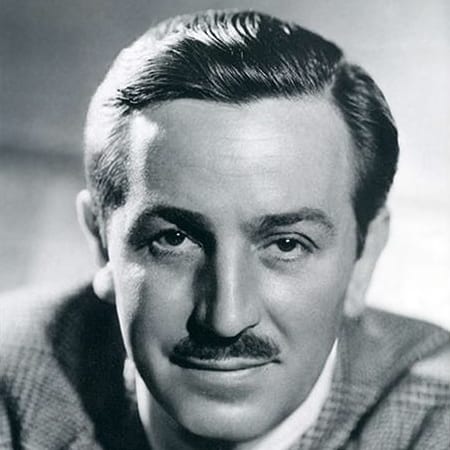
Hall of Masters

Walt Disney

월트 디즈니

Founder of The Walt Disney Company

204 records in all

  • Principles 94
  • Episodes 80
  • Quotes 30
Ask with this master's words

3 free questions a day, no sign-up.

Photo: Boy Scouts of America  Public domain  Original  cropped

Episodes

12 basic records of 80

Episodes are real events from public sources, summarised by us.

  • 1929Sales

    The First Mickey License

    A man approached Walt on a New York street and offered $300 to put Mickey Mouse on children's writing workbooks. Walt accepted the cash immediately because the studio needed money during the early days of the Great Depression.

    LessonEarly on, even small licensing deals can provide essential cash flow and proof of concept for a brand.
  • The Story Department Process

    The Disney studio developed a process where story meetings involved acting out sketches pinned to corkboards. This allowed the team to edit dialogue and reorder scenes easily before the expensive animation phase began.

    LessonIterate and edit in the cheapest medium possible before committing to high-cost production.

  • The Latin America Goodwill Trip

    To escape the 'nightmare' of the strike in Burbank, Walt accepted a government-sponsored trip to Latin America. While he was away, Roy Disney recognized the union and settled the labor dispute, while Walt found inspiration for new films like Saludos Amigos.

    LessonSometimes a founder needs to step away from a conflict they cannot emotionally handle to allow others to reach a pragmatic solution.

  • The Birth of the Disney Vault

    Facing a severe cash crunch during World War II, Disney re-released Snow White in theaters instead of making new content. The move cost very little but generated 3 million dollars in revenue.

    LessonWhen cash is tight, look for ways to re-package and sell your existing high-quality assets to a fresh audience.

  • Founding WED Enterprises

    When the board of Walt Disney Productions refused to fund his theme park idea, Walt started his own private company, WED Enterprises. He used this entity to hire away his own studio's best artists to work on Disneyland.

    LessonIf your current organization blocks a vision, find a way to build it independently.

  • 1953Wealth

    The Retlaw and WED Structure

    Walt Disney personally owned the Disneyland Railroad and Monorail through his private company, WED Enterprises, rather than through the public Disney company. This allowed him to collect ticket revenue as a personal annuity and retain rights to his name and likeness.

    LessonStrategic ownership of core assets can provide long-term personal financial security even while building a public entity.

  • The Florida Land Acquisition

    Walt Disney secretly purchased 27,000 acres of swampland in Central Florida using various subsidiaries to hide his identity. This massive area, twice the size of Manhattan, was intended for his utopian city vision, EPCOT.

    LessonStrategic secrecy in land or asset acquisition can prevent price gouging and competitor interference.

  • The Rising Budget of Mary Poppins

    As the budget for Mary Poppins grew to five million dollars, Disney noticed a lack of concern or opposition from his staff and even his brother Roy. This unusual lack of pushback made him nervous, as he realized his team had finally stopped questioning his judgment entirely.

    LessonWhen a leader's team stops questioning risky decisions, it can be a sign that they have lost their critical edge or are deferring too much to authority.

  • 1919Career

    Starting from the Bottom

    After returning from WWI, Walt struggled to find work as a cartoonist in Kansas. He eventually took a job at an advertising company making 1-minute animation clips by moving dolls.

    LessonPractical experience in a related field, even at a small scale, provides the foundational skills needed for future mastery.

  • Working Through Terminal Illness

    After being diagnosed with lung cancer, Disney underwent treatment and immediately returned to work, believing he was recovered. He remained heavily involved in story development for several major films until his final weeks.

    LessonA founder's passion for their craft often drives them to remain productive even in the face of severe personal adversity.

  • Advocating for James Baskett

    Disney formed a close friendship with actor James Baskett and campaigned for him to receive an Honorary Academy Award. He also provided financial support to Baskett and his family when the actor's health began to fail.

    LessonBuilding genuine relationships with your team and supporting them in times of need creates lifelong loyalty and gratitude.

  • Transformation of a Marginal Studio

    Walt Disney took a minor animation studio and turned it into a multinational leisure industry giant. He achieved this through technological innovation and strategic partnerships with powerful entities.

    LessonStrategic scaling and innovation can turn a niche business into a dominant industry leader.

You are seeing 36 basic records. Membership answers from all 204 of this master's records.

See membership

More masters in this field

See the whole field

Founders and company builders

These records are our compilation of public statements and sources. We are not affiliated with or endorsed by Walt Disney or any related company. If something should come down, tell us. Takedown request form