
W. Edwards Deming
W. 에드워즈 데밍
Statistician who shaped Japan's quality movement
51 records in all
- Principles 12
- Episodes 23
- Quotes 16
3 free questions a day, no sign-up.
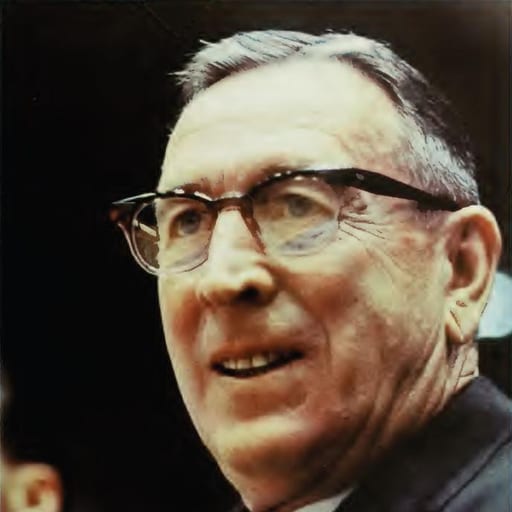
Photo: FDA Public domain Original cropped
Quotes
10 basic records of 16
Quotes are word for word from the source.
Continuous learning
Learning is not compulsory; it's voluntary. Improvement is not compulsory; it's voluntary. But to survive, we must learn.
Our noteHe emphasizes that survival in business depends on the choice to learn.
Building quality in
Quality comes not from inspection, but from improvement of the production process.
Our noteHe argues against relying on end-of-line checks to ensure product quality.
Cost of defects
Defects are not free. Somebody makes them, and gets paid for making them.
Our noteHe points out the hidden costs of poor quality in production.
Constant improvement
Improve constantly and forever the system of production and service, to improve quality and productivity, and thus constantly decrease costs.
Our noteThis is the fifth point of his 14 points for management.
Individual differences
A manager of people needs to understand that all people are different. This is not ranking people.
Our noteDeming explains the role of a manager in understanding human variation.
Systemic performance
He needs to understand that the performance of anyone is governed largely by the system that he works in, the responsibility of management.
Our noteDeming discusses how management is responsible for the systems that dictate performance.
Defining purpose
It is important that an aim never be defined in terms of a specific activity or method. It must always relate to a better life for everyone.
Our noteDeming advises on how to set a meaningful aim for an organization.
Active management
A system must be managed. It will not manage itself. Left to themselves in the Western world, components become selfish, competitive, independent profit centres, and thus destroy the system.
Our noteDeming warns about the dangers of unmanaged components within an organization.
Fear and data
the principle that where there is fear, there will be wrong figures.
Our noteDeming notes the correlation between a fearful culture and inaccurate reporting.
Knowledge vs information
Information is not knowledge. The world is drowning in information but is slow in acquisition of knowledge. There is no substitute for knowledge.
Our noteDeming distinguishes between raw information and profound knowledge.
You are seeing 17 basic records. Membership answers from all 51 of this master's records.
See membershipMore masters in this field
See the whole fieldManagement and leadership




These records are our compilation of public statements and sources. We are not affiliated with or endorsed by W. Edwards Deming or any related company. If something should come down, tell us. Takedown request form