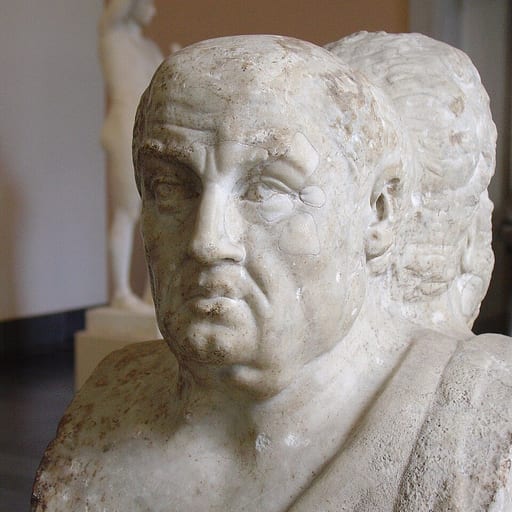
Seneca the Younger
세네카
Roman Stoic philosopher and statesman; Letters to Lucilius
1,047 records in all
- Principles 346
- Episodes 150
- Quotes 551
3 free questions a day, no sign-up.
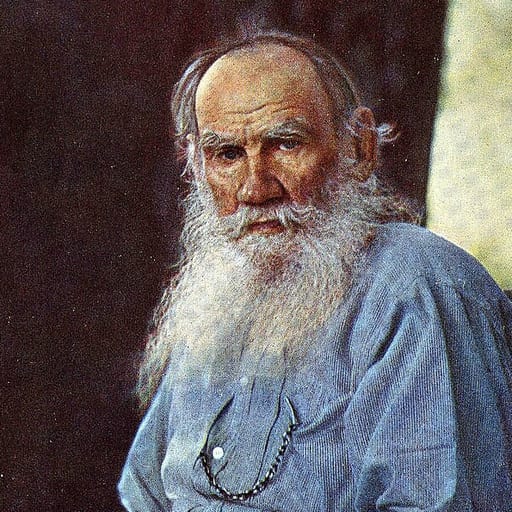
Photo: Calidius CC BY-SA 3.0 Original cropped
Quotes
83 basic records of 551
Quotes are word for word from the source.
Impactful content
But when you come to read Sextius, you will say: "He is alive; he is strong; he is free; he is more than a man; he fills me with a mighty confidence before I close his book.
Our noteSeneca describes the powerful effect of reading a writer who possesses genuine spirit.
Vision of Achievement
No man of exalted gifts is pleased with that which is low and mean; the vision of great achievement summons him and uplifts him.
Our noteOn how high aspirations motivate talented individuals to pursue greatness.
Persistence in generosity
It is better, however, to get no return than to confer no benefits. Even after a poor crop one should sow again; for often losses due to continued barrenness of an unproductive soil have been made good by one year's fertility.
Our noteSeneca encourages Lucilius to keep helping others despite encountering ingratitude.
Embracing difficulty
If one were compelled to drop everything that caused trouble, life would soon grow dull amid sluggish idleness; but in your case this very condition may prompt you to become more charitable.
Our noteSeneca argues that avoiding all trouble leads to a dull and unproductive life.
Intrinsic Reward
For they are not practised with a view to recompense; the wages of a good deed is to have done it.
Our noteSeneca explains that the primary benefit of being virtuous is the internal satisfaction of the act itself.
Conscience Over Reputation
No one, I think, rates virtue higher or is more consecrated to virtue than he who has lost his reputation for being a good man in order to keep from losing the approval of his conscience.
Our noteSeneca discusses the ultimate commitment to integrity, even when it leads to public misunderstanding.
Generous interpretation
he makes light of all mishaps by interpreting them in a generous way.
Our noteThe wise person chooses to view setbacks and slights through a positive lens.
Tested virtues
I should bestow greater praise upon those goods that have stood trial, and show courage, and have fought it out with fortune.
Our noteValuing character that has been proven through struggle.
Accepting Imperfection
For it has ever been thus: no man's ability has ever been approved without something being pardoned.
Our noteSeneca notes that even the greatest figures have flaws that their contemporaries chose to overlook.
Objective reality check
Apply careful investigation, considering how our affairs actually stand, and not what men say of them; you will then understand that evils are more likely to help us than to harm us.
Our noteSeneca advises Lucilius to ignore public opinion and analyze the true nature of events.
Practical consumption
We should satisfy our stomachs without being over-nice. How does it matter what the stomach receives, since it must lose whatever it has received?
Our noteSeneca argues against over-refining one's tastes in food and consumption.
Internal validation
you will strive not to seem happy, but to be happy, and, in addition, to seem happy to yourself rather than to others.
Our noteHe advises focusing on internal satisfaction rather than external appearances.
The cost of greed
For men cease to possess all things the moment they desire all things for their own.
Our noteSeneca discusses how avarice destroyed the original communal fellowship of humanity.
Lasting Value
For he would have judged that nothing was worth discovering that he would not afterwards judge to be worth using always.
Our noteSeneca suggests focusing only on things that have permanent utility.
True Power and Happiness
he has published the truth abroad that he is most happy who has no need of happiness, and that he is most powerful who has power over himself.
Our noteSeneca defines the true achievements of a wise person beyond technical inventions.
Sacrifice for freedom
No man can swim ashore and take his baggage with him.
Our noteSeneca uses a metaphor to show that leaving a toxic situation requires leaving some assets behind.
Consistent life scheme
in order that virtue may be perfect, there should be an even temperament and a scheme of life that is consistent with itself throughout
Our noteHe emphasizes the importance of consistency and temperament in achieving excellence.
Integrity under fire
Are you not willing to be just without being renowned? Nay, indeed you must often be just and be at the same time disgraced.
Our noteHe challenges the reader to maintain their principles even when it leads to a bad reputation.
Time Management
gather and save your time, which till lately has been forced from you, or filched away, or has merely slipped from your hands.
Our noteSeneca advises Lucilius to reclaim and protect his most valuable asset.
Anticipate all outcomes
Therefore, nothing ought to be unexpected by us. Our minds should be sent forward in advance to meet all problems, and we should consider, not what is wont to happen, but what can happen.
Our noteAdvising Lucilius to mentally prepare for every possible disaster, no matter how unlikely.
Ignoring Common Opinion
It is only by common opinion that there is anything formidable in them. Your fearing death is therefore like your fear of gossip.
Our noteSeneca challenges the idea that we should fear things just because others say they are scary.
The speed of time
Infinitely swift is the flight of time, as those see more clearly who are looking backwards. For when we are intent on the present, we do not notice it, so gentle is the passage of time's headlong flight.
Our noteSeneca reflects on how quickly life passes when looking back at his career and youth.
Contextual scale
A ship which looms large in the river seems tiny when on the ocean. A rudder which is large for one vessel, is small for another.
Our noteHe uses maritime metaphors to show how market or environment size changes the perception of importance.
You are seeing 158 basic records. Membership answers from all 1,047 of this master's records.
See membershipMore masters in this field
See the whole fieldPhilosophy and wisdom traditions

These records are our compilation of public statements and sources. We are not affiliated with or endorsed by Seneca the Younger or any related company. If something should come down, tell us. Takedown request form