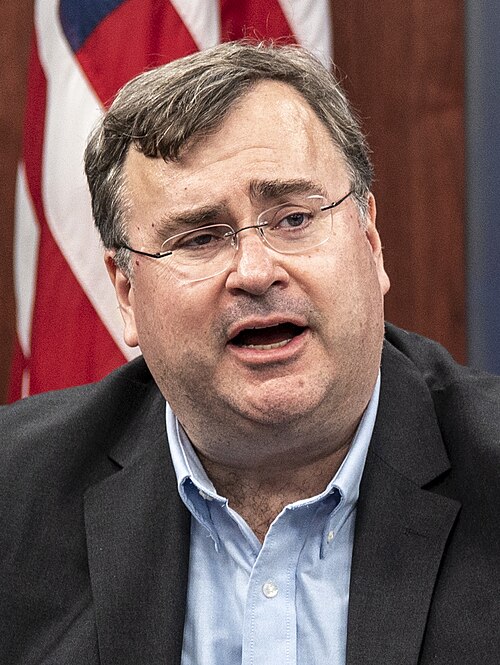
Reid Hoffman
리드 호프먼
Co-founder of LinkedIn and key member of the PayPal Mafia, a prominent Silicon Valley investor known for advocating blitzscaling and the power of human networks.
3,609 records in all
- Principles 945
- Episodes 646
- Quotes 2,018
3 free questions a day, no sign-up.
Quotes
303 basic records of 2,018
Quotes are word for word from the source.
Honesty about risks
And that's one of the pieces of advice I give entrepreneurs in dealing with investors is don't try to say we have no risks. Right? It's like, duh, you have risks.
Our noteReid discusses the importance of being transparent with investors about the challenges a startup faces.
CEO board relations
Trust maintenance is: you have to have CEOs that trust that you, as a board member, will not operationally undermine them except by direct discussion
Our noteReid talks about the importance of not undermining a leader's authority when interacting with their team.
Respecting leadership authority
I'm very careful about not undermining the CEO. So, we're sitting down and Sam asked me a question out of the blue, no prep, just like "So?"
Our noteReid describes a surprise question from Sam Altman during an OpenAI all-hands meeting.
Iterative deployment
you cannot get it perfect before you get it. Like you tried to get a car perfect before you put the car on the road, you'd have no cars.
Our noteReid argues for launching products and iterating rather than waiting for perfection.
Learning from iteration
all technology iterative deployments are important. There will be things that are fail moments in it. They'll have to iterate and change it. That's, by the way, not a fail for them.
Our noteReid explains that early product flaws are opportunities for learning, not final failures.
Using simulated data
what are the things you use generated data for, simulated data, et cetera, is like, let's go through every possible really bad circumstance.
Our noteReid explains why AI companies use simulated data to train autonomous vehicles for rare edge cases.
Safety through training
part of the reason you do that and train them all, is because it's part of how you get in substantive ways safer than human drivers - because human drivers never encounter those circumstances.
Our noteReid discusses how AI can become safer than humans by training on rare scenarios.
Global innovation hubs
the more Silicon Valleys there are, around the world, especially around the Western world and creating technology, having humanistic values in terms of what you're building, etc - the better we all are.
Our noteReid explains why he supports the growth of technology ecosystems in other democratic countries.
Power of collaboration
I think it's better in partnership, better in alliance, better in collaboration.
Our noteReid emphasizes the importance of international collaboration in developing AI and technology.
Integrating AI tools
Every single CEO of anything from a five to seven person company, to a tens of thousands of people company, should look at that and say, "What's my version of how I should do that and how I should integrate it?
Our noteReid discusses Shopify CEO Tobi Lütke's memo requiring employees to use AI daily.
Shaping technology
my principle thought there is we should not be trying to restrict technology as much as we should be trying to shape technology.
Our noteReid talks about how to handle market volatility and misinformation caused by technology.
Learning at scale
As opposed to, we program the AI, the AI learns. And it learns at scale because you can use self play as a way of doing it.
Our noteHe explains how self-play allows AI to learn more efficiently than manual programming.
Returning to AI
Seeing this genius moment by them was part of what got me back into AI from my undergraduate days, where I concluded that the mindsets, and programming AI, would actually not work.
Our noteReid reflects on why he initially left AI and what brought him back to the field.
AI for general principles
Like for general principles, like, you know, how would I approach a board member to raise the topic the right way? It'll be very good at. When it gets to specifics, those things that won't generally be as good at.
Our noteReid discusses the strengths and limitations of using AI like Pi for professional advice.
Future career skills
What's going to be the ongoing table stakes for people engaging with these agentic technologies to, to strategize and navigate their career and work trajectories?
Our noteReid asks about the evolving skill sets needed to work effectively with AI agents.
AI and humanity
AI is, you know, going to potentially amplify humanity even in jobs and work.
Our noteReid discusses how AI will enhance human capabilities rather than just replacing them.
Technological transition
this is a thing that's going to amplify people. The transition's going to be really, you know, challenging and, and, and, and have some real effort in it.
Our noteReid acknowledges the difficulty of the coming economic shift while remaining optimistic about the outcome.
Existing drug safety
Because look, part of the thing is - just to be clear - we've got thousands of drugs that we know are not toxic.
Our noteReid highlights the opportunity in repurposing already approved, safe drugs.
Agent optimization era
You previously had search engine optimization, a la Google. Now you're going to have agent optimization.
Our noteReid predicts how AI agents will change how people find specialized information.
Importance of deployment
I think, actually, in fact, one of the really key things - it's not just scale compute, scale data, scale teams, but also scale deployment.
Our noteReid argues that scaling the use of technology is as vital as scaling the technology itself.
Technology and centralization
I think all technology is inherently centralizing, but we can choose to make it decentralizing.
Our noteReid argues that human choice determines whether technology centralizes power or distributes it.
Preserving institutions
by being antitrust, by being only power, by tearing down institutions, you're tearing down the very society that has gotten us to our most elevated golden age.
Our noteReid expresses concern about political movements that undermine social trust and institutions.
Rebuilding trust
Maybe it's: where do you see the elements for the possibility of rebuilding trust somewhere in society?
Our noteReid asks about the potential for restoring trust within modern society.
AI versus human experts
It probably won't be as good as the best human experts, but there's kind of three things that can obviate that. One is they'll probably be pretty good at saying, "Hey, this is one I couldn't read that.
Our noteReid discusses how AI will handle complex human interactions like focus groups.
Regulation vs Technology
Yes, we should have a cord. Yes, we should try to limit the temperature. Yes, we should do things, but that's not the solution. That is simply a delay. And so the solution is technology.
Our noteReid argues that while regulations help, only technological innovation actually solves the problem.
Human-Machine Collaboration
You could have a person-plus-machine still be much better. But also when it gets that skill gap of lower-skilled or higher-skilled, you go, "Who is benefited by an amazing assistant that does all of the basics, you know, very well?
Our noteReid discusses how AI assistants bridge the gap between different skill levels in the workforce.
Human search for truth
We need to figure out how to get, you know, the question about the human search for truth is allowing a discourse between positions and allow, you know, like people to have that discourse, is what's most important.
Our noteReid emphasizes the need for AI to facilitate human discourse and truth-seeking.
Digital Identity and Belonging
What followed wasn't just a new kind of art. It was a new kind of belonging. A way that people began to relate to identity, ownership, and culture on the Internet.
Our noteReid introduces the impact of CryptoPunks on internet culture and digital ownership.
Importance of Artistic Challenge
it's that challenge moment that is actually important on the art thing.
Our noteReid emphasizes that the controversy surrounding new art is what makes it significant.
Advice to younger self
second guessing an amazing journey and success is always difficult, but like, if you could call yourselves, your younger selves, 2017, before you hit publish, is there anything you would tell yourself
Our noteReid asks the founders about potential regrets or changes they would make to their original launch.
You are seeing 542 basic records. Membership answers from all 3,609 of this master's records.
See membershipMore masters in this field
See the whole fieldFounders and company builders

These records are our compilation of public statements and sources. We are not affiliated with or endorsed by Reid Hoffman or any related company. If something should come down, tell us. Takedown request form