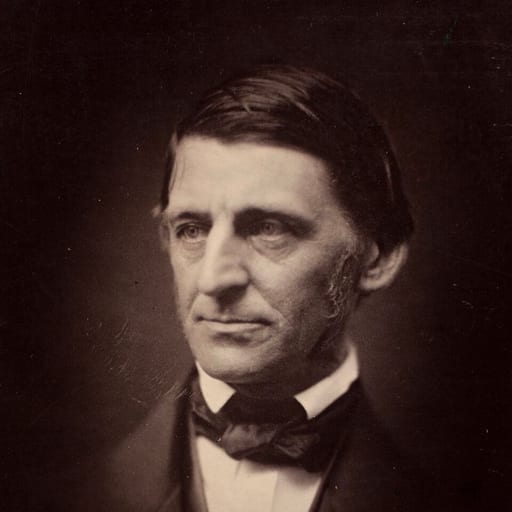
Ralph Waldo Emerson
랠프 월도 에머슨
Essayist and lecturer; author of Self-Reliance
1,253 records in all
- Principles 399
- Episodes 233
- Quotes 621
3 free questions a day, no sign-up.
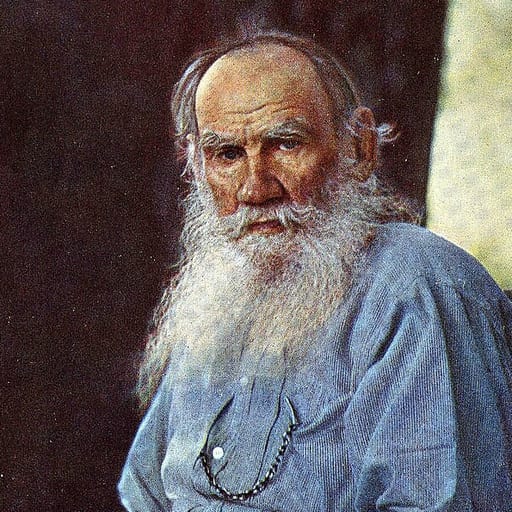
Photo: Josiah Johnson Hawes Public domain Original cropped
Quotes
93 basic records of 621
Quotes are word for word from the source.
Action and realization
Genius is not a lazy angel contemplating itself and things. It is insatiable for expression. Thought must take the stupendous step of passing into realization.
Our noteHe emphasizes that genius requires the drive to turn thoughts into reality.
Willpower as power
Will is the measure of power. To a great genius there must be a great will.
Our noteHe asserts that intellectual ability is useless without the will to act.
Memory as instructor
Memory is not a pocket, but a living instructor, with a prophetic sense of the values which he guards; a guardian angel set there within you to record your life
Our noteEmerson describes memory as an active force that guides and improves a person's character.
Purposeful memory
The mind disposes all its experience after its affection and to its ruling end; one man by puns and one by cause and effect, one to heroic benefit and one to wrath
Our noteHe explains how our primary goals determine how we organize and remember our experiences.
Mental clarity
It is found that we remember best when the head is clear, when we are thoroughly awake.
Our noteEmerson emphasizes the importance of physical health and alertness for cognitive performance.
True organizational soul
The soul of a political party is by no means usually the officers and pets of the party, who wear the honors and fill the high seats and spend the salaries.
Our noteHe explains that the real power of a movement lies in its dedicated theorists, not its officials.
Ethics as economic value
Moral values become also money values. When men saw that these people, besides their industry and thrift, had a heart and soul and would stand by each other at all hazards, they desired to come and live here.
Our noteEmerson explains how a community's integrity and mutual defense increased property values in Boston.
Purpose over profit
art was to him no means of livelihood or road to fame, but the end of living
Our noteEmerson describes Michelangelo's total devotion to his craft as a spiritual calling.
Idealism vs realism
Milton seldom deigns a glance at the obstacles that are to be overcome before that which he proposes can be done.
Our noteEmerson critiques Milton's prose for demanding ideal justice without considering practical implementation.
Focus in communication
Eager to do fit justice to each thought, he does not subordinate it so as to project the main argument.
Our noteEmerson notes that Milton's writing often lost its main point by over-explaining every detail.
Discipline for greatness
he who would write an epic to the nations, must eat beans and drink water.
Our noteEmerson notes that high achievement requires a life of austerity and focus.
Beyond the words
Observe moreover that we ought to credit literature with much more than the bare word it gives us.
Our noteEmerson argues that the value of a work lies in its overall suggestion and atmosphere.
Fearless learning
He was not afraid to live. And in him this encyclopædia of facts, which it has been the boast of the age to compile, wrought an equal effect.
Our noteEmerson describes Goethe's ability to absorb and utilize all the knowledge of his time.
Foundation of sense
Coleridge excellently said of poetry, that poetry must first be good sense; as a palace might well be magnificent, but first it must be a house.
Our noteEmerson emphasizes that even the most creative work must first function on a basic, logical level.
True skill defined
The true men of skill, the poor farmers, who, by the sweat of their face, without an inheritance and without offence to their conscience have reared a family
Our noteEmerson contrasts those who rely on outside capital with those who build value through pure labor and integrity.
Temperament and tragedy
In those persons who move the profoundest pity, tragedy seems to consist in temperament, not in events.
Our noteEmerson observes that a person's internal outlook often dictates their suffering more than external events.
Cost of wealth
If the gatherer gathers too much, nature takes out of the man what she puts into his chest; swells the estate, but kills the owner.
Our noteExcessive accumulation of wealth often comes at a high personal cost to the individual.
Unity of means and ends
Cause and effect, means and ends, seed and fruit, cannot be severed; for the effect already blooms in the cause, the end pre-exists in the means, the fruit in the seed.
Our noteHe emphasizes that the way you do something determines the final outcome.
Inherent flaws in systems
There is a crack in every thing God has made. Always it would seem there is this vindictive circumstance stealing in at unawares
Our noteHe notes that no plan or product is perfect and hidden risks always exist.
The price of things
What will you have? quoth God; pay for it and take it.
Our noteEmerson explains that every benefit in life and business comes with a mandatory cost.
Impact of Work
Believe, when you are weary, that you who stimulate and rejoice virtuous young men do not write a line in vain.
Our noteEmerson encourages Carlyle after the loss of a manuscript, emphasizing the value of his influence.
Legacy through Others
To die of feeding the fires of others were sweet, since it were not death but multiplication.
Our noteEmerson discusses the selfless act of inspiring others as a form of immortality.
Commitment to action
the way to make sure of fighting into the new continent is to burn your ships.
Our noteEmerson discusses the necessity of committing fully to a new project or speech.
The burden of wealth
As no wise man, I suppose, ever was rich in the sense of _freedom to spend,_ because of the inundation of claims, so neither am I, who am not wise.
Our noteEmerson reflects on how financial obligations limit the feeling of freedom.
Local production efficiency
He is quite sure that it would be more profitable to print them in this manner than to try to import and sell here the books after being manufactured in London.
Our noteEmerson explains why printing in America using London plates is better than importing finished books.
Value of manual labor
I believe in the spade and an acre of good ground. Whoso cuts a straight path to his own bread, by the help of God in the sun and rain and sprouting of the grain, seems to me an _universal_ workman.
Our noteEmerson reflects on the integrity of self-reliance and working the land compared to city life.
Skepticism of cities
I always seem to suffer some loss of faith on entering cities. They are great conspiracies; the parties are all maskers, who have taken mutual oaths of silence not to betray each other's secret
Our noteEmerson describes his feeling of alienation and the perceived artificiality of urban social structures.
Overcoming procrastination
I will not resist hints so broad upon my long procrastinations. You shall have at least a tardy acknowledgment that I received in January your letter of December
Our noteEmerson apologizes to Carlyle for his delay in responding to previous correspondence.
Character Over Action
"common souls pay with what they do, nobler souls with that which they are."
Our noteHe reflects on how personal character carries more weight than mere tasks or activities.
Maintaining conviction
They teach us to abide by our spontaneous impression with good-humored inflexibility then most when the whole cry of voices is on the other side.
Our noteHe explains that art teaches us to hold onto our unique perspectives despite social pressure.
You are seeing 188 basic records. Membership answers from all 1,253 of this master's records.
See membershipMore masters in this field
See the whole fieldPhilosophy and wisdom traditions
These records are our compilation of public statements and sources. We are not affiliated with or endorsed by Ralph Waldo Emerson or any related company. If something should come down, tell us. Takedown request form