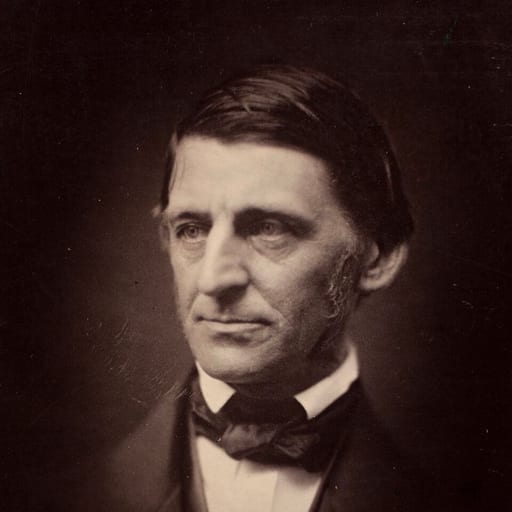
Ralph Waldo Emerson
랠프 월도 에머슨
Essayist and lecturer; author of Self-Reliance
1,253 records in all
- Principles 399
- Episodes 233
- Quotes 621
3 free questions a day, no sign-up.
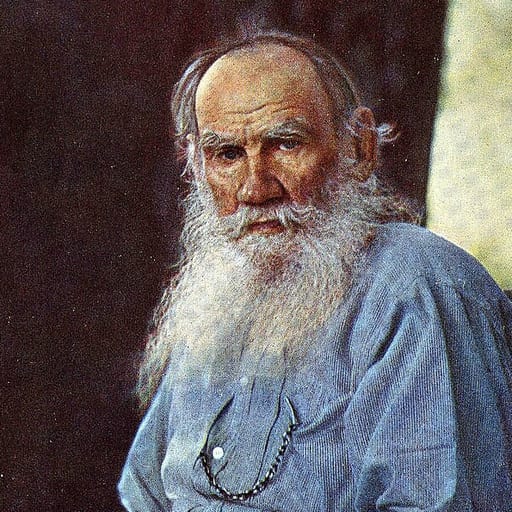
Photo: Josiah Johnson Hawes Public domain Original cropped
Quotes
93 basic records of 621
Quotes are word for word from the source.
Experience over contemplation
A mind might ponder its thought for ages and not gain so much self-knowledge as the passion of love shall teach it in a day.
Our noteEmerson argues that real-world experiences and emotions provide more self-knowledge than isolated thinking.
Daily action
As great a stake depends on your private act to-day, as followed their public and renowned steps.
Our noteEmerson emphasizes that a common person's daily work is as significant as the deeds of kings.
Natural Teaching
It is natural and beautiful that childhood should inquire and maturity should teach; but it is time enough to answer questions when they are asked.
Our noteEmerson criticizes forced education and advocates for responding to genuine curiosity.
Radical transparency
If you would not be known to do any thing, never do it.
Our noteEmerson warns that actions cannot be hidden forever and will eventually reveal character.
Learning through excellence
By conversation with that which is in itself excellent, magnanimous, lowly, and just, the lover comes to a warmer love of these nobilities, and a quicker apprehension of them.
Our noteEmerson suggests that surrounding oneself with high-quality ideas and people accelerates personal growth.
Self reliance
I cannot choose but rely on my own poverty more than on your wealth. I cannot make your consciousness tantamount to mine.
Our noteEmerson emphasizes the importance of one's own perspective over the resources of others.
Patience in growth
Respect the _naturlangsamkeit_ which hardens the ruby in a million years, and works in duration in which Alps and Andes come and go as rainbows.
Our noteEmerson advises respecting the slow, natural pace of development and maturation.
Social hypocrisy
Every man alone is sincere. At the entrance of a second person, hypocrisy begins.
Our noteEmerson observes how social interactions often force people to hide their true thoughts.
Continuous Growth
Our life is an apprenticeship to the truth that around every circle another can be drawn; that there is no end in nature, but every end is a beginning
Our noteEmerson explains that every achievement is merely a starting point for a larger endeavor.
Creative Destruction
New arts destroy the old. See the investment of capital in aqueducts made useless by hydraulics; fortifications, by gunpowder; roads and canals, by railways; sails, by steam; steam by electricity.
Our noteEmerson illustrates how technological advancement renders previous capital investments and infrastructures obsolete.
Demystifying Success
Every thing looks permanent until its secret is known.
Our noteEmerson suggests that understanding the underlying cause of a thing removes its intimidating sense of permanence.
Persuasion and Change
He can only be reformed by showing him a new idea which commands his own.
Our noteEmerson notes that changing someone's mind requires presenting a superior, more powerful concept.
Patience with instinct
Trust the instinct to the end, though you can render no reason. It is vain to hurry it.
Our noteEmerson advises founders to let their instincts ripen into clear knowledge without forcing the process.
Commanding attention
each work of genius is the tyrant of the hour and concentrates attention on itself.
Our noteGreat work demands total focus and makes everything else seem irrelevant for a moment.
Value the present
To finish the moment, to find the journey's end in every step of the road, to live the greatest number of good hours, is wisdom.
Our noteEmerson defines wisdom as finding fulfillment in the present task rather than waiting for a future goal.
Learning From Greatness
Instead of feeling a poverty when we encounter a great man, let us treat the new comer like a travelling geologist who passes through our estate
Our noteHow to view the success of others as a map to one's own hidden potential.
Defining Character
Character is this moral order seen through the medium of an individual nature.
Our noteA concise definition of what constitutes a person's character.
Heart Over Money
Without the rich heart, wealth is an ugly beggar.
Our noteEmerson argues that material wealth without a generous spirit is spiritually bankrupt.
Internal Authority
Every man finds a sanction for his simplest claims and deeds in decisions of his own mind, which he calls Truth and Holiness.
Our noteEmerson explains that true legitimacy for one's actions comes from personal conscience rather than external laws.
Value of Sincerity
Surely nobody would be a charlatan who could afford to be sincere.
Our noteHe posits that people only resort to deception when they lack the inner strength to be authentic.
Individual vs Collective
Friendship and association are very fine things, and a grand phalanx of the best of the human race, banded for some catholic object; yes, excellent; but remember that no society can ever be so large as one man.
Our noteEmerson discusses the limitations of social movements and collective associations compared to individual power.
Limits of Education
We do not believe that any education, any system of philosophy, any influence of genius, will ever give depth of insight to a superficial mind.
Our noteHe criticizes the lack of faith in the transformative power of education and human potential.
Original relation
Why should not we also enjoy an original relation to the universe.
Our noteEmerson questioned why his generation relied on the past instead of their own insight.
Maintain perspective
Keep cool: it will be all one a hundred years hence.
Our noteAdvising on how to handle life's stresses with a long-term view.
Learning and mastery
All the great speakers were bad speakers at first.
Our noteEmerson discusses the nature of fate and human development.
Cause and effect
Shallow men believe in luck, believe in circumstances...Strong men believe in cause and effect.
Our noteEmerson contrasts how different people view success and failure.
Self honesty
Whatever games are played with us, we must play no games with ourselves, but deal in our privacy with the last honesty and truth.
Our noteEmerson warns against self-deception in a world of illusions.
Paying debts
Wilt thou seal up the avenues of ill? Pay every debt as if God wrote the bill.
Our noteHe offers a rule for maintaining integrity and avoiding future troubles.
Daily mindset
Write it on your heart that every day is the best day in the year.
Our noteEmerson encourages a positive and present-focused outlook on life.
Power of symbols
A good symbol is the best argument and is a missionary to persuade thousands.
Our noteEmerson reflects on the persuasive power of poetry and imagination.
You are seeing 188 basic records. Membership answers from all 1,253 of this master's records.
See membershipMore masters in this field
See the whole fieldPhilosophy and wisdom traditions
These records are our compilation of public statements and sources. We are not affiliated with or endorsed by Ralph Waldo Emerson or any related company. If something should come down, tell us. Takedown request form