
Paul Graham
폴 그레이엄
Co-founder of Viaweb and Y Combinator and essayist known for advising founders to do things that don't scale and make something people genuinely want.
1,566 records in all
- Principles 417
- Episodes 232
- Quotes 917
3 free questions a day, no sign-up.
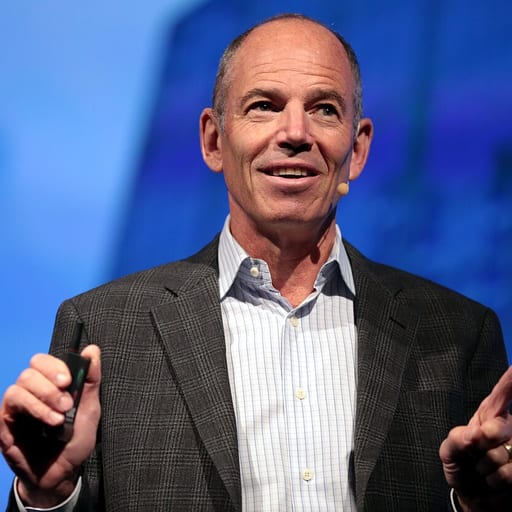
Photo: TechCrunch (Charles Eshelman/Getty Images for AOL) CC BY 2.0 Original cropped
Quotes
138 basic records of 917
Quotes are word for word from the source.
People as infrastructure
The antidote is people . It's not the physical infrastructure of Silicon Valley that makes it work, or the weather, or anything like that.
Our noteEmphasizing that the value of a startup hub lies in its human density, not its physical traits.
Hidden bureaucratic costs
the real costs are the ones you never hear about: the company that would be the best supplier, but doesn't bid because they can't spare the effort to get verified.
Our noteHe explains how strict supplier verification processes can accidentally filter out the best partners.
Self indulgence alarms
If I spent a whole day watching TV I'd feel like I was descending into perdition.
Our noteGraham describes the natural guilt associated with obvious procrastination.
Subconscious idea filtering
It means these ideas are invisible to most people who try to think of startup ideas, because their subconscious filters them out. Even the most ambitious people are probably best off approaching them obliquely.
Our noteDiscussing how our minds naturally avoid ideas that seem too big or difficult to handle.
Speed as feature
If you made something no better than GMail, but fast, that alone would let you start to pull users away from GMail.
Our noteHighlighting how performance and speed can be a primary competitive advantage against established products.
Value of novelty
the more of a noob you are locally, the less of a noob you are globally.
Our notePaul explains that feeling like a beginner in a specific context means you are expanding your knowledge.
Embrace the discomfort
Though it feels unpleasant, and people will sometimes ridicule you for it, the more you feel like a noob, the better.
Our notePaul encourages founders to lean into the discomfort of learning new things despite social pressure.
Fighting addiction
Addictive things have to be treated as if they were sentient adversaries - as if there were a little man in your head always cooking up the most plausible arguments
Our noteHow to view the mental struggle against distracting habits.
Avoiding average
If you do everything the way the average startup does it, you should expect average performance. The problem here is, average performance means that you'll go out of business.
Our noteHe explains why startups must differentiate themselves from the norm to survive.
Why solo founders struggle
Starting a startup is too hard for one person. Even if you could do all the work yourself, you need colleagues to brainstorm with, to talk you out of stupid decisions, and to cheer you up when things go wrong.
Our noteThe psychological and operational burden of being a single founder.
Finding real problems
Instead of starting from companies and working back to the problems they solved, look for problems and imagine the company that might solve them.
Our noteAdvice on how to generate original startup ideas instead of derivative ones.
The value of implausibility
on average the ideas that seem craziest will, if correct, have the biggest effect. So if you can eliminate the theory that the person proposing an implausible-sounding idea is incompetent, its implausibility switches from evidence that it's boring to evidence that it's exciting.
Our noteThe correlation between how crazy an idea sounds and its potential impact.
Fragility of new ideas
When a new idea first emerges, it usually seems pretty feeble. It's a mere hatchling. Received wisdom is a full-grown eagle by comparison.
Our noteComparing the initial appearance of new ideas to established wisdom.
Appearance vs performance
The effort that goes into looking productive is not merely wasted, but actually makes organizations less productive.
Our noteExplaining how corporate professionalism can hinder actual work.
Real startup productivity
This is what real productivity looks like. This is the Formula 1 racecar. It looks weird, but it goes fast.
Our noteComparing the messy but fast nature of startups to high-performance race cars.
The element of surprise
A good essay has to be surprising. It has to tell people something they don't already know.
Our noteDefining what makes an essay special and worth reading.
Avoid being hapless
To be hapless is to be battered by circumstances - to let the world have its way with you, instead of having your way with the world.
Our notePaul Graham defines the opposite of a good founder as being hapless or passive.
Managing creative people
Imaginative people don't want to follow or lead. They're most productive when everyone gets to do what they want.
Our noteDescribing the independent nature of highly productive, imaginative individuals.
Startup hiring stakes
The difficulty of firing people is a particular problem for startups because they have no redundancy. Every person has to do their job well.
Our noteExplaining why rigid labor laws are especially damaging to small, high-growth companies.
Survival leads to wealth
If you can just avoid dying, you get rich. That sounds like a joke, but it's actually a pretty good description of what happens in a typical startup.
Our notePaul explains that the primary goal of a startup is simply to stay alive long enough to succeed.
Motivation for starting
Viaweb we started very explicitly to make money. I was sick of living from one freelance project to the next, and decided to just work as hard as I could till I'd made enough to solve the problem once and for all.
Our notePaul Graham explains why he and his co-founders started their first company, Viaweb.
The trap of complexity
Though simple solutions are better, they don't seem as impressive as complex ones. Overlooked problems are by definition problems that most people think don't matter.
Our noteHe discusses why simple solutions to ignored problems often face initial contempt.
Attachment to names
There's nothing intrinsically great about your current name. Nearly all your attachment to it comes from it being attached to you.
Our noteHe challenges founders to overcome their emotional bias toward their current company name.
Winning by transcending
Startups don't win by attacking. They win by transcending. There are exceptions of course, but usually the way to win is to race ahead, not to stop and fight.
Our notePaul discusses the strategic advantage of focusing on growth rather than competition.
Acquisition meeting expectations
We weren't expected to do more than chat and seem smart and reasonable.
Our notePaul describes a meeting with Jerry Yang during the acquisition of Viaweb.
Open platform innovation
Anyone can build whatever they want on it, and the market picks the winners. So innovation happens at hacker speeds instead of big company speeds.
Our noteExplaining why the Internet's open nature allowed it to outpace traditional television innovation.
Software Usability
The best thing software can be is easy, but the way to do this is to get the defaults right, not to limit users' choices.
Our notePaul Graham discusses the principles of designing user-friendly software.
Tools for Thinking
A programming language is for thinking of programs, not for expressing programs you've already thought of.
Our noteGraham reflects on the true purpose of programming languages.
Judges versus customers
If you regard someone judging you as a customer instead of a judge, the expectation of fairness goes away. The author of a good novel wouldn't complain that readers were unfair for preferring a potboiler with a racy cover.
Our noteHe explains why founders should treat evaluators like customers rather than moral authorities.
Generating new ideas
Half the ideas that end up in an essay will be ones you thought of while you were writing it.
Our noteHe notes that the process of writing is actually a way to discover new thoughts.
You are seeing 236 basic records. Membership answers from all 1,566 of this master's records.
See membershipMore masters in this field
See the whole fieldFounders and company builders

These records are our compilation of public statements and sources. We are not affiliated with or endorsed by Paul Graham or any related company. If something should come down, tell us. Takedown request form