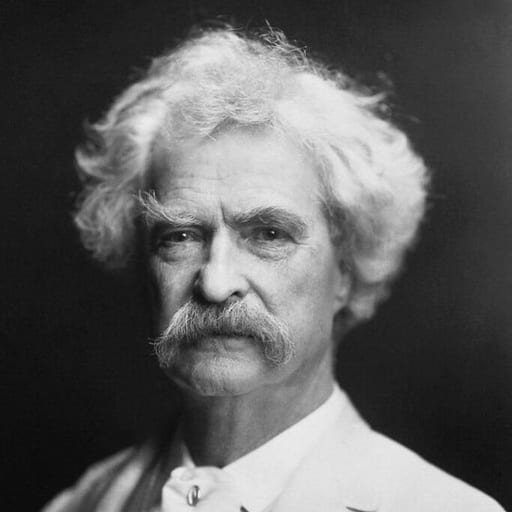
Mark Twain
마크 트웨인
American writer and humorist
1,104 records in all
- Principles 367
- Episodes 315
- Quotes 422
3 free questions a day, no sign-up.
Photo: A.F. Bradley, New York Public domain Original cropped
Quotes
63 basic records of 422
Quotes are word for word from the source.
Idea timing
It always happens that when a man seizes upon a neglected and important idea, people inflamed with the same notion crop up all around.
Our noteTwain observes how competition often emerges simultaneously once an idea gains traction.
Technological disruption
But after a while the steamboats so increased in number and in speed that they were able to absorb the entire commerce; and then keelboating died a permanent death.
Our noteTwain describes how new technology completely replaced an older industry.
Strategic planning
Jim had a wonderful level head, for a nigger: he could most always start a good plan when you wanted one.
Our noteHuck Finn reflects on Jim's ability to provide sound advice and plans.
Action over planning
I would go and complete the exploration of the Amazon. This was all the thought I gave to the subject. I never was great in matters of detail.
Our noteTwain describes his impulsive decision to travel to South America with very little preparation.
Knowledge versus notes
I had a note-book that fairly bristled with the names of towns, 'points,' bars, islands, bends, reaches, etc.; but the information was to be found only in the notebook--none of it was in my head.
Our noteTwain realizes that having information in a book is not the same as possessing the skill.
Mastering the fundamentals
My boy, you've got to know the _shape _of the river perfectly. It is all there is left to steer by on a very dark night. Everything else is blotted out and gone.
Our noteMr. Bixby explains why a pilot must memorize the river's shape to navigate in the dark.
Humility in mastery
Well, I thought I knew how to steer a steamboat, but that was another mistake of mine.
Our noteA pilot realizes his own limitations after watching a master steer through a difficult passage.
Difficulty of emotion
And, mind you, emotions are among the toughest things in the world to manufacture out of whole cloth; it is easier to manufacture seven facts than one emotion.
Our noteTwain discusses how early tourists had to originate their own feelings about the Mississippi River.
Atmosphere and impact
The loneliness of this solemn, stupendous flood is impressive--and depressing.
Our noteDescribing the overwhelming feeling of the Mississippi's vast and empty landscape.
Diverse industrial base
A thriving place is the Good Samaritan City of the Mississippi: has a great wholesale jobbing trade; foundries, machine shops; and manufactories of wagons, carriages, and cotton-seed oil
Our noteTwain lists the various industries that led to the economic recovery of Memphis.
Cultivating essential skills
No virtue can reach its highest usefulness without careful and diligent cultivation--therefore, it goes without saying that this one ought to be taught in the public schools--even in the newspapers.
Our noteTwain argues that even controversial skills require diligent practice to be useful in society.
Authenticity in trade
a man can't handle glibly and easily and comfortably and successfully the _argot_ of a trade at which he has not personally served.
Our noteTwain argues that real expertise requires personal experience in a specific field.
Spotting the amateur
the moment he departs, by even a shade, from a common trade-form, the reader who has served that trade will know the writer _hasn't
Our noteTwain explains how professionals can easily detect a lack of real-world experience in writing.
Respect for the unknown
I had the highest respect for Satan, and that my reverence for him equalled, and possibly even exceeded, that of any member of any church.
Our noteTwain explains his ironic respect for Satan compared to the 'conjecturers' who invent his history.
Rational data interpretation
Both parties handle the same materials, but the Baconians seem to me to get much more reasonable and rational and persuasive results out of them than is the case with the Shakespearites.
Our noteTwain observes that different people can reach vastly different conclusions using the exact same data set.
Theory versus practice
I should recognize a mistake or two in the phrasing, and would know that the writer was only a printer theoretically, not practically.
Our noteTwain explains how he can spot a writer who hasn't actually worked in the printing trade.
Spotting the amateur
whenever a person tries to talk the talk peculiar to any of them without having learned it at its source I can trap him always
Our noteTwain asserts his expertise in identifying people who lack real-world experience in various trades.
Loudness versus reasoning
The thug is aware that loudness convinces sixty persons where reasoning convinces but one.
Our noteTwain criticizes how people use loud assertions to turn mere guesses into accepted facts.
Flawed human reasoning
We are The Reasoning Race, and when we find a vague file of chipmunk-tracks stringing through the dust of Stratford village, we know by our reasoning powers that Hercules has been along there.
Our noteTwain mocks how people use tiny, irrelevant clues to support massive, unfounded conclusions.
Deceptive communication
It takes one some little time to find out that phrases which seem intended to guide the reader aright are there to mislead him
Our noteTwain warns about writing that uses a facade of fairness to hide a biased agenda.
Independent thinking
He was curiously mature at nineteen in his ability to do independent thinking on the deep questions of life and to arrive at sharply definite decisions regarding them, and stick to them
Our noteTwain describes Percy Shelley's early maturity and his ability to make and stand by difficult personal decisions.
Sacrifice for principles
For the sake of his opinions he was willing to sacrifice all these valuable things, and did sacrifice them; and went on doing it, too, when he could at any moment have made himself rich
Our noteTwain notes how Shelley chose his principles over financial security and social approval.
Attention to detail
He is always overlooking a detail here and there that might be valuable in helping us understand a situation.
Our noteTwain criticizes a biographer for missing small but crucial facts that explain human behavior.
Understanding true motives
The obvious thing is, that Harriet was happy because there was much territory between her husband and Cornelia Turner now
Our noteTwain explains that the real reason for someone's happiness was distance from a rival, not a minor travel detail.
Excuses for dissatisfaction
If he had been still in love with his wife it is not easily conceivable that he would care much who nursed the baby, provided the baby was well nursed.
Our noteTwain argues that when someone wants to leave, they find trivial faults.
Focus on substance
The woman is recalling a conversation which is more than two months old; besides, she was probably more intent upon the central and important fact of it than upon its unimportant date.
Our noteTwain defends a witness who got a date wrong but remembered the core event.
Demand for clarity
As for me, I do not quite see why we should rest content with anything of the sort. It is not a very definite statement.
Our noteTwain criticizes vague explanations that avoid the real root of a problem.
Reliability of passion
We are able to believe that they spoke the truth for that one day, but we know by experience that they could not be depended on to speak it the next.
Our noteTwain warns that intense emotional expressions are often temporary and unreliable as a basis for long-term judgment.
Deciding to act
After much thought, I decided that I was a person fitted to furnish to mankind this spectacle. So I determined to do it.
Our noteHe reflects on his decision to start a new ambitious project.
Preserving unique style
I shall not mar Garnham's translation by meddling with its English; for the most toothsome thing about it is its quaint fashion of building English sentences on the German plan
Our noteTwain explains why he chooses to keep a translated text exactly as it is.
You are seeing 165 basic records. Membership answers from all 1,104 of this master's records.
See membershipMore masters in this field
See the whole fieldCraft, arts and performance
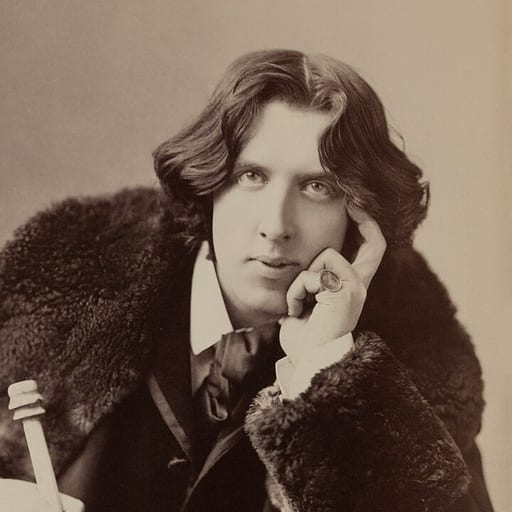
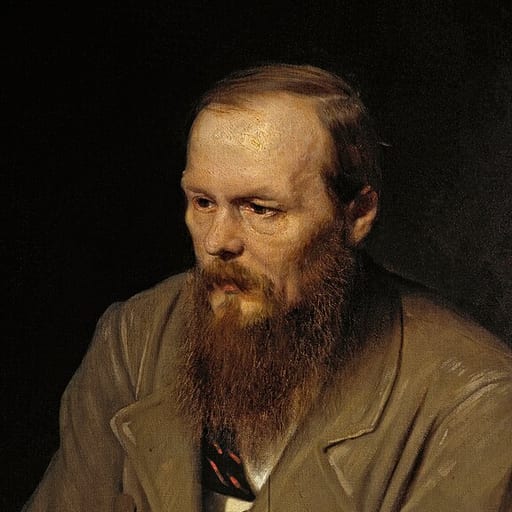


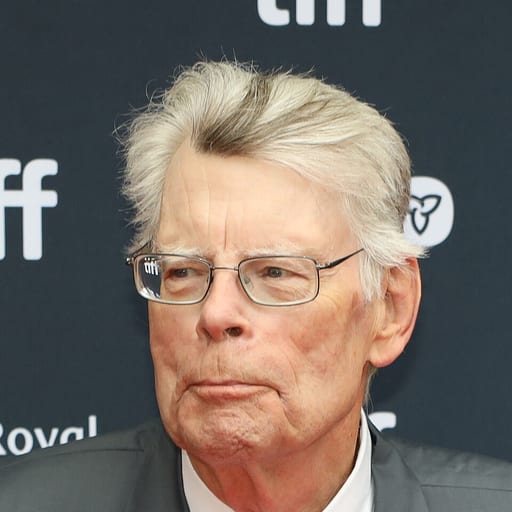

These records are our compilation of public statements and sources. We are not affiliated with or endorsed by Mark Twain or any related company. If something should come down, tell us. Takedown request form