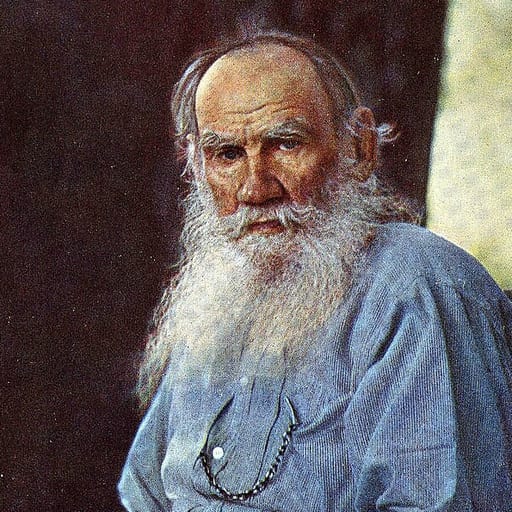
Leo Tolstoy
레프 톨스토이
Russian novelist and moral thinker; author of War and Peace
880 records in all
- Principles 311
- Episodes 268
- Quotes 301
3 free questions a day, no sign-up.
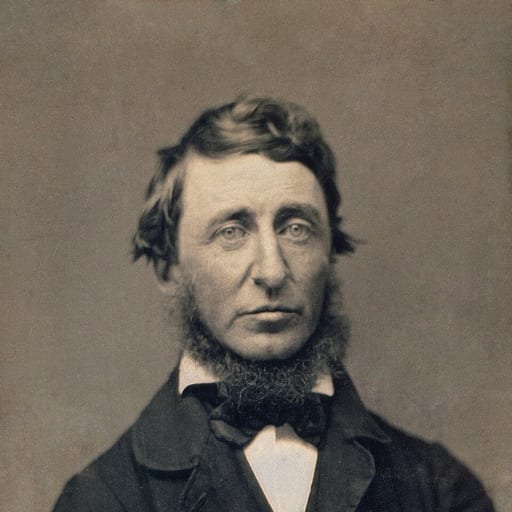
Photo: Sergei Prokudin-Gorskii Public domain Original cropped
Quotes
45 basic records of 301
Quotes are word for word from the source.
Cost of conflict
Enlightened men cannot but know that occasions for war are always such as are not worth not only one human life, but not one hundredth part of all that which is spent upon wars
Our noteTolstoy discusses the irrationality and immense waste of human life and resources in international conflicts.
Loss of religion
The evil from which the men of the Christian world suffer is that they have temporarily lost religion.
Our noteTolstoy explains the root cause of societal suffering and conflict.
Human material cost
Russia's chief chance of success lies in the fact that it possesses inexhaustible human material.
Our noteTolstoy criticizes the government's view of citizens as mere expendable resources.
Focus on essentials
I should never finish this paper if I were to continue to add to it all that corroborates its essential idea.
Our noteTolstoy notes the overwhelming amount of evidence supporting his stance against the war.
Awareness of inequality
I realized not only with my brain, but in every pulse of my soul, that, whilst there were thousands of such sufferers in Moscow, I, with tens of thousands of others, daily filled myself to repletion with luxurious dainties
Our noteTolstoy reflects on the contrast between his luxury and the poverty he witnessed.
Understanding human needs
I realized now, for the first time, that all these people, besides the mere effort to find food and shelter from the cold, must live through the rest of every day
Our noteTolstoy realized that charity is more than just providing physical necessities; it involves understanding a person's whole life.
External vs Internal
All say that they have need of some external circumstance in order to regain that position which they think natural and happy.
Our noteTolstoy observes how people blame their failure on lack of external resources.
Escalating demands
when I began to investigate what was necessary, it turned out that their wants increased in proportion to the help offered, and nothing satisfactorily resulted.
Our noteTolstoy observes that providing aid often leads to an endless increase in the recipients' perceived needs.
True value of money
Simon, who gave three kopeks which he had earned, assisted the pilgrim, because these three kopeks really represented his labour; but I had served nobody, worked for no one, and knew very well that my money did not represent my labour.
Our noteHe distinguishes between money earned through personal labor and money obtained through capital.
Liquidation for debt
the demand for money can always be satisfied, because the debtor, to satisfy it, must sell his cattle, clothes, or houses.
Our noteTolstoy describes how monetary demands force people to liquidate their essential assets.
Consistency in action
If the theory of baking bread consists in this, that first of all one must knead the dough, then put it by to rise, anyone knowing it would be a fool to do the reverse.
Our noteHe uses a simple analogy to show that practical action should follow logical theory.
Integrity in action
One need only think for a moment in order to be terrified at the way our lives contradict what we profess to believe
Our noteTolstoy points out the gap between human ideals and their actual daily habits.
Fearless honesty
I must neither deceive other men nor myself; that I must not be afraid of the truth, whatever the result may be.
Our noteHe defines the first step toward solving any life or work crisis.
Correcting course
If a man considers a wrong road to be a right one, then his every step leads him only farther from his aim
Our noteTolstoy warns against the danger of persisting in a flawed strategy or direction.
Admitting error
however far we have gone astray, it is better to return than to continue straying.
Our noteHe encourages the reader to pivot immediately once a mistake is recognized.
Improving work quality
And this caused the quality, and therefore the usefulness and pleasantness, of my special labour to improve.
Our noteTolstoy explains how balancing physical labor with writing improved his literary output.
Happiness through labor
The happiness of men consists in life. And life is in labour.
Our noteTolstoy defines the core of human happiness as being active and productive.
Internal isolation
In the common cell he lived in the company of twenty men, but felt as if he were quite alone.
Our noteDespite being surrounded by others, Stepan remained trapped in his own mind.
Conflict of duties
As to acknowledging that human duties were more obligatory than those of a Czar--he had not strength for that.
Our noteThe Emperor struggles to prioritize his basic human conscience over his professional role.
Urgent business matters
The letter was a very important one to a friend, asking him to bid for him for a picture of the Madonna which was to be offered for sale at an auction.
Our noteVolgin realized he had forgotten to write an important letter regarding an art auction purchase.
Definition of progress
Progress consists, not in the increase of truth, but in freeing it from its wrappings.
Our noteTolstoy writes about how progress is the clarification of basic life questions.
Wisdom without violence
Every violent reform deserves censure, for it quite fails to remedy evil while men remain what they are, and also because wisdom needs no violence.
Our notePierre reads about the futility of violent reform in achieving virtue.
Patterns of success
All happy families resemble one another, each unhappy family is unhappy in its own way.
Our noteThe opening observation on the nature of domestic happiness.
Focus on self
Which is the principal aim of these three? Certainly self-reformation and self-purification. Only to this aim can we always strive independently of circumstances.
Our noteDiscussing the primary goal of personal and spiritual growth.
The barrier of certainty
The most difficult subjects can be explained to the most slow-witted man if he has not formed any idea of them already; but the simplest thing cannot be made clear to the most intelligent man if he is firmly persuaded that he knows already
Our noteTolstoy discusses why intelligent people often fail to grasp new or simple truths.
Purpose of art
Art is a human activity having for its purpose the transmission to others of the highest and best feelings to which men have risen.
Our noteTolstoy defines the core function of artistic creation.
Losing self faith
And all this terrible transformation took place in him only because he ceased to have faith in himself, and began to believe in others.
Our noteHe describes the moral decline of a character who prioritized external opinions over internal values.
Human nature fluidity
Men are like rivers - the water in all of them, and at every point, is the same, but every one of them is now narrow, now swift, now wide, now calm
Our noteTolstoy challenges the idea that people have fixed, unchanging characters or qualities.
Utility of thought
In the spiritual realm nothing is indifferent: what is not useful is harmful.
Our noteTolstoy discusses the importance of focusing on spiritual truths rather than distractions.
Methodical truth seeking
I seek methodically to disentangle everything that tends to conceal the truth from men; I translate the four Gospels anew, verse by verse, and I bring them together in a new concordance.
Our noteTolstoy explains his rigorous six-year process of re-translating the Gospels.
You are seeing 132 basic records. Membership answers from all 880 of this master's records.
See membershipMore masters in this field
See the whole fieldPhilosophy and wisdom traditions
These records are our compilation of public statements and sources. We are not affiliated with or endorsed by Leo Tolstoy or any related company. If something should come down, tell us. Takedown request form