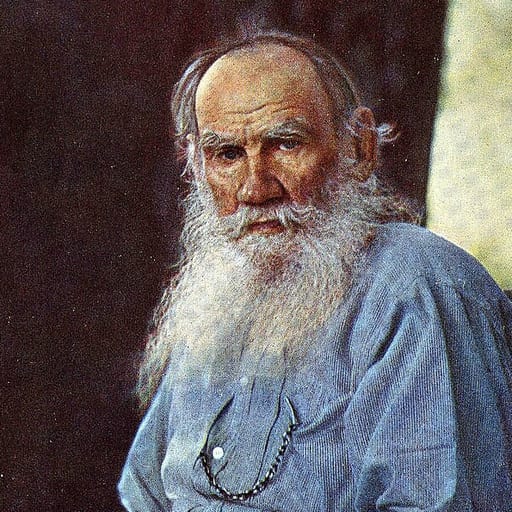
Leo Tolstoy
레프 톨스토이
Russian novelist and moral thinker; author of War and Peace
880 records in all
- Principles 311
- Episodes 268
- Quotes 301
3 free questions a day, no sign-up.
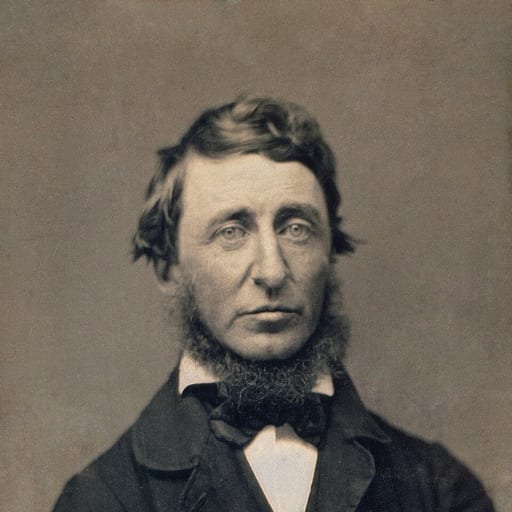
Photo: Sergei Prokudin-Gorskii Public domain Original cropped
Quotes
45 basic records of 301
Quotes are word for word from the source.
Direct understanding of text
I understood everything, because I put all commentaries out of my mind. This was the passage that gave me the key to the whole:-- "_Ye have heard that it hath been said, An eye for an eye, and a tooth for a tooth: But I say unto you, That ye resist not evil.
Our noteTolstoy explains how ignoring complex interpretations helped him find the core meaning of the Gospels.
Integrity of action
In words I had recognized the doctrine of Jesus as sacred; in actions, I had professed a doctrine not at all Christian, and I had recognized and reverenced the anti-Christian customs which hampered my life upon every side.
Our noteTolstoy reflects on the hypocrisy of holding high ideals while living a life that contradicts them.
Incompetency of human justice
he absolutely denied the possibility of human justice, and demonstrated that man could not be the judge since man himself was guilty.
Our noteTolstoy explains why Jesus rejected the idea of humans judging one another.
Value in tradition
He who seeks for the good, takes not only the new, but also the old; and because a thing is old, he does not therefore reject it.
Our noteTolstoy explains that a reformer should use existing truths as a foundation for new ideas.
The illusion of anger
I never yet encountered an angry person who did not believe his wrath to be justifiable. Every one who is angry thinks anger legitimate and serviceable.
Our noteTolstoy observes that everyone justifies their own anger as necessary or useful.
Pursuit of best
As soon as they discover that a thing is best, however difficult of attainment, men do it.
Our noteTolstoy argues that humans naturally pursue what they perceive as the best path despite obstacles.
Enduring for superior good
Every being endowed with even the most rudimentary reason knows that he must endure difficulties to procure any good, superior to that which he has enjoyed before.
Our noteHe points out that progress always requires enduring temporary hardships for a greater benefit.
Becoming indispensable
He showed that a man does not insure his own subsistence by amassing worldly goods at the expense of others, but by rendering himself useful and indispensable to others.
Our noteHe explains that true security comes from being valuable to other people.
Wasted human potential
"What a pity it is that so much strength is wasted uselessly!" said I. "How people like you destroy your own lives!...
Our noteTolstoy expressed his sorrow to an exiled intellectual who had given up on life.
Taking specific action
I promised to take steps to get one or more of the children into an Orphanage.
Our noteTolstoy offers a practical solution to a family left destitute after their mother's death.
Direct communication
I told her it was impossible, and asked what property her husband had left behind with his brother, to keep her and the children.
Our noteTolstoy tells the woman the truth about her husband's return and looks for alternative resources.
Equal rights to resources
all who live on the earth cannot but have an equal right to its use.
Our noteTolstoy argues for the fundamental right of all people to access the land.
Self reflection
We ourselves live like devils, and yet we complain of others!
Our noteTolstoy points out the hypocrisy of blaming others for a miserable life while participating in harmful systems.
Power of collective identity
A Russian is hardly ever alone. If he is doing something wrong, he may perhaps say "I"; otherwise it is always "we" the family, "we" the _artél_, "we" the Commune.
Our noteTolstoy observes the linguistic habit of peasants using 'we' instead of 'I'.
The remedy for evil
Behind the army lies a false Christianity, with which everyone is inoculated in youth. This is "The Root of the Evil," and the true Christian teaching is the remedy.
Our noteTolstoy identifies ideological indoctrination as a core problem and proposes a moral remedy.
You are seeing 132 basic records. Membership answers from all 880 of this master's records.
See membershipMore masters in this field
See the whole fieldPhilosophy and wisdom traditions
These records are our compilation of public statements and sources. We are not affiliated with or endorsed by Leo Tolstoy or any related company. If something should come down, tell us. Takedown request form