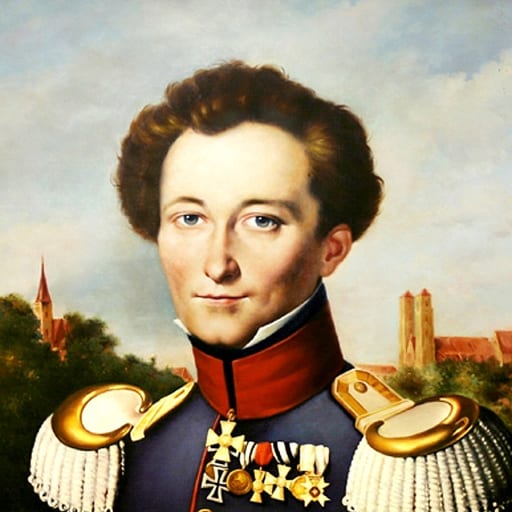
Carl von Clausewitz
카를 폰 클라우제비츠
Prussian general, author of On War
597 records in all
- Principles 191
- Episodes 133
- Quotes 273
3 free questions a day, no sign-up.
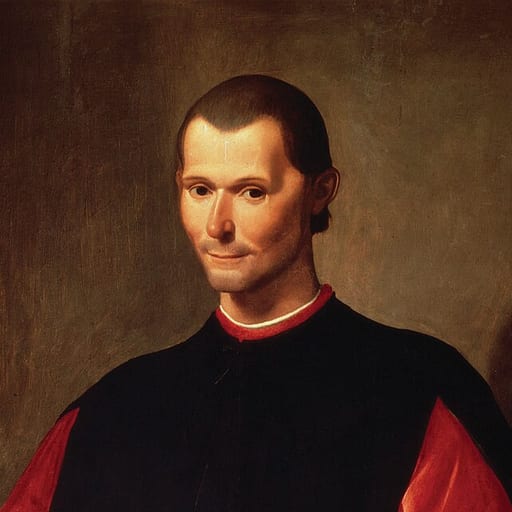
Photo: Wilhelm Wach Public domain Original cropped
Quotes
41 basic records of 273
Quotes are word for word from the source.
Concentration of force
The best Strategy is _always to be very strong_, first generally then at the decisive point.
Our noteClausewitz explains the fundamental law of strategic strength and focus.
Expanding success
what can be looked upon in tactics as an excess of power, must be regarded in Strategy as a means to give expansion to success
Our noteHe explains that 'extra' resources in strategy aren't wasteful but are tools to capitalize on opportunities.
The Necessity of Aggression
One of the parties must of necessity be assumed politically to be the aggressor, because no War could take place from defensive intentions on both sides.
Our noteHe notes that conflict requires at least one party to have a positive, proactive goal.
Leadership tact
That a Commander should thoroughly understand these states, that he should have the tact to act in the spirit of them, we hold to be a great requisite
Our noteClausewitz emphasizes the necessity for leaders to recognize whether they are in a state of tension or rest.
Importance of Success
the tactical successes_ are of paramount importance in the conduct of War.
Our noteExplaining that high-level strategy must be built on solid, practical execution.
Risk of Complexity
every carefully combined attack requires time for its preparation, and if a counter-stroke by the enemy intervenes, our whole design may be upset.
Our noteWarning against overly complex plans that are vulnerable to disruption.
Universal combat goals
In this effort we see, therefore, the first immediate purpose in the combat, and one which is quite universal.
Our noteHe identifies securing one's own retreat while cutting off the enemy's as a fundamental goal.
Evidence of victory
Of the loss in moral forces there is no reliable measure, except in the trophies: therefore, in many cases, the giving up the contest is the only real evidence of the victory.
Our noteHe argues that an opponent's withdrawal is often the only clear sign that you have won.
Crisis and Opportunity
The more our forces have suffered, the more the enemy will have expended on his side; the greater, therefore, will be the crisis for the enemy
Our noteHe describes how a losing battle can be turned into a foundation for a greater victory.
Attrition and exhaustion
the course of the battle a mutual slow wearing away of these forces upon one another, to see which will have soonest exhausted his adversary.
Our noteDescribing modern conflict as a test of who can endure longer while depleting the other.
Purpose of action
The great battle takes place for the sake of itself, for the sake of the victory which it is to give
Our noteMajor efforts are concentrated points where all strategic threads converge for a single result.
You are seeing 90 basic records. Membership answers from all 597 of this master's records.
See membershipMore masters in this field
See the whole fieldStrategy and mental models


These records are our compilation of public statements and sources. We are not affiliated with or endorsed by Carl von Clausewitz or any related company. If something should come down, tell us. Takedown request form